

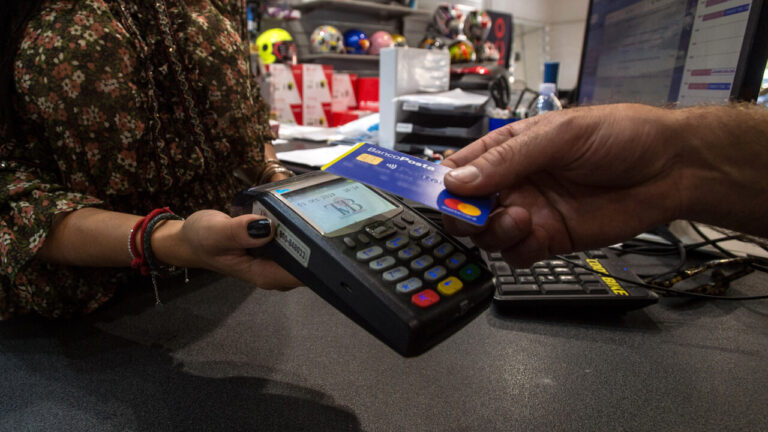
The Revenue Agency’s checks began on Thursday 5 March 2026. They concern shop owners, who are obliged to connect cash registers to electronic payment systems with credit cards and debit cards, i.e. POS. In the event of any anomalies, the Tax Office has arranged for specific compliance communications to be sent to taxpayers: these are letters inviting traders and professionals to clarify the reasons for any discrepancies found in the information flows transmitted. But there is a risk of sanctions and even suspension of activity in the most serious cases. Let’s go in order.
Checks on the sums collected and communicated
In detail, these checks by the Revenue Agency mainly concern commercial activities in which there is a substantial difference between the amounts collected via electronic means and the fees communicated electronically to the public tax body. Today the financial administration is able to automatically cross-reference the data of payments made by card or debit card with those recorded at the closing of the cash register. This is a control system possible thanks to monitoring active since 2022, which allows the Tax Office to receive information from banking institutions relating to all digital transactions carried out in commercial establishments.
When the sums are inconsistent with each other, the system reports the anomaly and a request for clarification may be triggered. A typical situation occurs when an electronic payment is collected, but is not accompanied by the issuing of an electronic receipt.
Data verification
Shopkeepers and professionals can directly access the Revenue Agency website to prevent any disputes and to check the correctness of the information. In the “invoices and fees” area, in fact, there is a section available that shows the list of POS terminals used and the total of recorded operations. The information comes from the flows that, since 2022, banks and companies that manage payment terminals periodically send to the financial administration. It is therefore up to the operator to verify that these data are correct and that each device is associated with the telematic recorder used for the transmission of the fees.
Letter and regularization
Once the devices have been checked and registered, any small inconsistencies between the receipts recorded by the POS and those reported on the receipts can be easily explained or fixed. However, if you do not intervene to verify your position, the IT system can classify the activity as irregular, triggering the compliance letter.
The Revenue Agency’s “compliance” is a collaboration system that invites taxpayers to spontaneously correct tax errors or omissions before formal assessments. Through letters sent via certified email or Io app, the taxman reports the anomalies, allowing regularization with the so-called active repentance, with reduced penalties.
Communications sent by the Agency do not automatically entail a sanction. As explained by the top management of the public body, their main purpose is to report any critical issues and start a dialogue with the taxpayer. Having received the letter, the operator has two ways to regularize his position: give an explanation of the anomaly, or resort to voluntary repentance. This is therefore a preliminary phase that allows any irregularities to be resolved before more in-depth checks are started.
If there is a technical error, such as a malfunction of the electronic recorder while the POS continued to function, the operator can demonstrate the fault and explain what happened. By presenting the documentation proving the technical problem, the case can be closed without further consequences. Different is the case in which the operator realizes that some operations have not been documented correctly. In this case it is possible to settle the matter independently by paying the amount due. Thanks to active repentance, the sanctions are reduced compared to those foreseen in the case of a formal investigation.
Fines and suspension of activity
And let’s move on to the fines chapter. The law establishes various sanctions for operators, depending on the type of violation found. If the electronic register is not technically connected to the payment terminal, the fine can range between one thousand and 4 thousand euros. However, when an electronic transaction is not stored or transmitted correctly, there is a fine of 100 euros for each operation, with a maximum limit of one thousand euros per quarter, provided that the violation does not compromise the correct payment of the tax.
In the most serious case, i.e. when the discrepancy between the collections recorded by the POS and the receipts hides a tax omission, the fine corresponds to 70% of the unpaid VAT (in the past it was 90%), with a minimum threshold of 300 euros for each individual operation.
But the law also provides for additional measures, in addition to fines, in the most serious cases. If four separate violations are detected on different days within a period of 5 years, the suspension of the license or authorization to carry out the activity may be triggered. The stop period can vary from 15 days up to two months. If the total amount of undocumented payments exceeds 50 thousand euros, the suspension of commercial activity can last up to six months.
The government’s measure
The meaning of the measure introduced by the government with the latest budget law is to eliminate discrepancies between electronic payments and receipts. Today a merchant can accept a card payment but not issue a receipt, and until recently the two systems, banking and tax, did not communicate directly with each other. From 2026, however, each electronic payment is automatically recorded by the cash register and sent to the Revenue Agency together with the daily payments. In this way, the tax authorities can verify in real time the consistency between amounts collected and amounts declared, identifying any anomalies or attempts at tax evasion.
Practical instructions
The connection between telematic registers and POS does not require physical interventions or new devices, but is managed through a dedicated digital service available in a reserved area of the Revenue Agency portal. Merchants can log in with Spid, Cie, Cns or credentials issued by the Agency and, once entered, associate the serial number of the electronic recorder with the identification data of the POS. The operation can also be carried out by a delegated intermediary, such as a tax consultant. The pairing must be performed only once and repeated only in the event of changes, for example when a new terminal is installed or a previous one is deactivated.
To make the use of the service easier for shopkeepers, the Revenue Agency has made an operational guide available: you can find it at this link.