

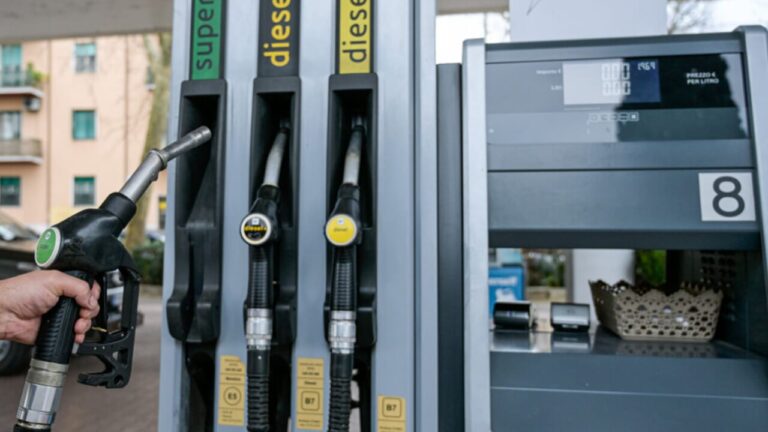
Filling up in Slovenia could allow Italian motorists to save over 40 euros on a 50-litre tank of petrol. This is thanks to a waiver just granted by the European Union, which authorizes Ljubljana to drastically cut excise duties on fuel, bringing them well below the minimum community levels. A decision that risks reviving the so-called “fuel tourism”, i.e. the flight of Italian motorists towards petrol stations across the border. The paradox is that, precisely to avoid this phenomenon, Friuli-Venezia Giulia spends around 65 million euros on regional discounts on petrol and diesel every year.
The cheapest fuels in Europe
On 9 November, the Ecofin Council of Finance Ministers of the European Union member countries authorized Slovenia to reduce taxes on fuel for six months, falling below the limits normally foreseen by community legislation. The excise duty on petrol could go from the current 41.759 cents to 13.95 cents per litre, while that on diesel could drop from 33 to 10.5 cents.
| Fuel | EU minimum | Ordinary Italian excise duty 2026 | Minimum authorized for Slovenia |
| Unleaded petrol | 35.90 cents/l | 67.29 cents/l | 13.95 cents/l |
| Automotive diesel | 33.00 cents/l | 67.29 cents/l | 10.50 cents/l |
To understand the scope of the provision, it is enough to consider that the European Union normally imposes a minimum excise duty of 35.9 cents on petrol and 33 cents on diesel. In Italy the ordinary rate is equal to 67.29 cents for both fuels, net of the temporary reductions adopted to deal with price increases.
Slovenia could therefore end up taxing petrol almost five times less than Italy: according to official simulations – also considering the effect of VAT – the maximum cut could reduce the final price of petrol by 33.9 cents per liter and that of diesel by 27.4 cents, falling from the current 1.506 to 1.167 euros per liter for petrol and from 1.848 to 1.574 euros for diesel. For a 50 liter tank you would spend 58.35 and 78.70 euros respectively. Slovenia could thus become the European Union country with the cheapest petrol, even surpassing Malta, where the price stands at 1.34 euros per litre.
The countries with the cheapest fuels in the EU
| Village | Petrol €/litre | Diesel €/litre |
| Malta | 1,340 | 1,210 |
| Poland | 1,456 | 1,812 |
| Sweden | 1,555 | 2,061 |
| Bulgaria | 1,605 | 1,893 |
| Slovenia | 1,675 | 1,941 |
| Italy | 2,001 | 2,238 |
A truly convenient price for Italians who are now accustomed to prices well over 2 euros per liter despite the “price cap”. Already with Slovenian prices in force since November 10, crossing the border allows a theoretical saving of around 26 euros on 50 liters of petrol and almost 22 euros on diesel. If Ljubljana fully applied the excise duty cut, the advantage would rise to around 43 euros for petrol and 35 euros for diesel.
A price difference that will end up fueling full-service tourism, a phenomenon known for decades in the provinces of Trieste and Gorizia. Motorists cross the border to buy fuel at lower prices, taking customers away from Italian distributors. And above all by moving the tax revenue across the border: excise duties and VAT on liters purchased in Slovenia end up in the coffers of the Slovenian state rather than in the Italian ones.
To counter this competition, Friuli-Venezia Giulia uses public resources to lower the price of fuel for its residents who can purchase fuel at affiliated distributors by paying a reduced price thanks to the regional contribution. And the numbers are substantial. On 9 November, during a hearing in the council commission, the regional energy councilor Fabio Scoccimarro quantified the expenditure on fuel discounts at around 65 million euros per year, announcing that around 450 thousand digital cards are active to access the discounts. In September the regional council had also approved an increase in contributions, bringing the overall intervention to almost 70 million euros.
The discounts significantly change the convenience of refueling across borders. A motorist resident in Trieste who benefits from the maximum contribution of 39 cents on petrol, considering the average provincial prices of 9 November, pays around 1.64 euros per liter in Italy. The advantage over Slovenia is thus reduced to around 7 euros on a 50-litre tank. But if Ljubljana applied the maximum cut authorized by the European Union, the same driver would save around 24 euros per refueling. For those who do not benefit from regional discounts, the advantage could exceed 40 euros.