

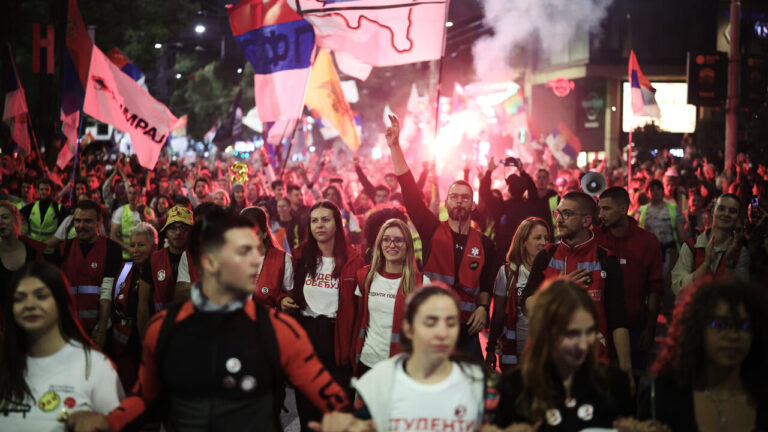
Over six million voters are called to the polls in Serbia to choose the 250 deputies of Parliament. But more than a normal consultation, the vote turned into a referendum on the system of power built by the Serbian Progressive Party and on its leader, Aleksandar Vučić. It is one of the most important political challenges of the last 14 years. The ones contesting the government are not the traditional opposition parties, but a movement born in the universities, grown in the streets and become the protagonist of one of the largest popular mobilizations that have characterized the recent history of the Balkan country for two years.
The polls describe an open competition: Vučić’s party would collect 47% of the votes, against 40% for the Student List.
The tragedy that changed Serbia
It all started on November 1, 2024, when the collapse of a concrete shelter in the Novi Sad train station caused the death of 16 people. A tragedy that has become the symbol of accusations of corruption, favoritism and mismanagement of public procurement aimed at Serbian institutions. According to the protesters, corruption and negligence in the renovation work contributed to the disaster.
The protests, initially focused on the demand to establish responsibilities, transformed into a broader political protest: for almost two years, students organized marches, university blockades and demonstrations, gathering a consensus that went far beyond academic circles.
Who are the students challenging Vučić
The political novelty of these elections is called the Student List, a movement organized by university students but which has chosen not to directly nominate the protagonists of the protests. The list includes professors, doctors, artists, farmers, athletes and representatives of civil society. Leading it is cardiologist Ilija Srđanović. The declared objective is to fight corruption, strengthen democratic institutions and improve the education system.
Vučić resigned to return to government
On September 27, former president Vučić resigned from the position of head of state, after having served almost two terms, to participate directly in the parliamentary elections and aim for the seat of prime minister. His party continues to count on a substantial electoral base.
Supporters credit him with the modernization of infrastructure and economic growth in recent years. During the election campaign, Vučić promised increases in pensions and public salaries, investments in healthcare and new incentives for young couples.
Because Brussels is watching carefully
On the international level, Serbia has maintained close relations with Russia and China, without formally renouncing the goal of joining the European Union. Today Serbia is a candidate country for entry into the European Union and the vote also represents a test of the stability of its democratic institutions.
International observers expressed concern about the conditions of the election campaign, marked by reports of intimidation, arrests, incidents of violence against journalists and activists, surveillance and cyber attacks. An OSCE mission is also monitoring the electoral operations and will present its preliminary assessments on Monday 26 October.
When the results arrive
The polls will close on Sunday at 8pm, Italian and Serbian time. The first projections are expected in the evening, while the official data are not expected before Monday. The ordinary threshold is set at 3%. With 18 competing lists, the turnout and distribution of votes among the smaller groups could affect the composition of the future parliamentary majority. But the main fear concerns the aftermath of the vote. Observers fear that disputed results could spark new tensions.
Vučić said he would recognize any defeat, but also warned that protests against his victory would be repressed by the authorities if they escalated into unrest.