

The Swedish company has decided to make the big leap: from a simple “catalogue” of songs and podcasts to a real personal assistant that creates dedicated content. A sort of digital companion capable of producing, suggesting and personalizing audio content based on users’ tastes, habits and even the context of their day. This is the trajectory presented by the company during Spotify Investor Day 2026, the appointment with investors in which co-CEOs Alex Norström and Gustav Söderström illustrated the group’s new growth phase. The starting point is clear: Spotify today has 761 million users, of which 293 million are subscribers, in 184 markets, according to data released by the company in the investor relations section.
Concert tickets “saved” from scalping
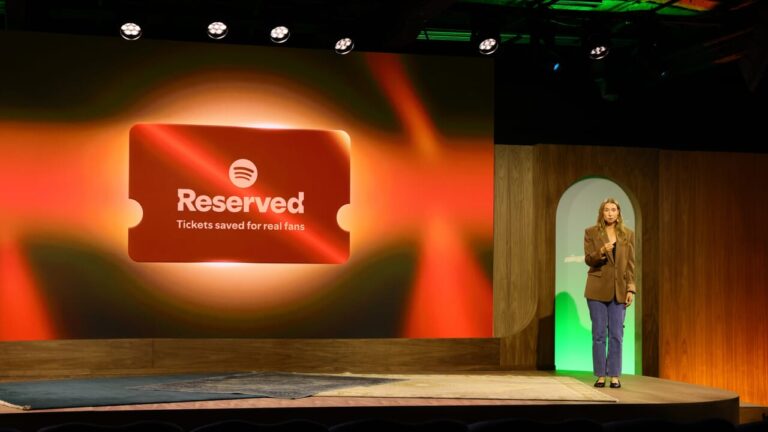
The innovations announced go far beyond music streaming. The first is called Reserved: for the first time, the most loyal fans of an artist who are subscribers to Spotify Premium will be reserved two tickets to purchase before going on sale to the public. The idea is simple: if the music catalog can be similar across multiple platforms, the direct relationship between artist and fan can become the true distinctive element.
DJ with artificial intelligence
The most delicate move, however, concerns artificial intelligence. Spotify has announced agreements with Universal Music Group and Universal Music Publishing Group to introduce a tool that will allow users to legally create covers and remixes of songs in the catalogs of participating artists and authors. The service will be a paid add-on, with priority access for Premium users. Reuters called the deal an important step because it will allow subscribers to create AI-generated covers and remixes, with a model based on consent, credit and compensation for artists and songwriters.
It is very sensitive terrain. In recent years, the music industry has looked with growing concern at artificial intelligence tools capable of generating songs, voices and imitations of existing artists. Spotify, at least in its official communication, tries to position itself on the opposite side to the “wild west” of musical Ai: not content created by circumventing copyright, but products developed through prior agreements with labels, publishers and rights holders. Already in October 2025, the company announced collaborations with Sony Music Group, Universal Music Group, Warner Music Group, Merlin and Believe to develop “artist-first” artificial intelligence products, based on voluntary participation, compensation and the centrality of the relationship between fans and artists.
The other direction concerns creators. With Memberships, Spotify will provide new tools to allow eligible creators to offer subscriptions directly to their most loyal fans. Creators will be able to manage relationships with subscribers, access data and import or export content from other platforms. In parallel, Personal Podcasts will also arrive: short, private and personalized audio content, generated in the app starting from a user prompt and their listening profile.
Podcasts created on the spot and “magical” audiobooks
Then there is the audiobook chapter. Spotify says Audiobooks+ is on track to reach $100 million in annual recurring revenue by July. The offering will be expanded with new premium packages, Family and Student plans, author tools in ten new languages and prompt-based features, including the ability to ask questions about books on the platform.
Finally there is Studio by Spotify Labs, a new independent desktop app designed to create personalized audio content: tailor-made podcasts, playlists, daily briefings. The platform will also be able to integrate connected tools, such as calendar and email, to organize and produce audio based on the user’s tastes and needs.
The algorithm that knows what you like (before you do)
The technological heart of this strategy is called Large Taste Model by Spotify: not a generic large linguistic model, but a system built around what the company knows best, i.e. users’ tastes. Söderström presented this as Spotify’s competitive advantage: applying artificial intelligence to proprietary, dynamic and personal data.
In essence, Spotify tries to move from the logic of the catalog to the logic of generation. No longer just choosing what to listen to among millions of songs, podcasts and books, but receiving content created or reworked in real time based on interests, context and intentions. A transformation that opens up new commercial possibilities, but also new questions: how transparent will these tools really be? How much control will artists, authors and users have? And how much will our “taste” transformed into a business model be worth in the future?