

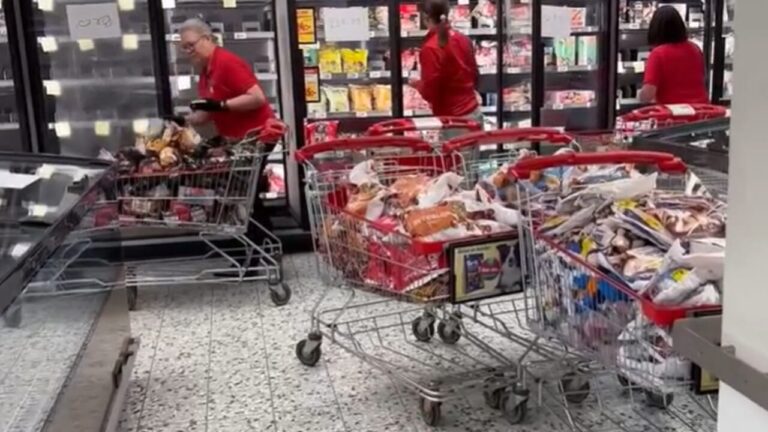
On the night of November 1-2, 2026, hackers targeted refrigeration systems in Sweden, Finland, Belgium, Luxembourg, Estonia and Ireland, remotely altering temperatures by up to 50 degrees in some cases. The Danish industrial group Danfoss confirms to the network Dr the involvement of its products, already hit by an attack in October. “We have been in close contact with our customers for three weeks and are helping them manage the situation” they explain. Some supermarkets in Sicily would also have been affected: this was confirmed to Open by Giuseppe Spadaro, general manager of Coop Radenza which manages some businesses in the Ragusa area.
In Belgium, dozens of Delhaize supermarkets, 15 Carrefour stores and five Spar stores were involved. According to Dutch public television Nosthe attackers would have remotely activated the defrost mode of the systems, causing an anomalous increase in temperatures. Some stores have used refrigerated trucks to save merchandise. Problems have also been reported at Delhaize supermarkets in Luxembourg.
Hacker attacks on refrigerators also in Italy: the alert from the National Cybersecurity Agency is triggered
Same dynamic in Sweden, where public television Svt reports attacks against ICA and Coop stores. In Böda on the island of Öland, a freezer reached 55 degrees.
In Estonia, according to the broadcaster Errhackers hacked the computer that controlled the refrigeration system of a Selver supermarket, setting the temperature to 50 degrees. In Ireland, the SuperValu chain has withdrawn fresh and frozen products from 13 supermarkets as a precaution, as reported byIrish Times.
Finland also seems to have ended up in the sights of hackers: on the night between 1 and 2 November, temperature anomalies were found in the refrigeration systems in some shops of the K-store chain, as explained to the network HS by Petri Kayhko, Head of Security at Kesko.
A deliberate attempt to disrupt food supply
“The recurrence of cyber attacks is deeply worrying. This is a deliberate attempt to disrupt our food supply chain and undermine consumer confidence in it: a warning that we must take seriously” explains the EU Agriculture Commissioner, Christophe Hansen, assuring that “food security” in the EU “is not currently at risk, but the food waste and the impact on businesses are real” and that he will raise the “issue with my fellow commissioners at our next meeting” of the college EU.
The episodes are reminiscent of the attack that affected hundreds of French supermarkets in October. In the crosshairs are digital systems that allow you to remotely control refrigerators and freezers: if vulnerable, they can be manipulated via the internet. There are no claims and it remains to be clarified whether the attacks in the different countries are coordinated.