

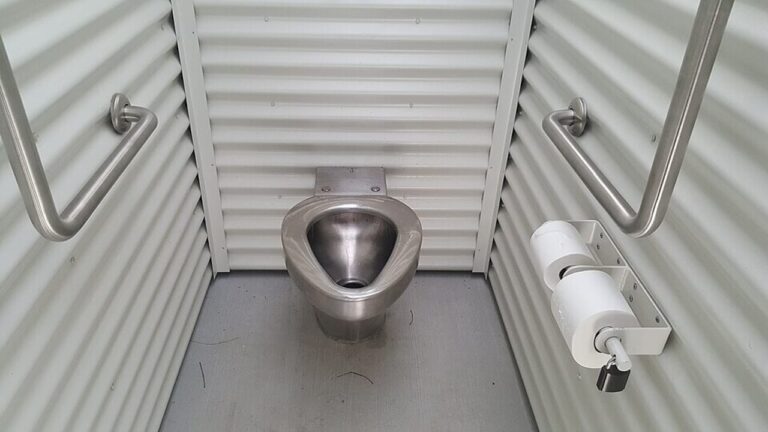
Public toilets certainly don’t have a flattering reputation in terms of hygiene. When we are forced to use them, we usually take great care not to touch the toilet seat or cover it with toilet paper before sitting down. But to tell the truth, it is not the surface we should be most afraid of: there are parts of the bathroom that are much more laden with bacteria, even harmful ones, that we necessarily find ourselves touching when we use the toilet. This is remembered by Lotti Tajouri, associate of Genomics and Molecular Biology at Bond University, in a contribution published in the journal The Conversation.
A large variety of microorganisms
How many and which bacteria can be found on the surfaces of a public bathroom? The answer depends on a series of variables, including the frequency of cleaning, ventilation and the number of people passing through the room. However, the analyzes conducted in these environments reveal that the variety of microorganisms is extremely high. Most contaminations come directly from human skin and the external environment. However, research has also isolated more dangerous pathogens, although in smaller percentages: Escherichia coli, Enterococcus faecalis and species of Klebsiella and Proteus, all capable of causing infections in humans, which can be particularly serious in fragile or immune-compromised people.
However, it is necessary to make a distinction between the simple presence of a pathogen and the real risk of contracting an infection. Although the bacterial load in some cases may seem alarming, it must be remembered that intact skin acts as an extremely effective natural barrier. For this reason, the risk of infections becomes real only when these microorganisms come into contact with the mucous membranes or with small open wounds, or if they are transferred to the mouth through hands that are not washed properly.
The dynamics of contagion
How can we come into contact with bacteria while using the bathroom? The most dangerous moment coincides with the activation of the exhaust. In fact, when we flush the toilet, the turbulence inside the cup generates the so-called “toilet plume”: a cloud of tiny droplets of water that can contain a high bacterial and viral load. These particles remain suspended in the air and can be easily breathed in if we remain near the toilet, or they can settle on all surrounding surfaces, including toilet paper, walls and soap dispensers.
In addition to inhalation, the main transmission mechanism remains surface-mediated fecal-oral transmission. And of which we are often not fully aware: many users, in an attempt to avoid contact with the toilet seat, end up touching other areas of the bathroom with their hands that are not cleaned with the same regularity. The problem is therefore not the seat itself, which is usually a dry surface that is not very hospitable to many bacteria, but everything we handle before reaching the sink.
The handle is the real danger
What is the dirtiest surface in the bathroom? It’s not the toilet seat – we said so – but the door handle, both internal and external, as well as the flush button. A study published last year in the journal Hygiene shows that the toilet seat is often one of the surfaces with the lowest microbial load, probably because it is the part that cleaners sanitize most carefully and because contact with the dry skin of the thighs is not an efficient transmission vehicle.
Instead, the handle is touched by anyone who has to leave the bathroom, often before they’ve even had a chance to wash their hands. This object becomes a collector of bacteria from hundreds of different people. The same goes for manual faucets or paper towel dispensers that require physical pressure. Microbe-laden hands touch these surfaces, leaving a trace that is picked up by the next user, in a continuous cycle of cross-contamination that the toilet seat, paradoxically, does not facilitate in the same way.
Defense strategies
How to defend ourselves when we are forced to use a public bathroom? The only truly effective solution lies in rigorous personal hygiene. Hand washing with soap for at least twenty seconds remains the gold standard of prevention; it is essential to dry them well, preferably with disposable paper, since damp hands transmit bacteria much more easily than dry ones. A practical tip is to use a piece of paper to touch the door handle when you leave, avoiding ruining the washing you just carried out.
It is also advisable to close the toilet lid, if present, before flushing to limit the aerosol effect and not to breathe close to the bowl while flushing. Finally, a common but risky habit is using your cell phone in the bathroom. The smartphone acts like a “sponge” for microbes present in the air or on the hands; Once we leave, we may have washed our hands, but we will continue to touch a contaminated device and then bring it near our face or mouth throughout the day.