

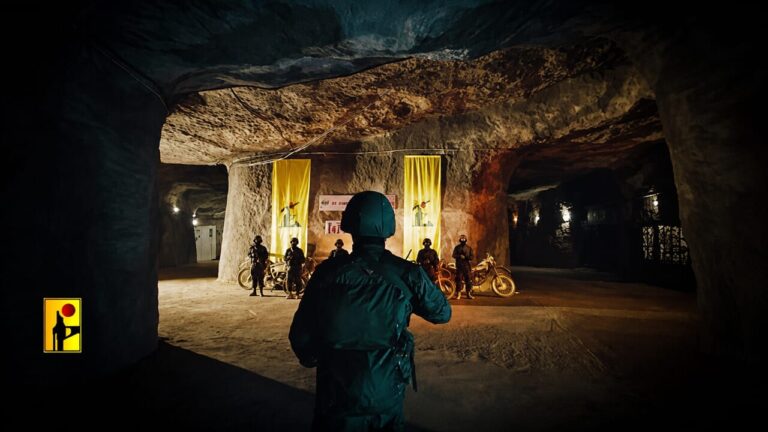
A mountain ridge in southern Lebanon, about fifteen kilometers from the border with Israel, has become one of the most sensitive points of the conflict between Israel and Hezbollah. It is called Ali al-Taher, reaches around 600 meters in height and dominates some of the main communication routes between the south of the country, the coast and the Bekaa valley. But the real strategic value of the area would not be so much on the surface as underground.
According to Lebanese security sources, Hezbollah has built a large underground complex inside the mountain with command centers, weapons depots and tunnels. Israel believes the ridge represents one of the main logistical and military hubs of the Shiite movement in southern Lebanon.
Some Israeli reconstructions claim that the headquarters of the so-called Badr Unit, responsible for Hezbollah operations north of the Litani river, may be located in the area. Under the mountain there could also be depots of rockets and precision missiles.
Why Ali al-Taher has become a political problem
Since June, the Israeli army has intensified bombings, artillery attacks and ground incursions around the ridge. The goal would be to isolate the tunnel system, cut off supplies and force Hezbollah fighters to abandon underground positions.
The battle around the ridge, however, is not just about military control of the territory. Ali al-Taher is in fact located north of the Litani river, and this element makes its fate particularly delicate.
The ceasefire agreements and United Nations Resolution 1701 have long provided for the presence of the Lebanese army and the absence of non-state armed forces in the southern part of the country. However, Hezbollah maintains that disarmament should mainly concern the area south of the Litani. Instead, Israel also wants the military infrastructure present around Ali al-Taher to be dismantled.
Lebanese President Joseph Aoun reportedly proposed the withdrawal of Hezbollah fighters and the subsequent deployment of the Lebanese army to the ridge. A solution that would theoretically allow us to avoid a major Israeli assault.
For Hezbollah, however, accepting such a proposal would have consequences that go far beyond a single military position. If disarmament began to be applied also north of Litani, it could pave the way for the progressive dismantling of other bases and infrastructures of the movement in the rest of Lebanon.
Ali al-Taher therefore risks becoming a precedent.
The risk of Iranian involvement
To further complicate the situation there is also Iran, Hezbollah’s main ally and financier.
In recent months, information has circulated about the possible presence of men from the Iranian Revolutionary Guards inside the tunnels of the ridge and Tehran would have sent a warning to the United States, via Oman, against a possible major Israeli assault in the area.
It is one of the reasons why Washington is apparently trying to avoid a new escalation, preferring a negotiated solution or a progressive isolation of Hezbollah positions.
The hill that can change the balance of Lebanon
The Ali al-Taher crest therefore represents much more than a military position. Some of the main connecting routes between Hezbollah’s southern front, the Iqlim al-Tuffah area and the Bekaa valley pass from those heights, where the movement maintains an important part of its infrastructure. If Israel managed to conquer the area and destroy the underground system, Hezbollah would lose one of the most important strategic nodes of its device in southern Lebanon.
But above all the political meaning of the defeat would weigh heavily. The fall of Ali al-Taher could in fact become the first step towards disarming Hezbollah even beyond Litani. For the Shiite movement, resisting on that hill therefore means defending not only a military base, but the very principle of its armed presence in Lebanon.
And this is why a small mountain ridge is becoming one of the places where the future of the war could be decided.