

Revolutionize healthcare by ensuring services guaranteed by a few and earning not so much on the tests and analyzes carried out, but if the patients are well and do not need hospitalization. The recipe is from the startup Even healthcare and there is an Italian behind it.
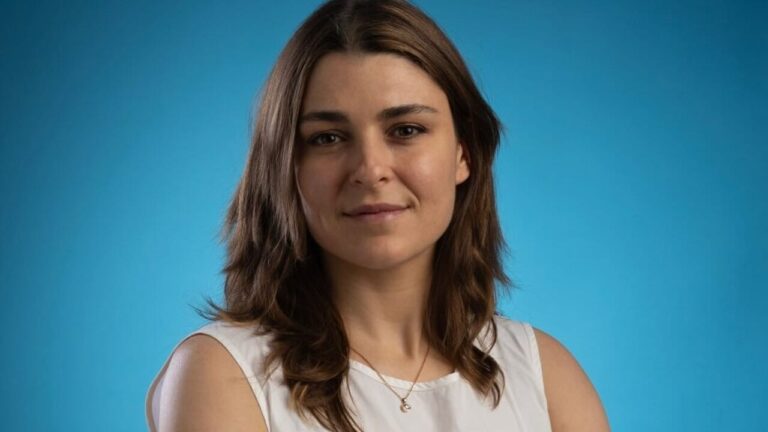
Who is Matilde Giglio
Matilde Giglio is only 35 years old, but she has already done a lot. Roman and passionate about politics, after her three-year degree in Economics at Luiss she decided to go to England to complete her studies at the London school of Economics and Political science. In 2016 she founded the startup Compass news with Mayank Banerjee, who would follow her at Even, which wanted to be the Spotify of journalism. He trained machine learning algorithms before ChatGpt with the goal of collecting, summarizing and personalizing the news offered to subscribers. The idea is popular and attracts investments from Bloomberg beta and the Hambro Perks investment fund. Compass manages to reach 250 thousand active users, but closes in 2019 because it fails to become scalable.
However, Hambro Perks lets her join its team and, thanks to her work, Giglio takes the reins of the division dedicated to the healthcare sector and financial technologies. And it is thanks to her experience that one of Compass’ investors introduced her to the Indian politician Rahul Gandhi. It is 2019, the activist offers her the leadership of social communication of the Indian National Congress. Gandhi will not be able to oust Narendra Modi from the prime minister’s seat, but Giglio will need those six months of electoral campaign to get to know India and the state of its healthcare system better. This is why in December 2020 he founded Even Healthcare, a healthcare delivery and financing model created to integrate health insurance and medical services into a single platform.
The evolution of Even
As the site reports TechcrunchEven became operational in February 2021 and launched its services in June of the same year. At the beginning, subscribing to its services cost around 180 euros a year for a person aged between 18 and 35. Previously, Even aimed to offer what the country’s insurance companies did not guarantee: unlimited consultations with GPs, diagnostics and analyses.

Meanwhile, the business model evolves and Even follows the US examples of Kaiser Permanente and United Health. It is structured as a payvidor, i.e. a company that manages health insurance (collaborating with them) and provides medical care through owned hospitals.
How it works
So how does Even Healthcare work? To understand the revolution brought to India by Matilde Giglio we must first understand the context in which it moves, a system far removed from our National Health Service. The country has public hospitals and assistance programs financed by the central government and individual states, but only for the poorest families (which are still 120 million families considered economically vulnerable). But a substantial part of the population continues to directly bear the cost of treatment.
Out of a total of 1.48 billion people, this means that almost one billion people are not covered by the most important federal program. If other forms of federal or state support are excluded, most people must pay for benefits out of pocket or buy insurance. And this is where Even Healthcare comes in.
The startup wants to overturn the traditional business model of hospitals: it earns money when patients are not hospitalized, while doctors are paid a fixed salary and can have bonuses based on the clinical results obtained. The vision of an insurer is combined with that of a hospital, the objective is to reduce unnecessary tests and constantly assist people so that they do not need to enter hospital.
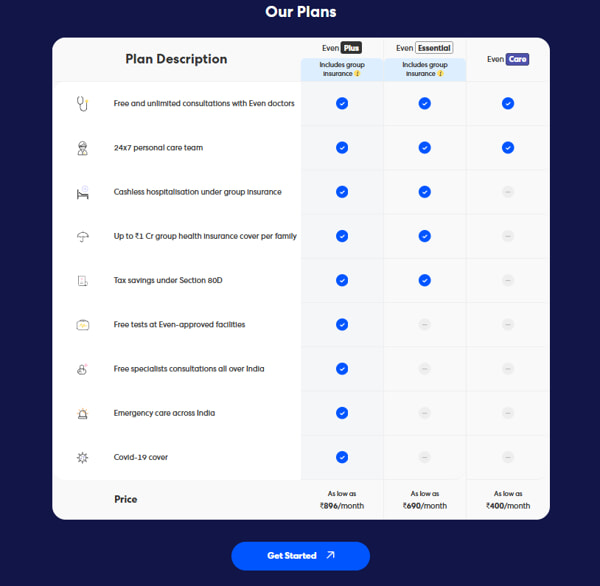
Even Healthcare offers complete healthcare: prevention, specialist visits and, if necessary, hospitalization. The startup offers three subscription plans with increasing services: Even care (400 rupees, equivalent to 3.7 euros per month, as of October 21), Even essential (6.5 euros) and Even plus (9 euros). To understand these figures it is necessary to compare them to the average salaries in India. How to read it in the 2025 survey in the workforce, only 23.6 percent of the population has a regular employment contract with fixed pay. Among these, the average monthly income is 24,217 rupees (228 euros) for men and 18,353 rupees (174 euros) for women.
The relationship with insurance companies
The approach of Matilde Giglio’s startup is different from normal Indian hospitals. Even declares that it has eliminated the economic incentives linked to the number of tests and operations carried out from doctors’ salaries. In the first programs managed with insurance companies, the company claims to have recorded an unplanned readmission rate of less than 1 percent, compared to an industry average of between 8 percent and 15 percent.
According to what was explained by CEO Mayank Banerjee, most of the revenues still come from patients who pay for treatments, while a part comes from relationships with insurance companies, but Even is working with insurance companies on a model that can also reward avoided hospitalizations.

The startup cannot select its own patients, who are instead referred by the insurance companies with which it has entered into agreements. Collaboration with insurance companies is among the reasons for the success of the company’s business model. From the signed contracts comes a certain pool of people that allows operational profitability to be achieved in a short time.
The role of AI
To oil the system created by Even Healthcare there is artificial intelligence. Ai allows the startup to scale the quality of care and maintain standards in each hospital so as to avoid divergences between structures. Through the computer vision function, computers can process and understand the images recorded in hospitals and thus monitor everything that happens. “During interventions, the system checks the checklists and immediately reports any anomalies, allowing interventions to be made while the procedure is still underway”, underlined Giglio in an interview with Adnkronos.
AI also serves to speed up bureaucratic procedures – 85 percent of the documentation is automated – but the final control of the doctors remains. This way doctors have more time for visits. The AI is also capable of contacting patients as a voice assistant by speaking in over 60 Indian languages and dialects. Finally, other tools are used to compile clinical and insurance documentation.
Funding and future projects
On October 19, Even Healthcare announced that it had closed round B of financing by raising $50 million. The operation was led by the American fund Khosla Ventures, with the participation of Alpha Wave. The startup has therefore reached a valuation of 300 million dollars, and the total declared collection exceeds 120 million dollars. Khosla Ventures is one of Even’s legacy investors as it backs it from its 2021 seed round of $5 million in funding.
But there are many who believe in society. Founders Fund, created by Peter Thiel, co-founder of Palantir together with Joe Lonsdale, who was also among the investors with his 8VC, invested in the startup. In November 2022 Even had obtained another 15 million dollars from Alpha Wave and Aspada, now Lightrock. October 2024 saw the announcement of a $30 million round A.

The company said it has more than 500,000 members from ten Indian cities and currently operates two hospitals in Bangalore, with a third announced after the end of the summer. Hospitals already open have achieved operational profitability, according to Even. In the next six months Matilde Giglio and her team hope to open five more hospitals, all in Bangalore.
Despite the results declared by individual hospitals, the economic sustainability of the entire society remains a challenge. According to company documents cited by TechCrunch, Even Healthcare ended fiscal 2025 with revenues of 272 million rupees and a net loss of 902 million, about $9.5 million. The company also reduced its staff by approximately 350 in August 2026 as part of a restructuring linked to strengthening its hospital business. Co-founder Mayank Banerjee explained that the company could get closer to profitability by stopping investment in expansion, but chose to continue growing.
Dossier is the exclusive subscription investigative section of The Vermilion. If you want to support our journalistic work and subscribe, Click here.