
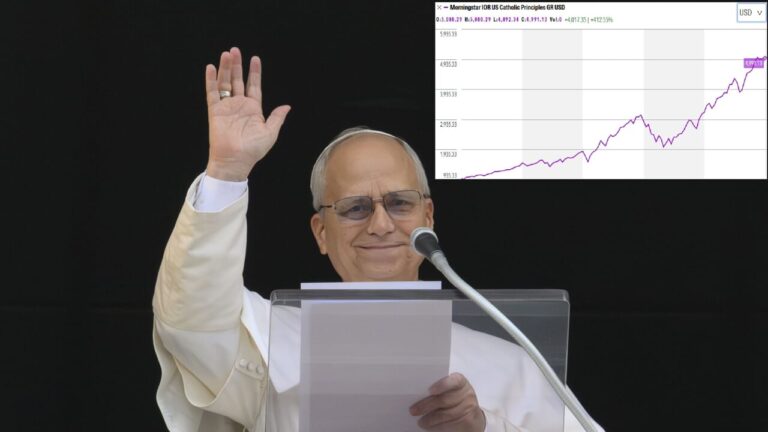
You can invest in the stock market while remaining faithful to the social doctrine of the Catholic Church. At least, this is what the IOR, the Institute for Works of Religion, the historic financial institution of the Vatican State, says. For the first time it is in fact possible to find packages of shares “certified” by Pope Leo XIV’s bank because they respect Catholic ethics. There are two versions launched, in euros and dollars. The composition is notable: on the European side there are banks, luxury companies, semiconductors or funds linked to Chinese messaging apps; in the dollar part, the presence of Silicon Valley and global financial giants stands out.
How is the IOR’s business going?
According to the latest annual report published by the Institute, the IOR manages a total collection of 5.7 billion euros, serving over 12,000 clients including religious orders, dioceses, Catholic institutions and Vatican employees. The net profit recorded was 32.8 million euros, up 7 percent on the previous year. It comes from interest on the entrusted money and from investments in the financial markets, mainly in government bonds. Where do they end up? The Institute reinvests its wealth by allocating it between dividends paid to the Pope and financing for the needs of the Church in Italy and around the world.
For example, in 2024 Pope Leo XIV received a dividend of 13.8 million euros. It is not a “personal” transfer, it does not enrich the Pontiff who in fact used the sums for “charitable works”. The rest of the profits were used to support missions in developing countries, dioceses around the world or for donations to poor families generally reported by their parishes.
Church-sponsored financial products
Now the IOR is diversifying. The institute has announced the launch of two new stock indices: the Morningstar Ior Eurozone Catholic Principles and the Morningstar Ior Us Catholic Principles. As implied by the acronyms, the first is in euros and the second is in dollars. Developed with Morningstar, one of the best-known global providers of market information and index solutions, the press release for the new products states that “they are built according to market best practices and in accordance with Catholic ethical criteria, and have been designed to offer a reference for Catholic investments around the world”.
The two stock indices are made up of fifty issuers each and focus on large and mid-cap companies. Inside, a portfolio of shares attributable to companies for a total of 2,700 billion euros and over 28,000 billion for the dollar part. “They are designed to incorporate future developments in its approach to Catholic ethical investing,” reads the launch statement. But what’s inside?
What’s inside the stock index launched by the IOR in Euro
The bulk of the euro basket is made up of banks or financial services companies: the Spanish Banco Santander and Banco Bilbao Vizcaya Argentaria, Unicredit, Allianz. But other high-sounding names appear within the index. In addition to banks and financial companies, in the IOR portfolio in euros we find:
- Asml Holding: Dutch company crucial for semiconductors and leader in lithography machines. The main customers are Samsung, Intel and Tsmc;
- Deutsche Telekom: the German telecommunications company among the most important in Europe;
- Sap: German multinational that produces software for companies;
- Hermes: the well-known French fashion and luxury company;
- Prosus: technological investment holding company from the Netherlands known for its significant stake (24 percent) in Tencent, a Chinese technological giant which, among other things, developed the most used messaging platform in China, WeChat;
- Vinci: French group active in the field of transport, among the most important in the world:
This is just the top 10 of the 50 listed companies that are part of the euro portfolio. Curiosity: the companies referable to Italy are only 8.6 percent, decidedly less than in France (25.7 percent) and Germany (22.8).
Big Tech, semiconductors, Jp Morgan: what’s in the dollar part
In the top 10 of the dollar basket we find the Big Tech companies of Silicon Valley. Meta, Alphabet parent company of Google, Tesla, Amazon, Apple. But not only that, in the IOR-sponsored index we also find Nvidia, the global semiconductor giant, and JP Morgan, among the best-known investment banks in the world.
Broadcom, one of the world’s main chip suppliers, and Micron also represent the world of semiconductors. In total, the capitalization of the companies included in the portfolio in dollars reaches the figure of 28,600,000,000, twenty-eight thousand billion and 600 million dollars.
Are the funds indicated by IOR inspired by the Social Doctrine of the Church?
It was precisely the previous Leo, the thirteenth, who inaugurated the Social Doctrine of the Church in 1891 with the encyclical Rerum Novarum. At the end of the 19th century, the Pope addressed workers and, in particular, those in industries, “afflicted by unworthy poverty”. The “bank” of his successor – named – Leo the Fourteenth now has financial references on the markets that would respond to that doctrine, enriched over the years by other inspiring principles, such as ecological ones, the common good and the dignity of the person.
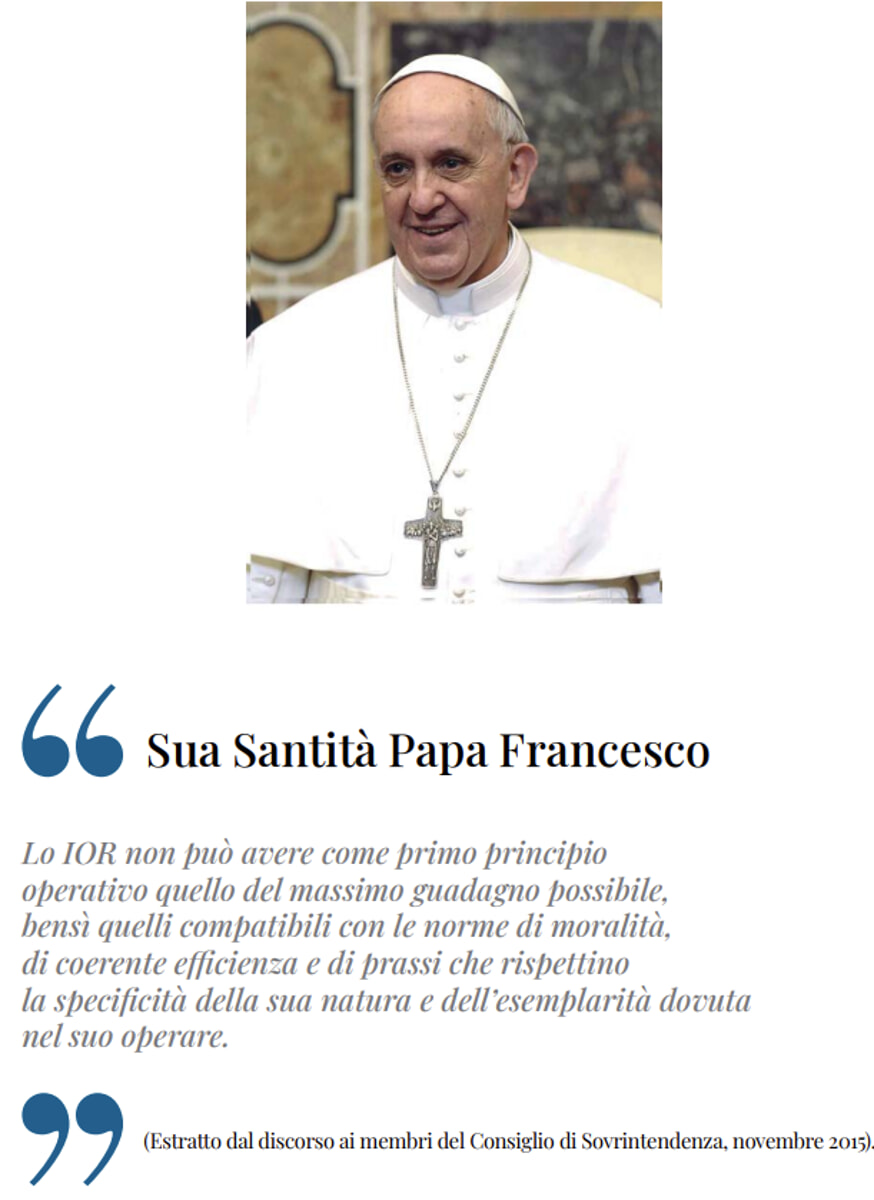
The presence of banks stands out within the two portfolios: in 2018, under Pope Francis, the “Oeconomicae et pecuniariae quaestiones” of the Congregation for the Doctrine of the Faith criticized the “financialisation” of the economy, denouncing the risk that capital may not always be at the service of the individual. A finance “more attentive to ethical principles – we read in the document – and a new system of rules for financial activities, which should limit speculation and recognize the value of the real economy”.
BlackRock, who is the giant that is buying Italy
The two IOR indices exclude links to weapons, pornography, tobacco, gambling and child labour. The companies included – of which we only know the first 20 that weigh most in the composition – over the years have faced critical issues and criticisms precisely on the “strong” themes of the social doctrine of the church: ecology, dignity of work, protection of minors and the person, legality, common good, social responsibility.
From the uses of artificial intelligence to the structure of social media algorithms, to investments in fossil fuels and complaints about working conditions: many of these companies have had to deal with these critical issues. Is there adherence to the Social Doctrine of the Church? There are doubts.