

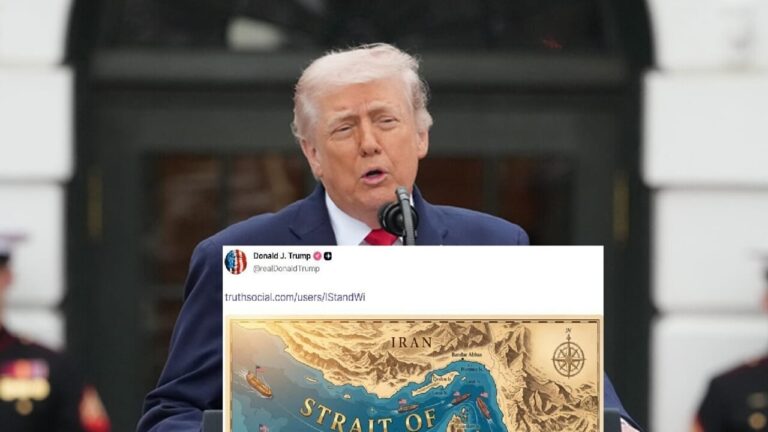
More and more effects on the economy from the war in Iran and the months ahead do not look rosy. Inflation in Italy recorded a clear acceleration in April 2026, doubling the February estimates and going from 1.5% to 2.9%. Italy, historically characterized by low structural growth, has thus reached the Eurozone average, which also increased from 1.9% to 3%. The increase in prices of energy goods caused by the crisis in the Strait of Hormuz pushes the tensions on prices: the consequent repercussions directly affect food goods and the shopping cart. Donald Trump has new military options on the table: among these, the new “Dark Eagle” hypersonic missiles.
Strait blocked and oil goes up
Global Brent crude prices have surpassed $125 a barrel, reaching their highest since the outbreak of war in Ukraine in 2022. The prolonged closure of the Strait of Hormuz and the stalemate on negotiations are being felt. The price of Brent is still well above the $73 a barrel at which it traded before the war, and almost double the price at the beginning of the year, before tensions between the United States and Iran began to rise.
Economists warn that if the disruption to oil supplies extends into the second half of the year, it could trigger a global recession. Some countries are already suffering from fuel shortages, such as jet fuel, as well as rising inflation and falling consumption.
According to Vandana Hari, founder of energy market analysis firm Vanda Insights, oil prices “can only go up” until the strait is finally reopened. “At the moment, how and when this might happen is impossible to predict,” she added CNN.
Interest rates blocked, for now: the ECB’s decision
Meanwhile, the European Central Bank decided to keep interest rates unchanged and warned of growing risks to growth and inflation prospects due to the war in the Middle East. At the same time, President Christine Lagarde said that the Council, which decided unanimously to keep rates unchanged, “intensively discussed a possible increase in interest rates”.
The government left the interest rates on deposits with the central bank, main refinancing operations and marginal refinancing operations unchanged at 2.00%, 2.15% and 2.40%, respectively. “Upside risks to inflation and downside risks to growth have intensified,” the ECB said. “The longer the war lasts and the longer energy prices remain high, the greater the likely impact on overall inflation and the economy,” the document reads.
Trump’s new military options: what’s happening in the Strait
Intelligence sources confirm ad Axios that the United States Central Command (Centcom) is presenting new military options to President Trump today. The operational plans include the possibility of targeted attacks – defined as “short and powerful” – against Iranian infrastructure, with the precise aim of breaking the negotiating stalemate on Tehran’s nuclear program.
Another plan, expected to be shared with Trump, focuses on seizing part of the Strait of Hormuz to reopen it to commercial shipping, an operation that could include the use of ground forces. Then there is the option, already discussed in the past and which could also emerge during the briefing, of a special forces operation to secure Iran’s stockpile of highly enriched uranium. Military planners are also considering the possibility of Iran taking military action against U.S. forces in the region in retaliation for the blockade.
Strait of Hormuz traffic remains tightly constrained
As of 28 April, 7 vessel crossings were recorded (+1 d/d), still at depressed levels. Activity remains selective, led by shadow fleet tonnage, with just 2 low-risk vessels and mostly west–east commercial flows.
No new physical… pic.twitter.com/N0LE4vxpJh— Kpler (@Kpler) April 29, 2026
According to some sources, the Chief of the Joint Chiefs of Staff, General Dan Caine, should also participate in the briefing scheduled for today, Axios concludes, recalling that Cooper held a briefing similar to this one on February 26, two days before the United States and Israel’s war against Iran began. A source close to Trump said that briefing contributed to Trump’s decision to enter the conflict.
The Iranian leadership, unable to export oil and with reserves exhausted, replied that the American naval blockade will soon be met with “practical and unprecedented” action, rejecting any form of negotiation under armed threat.
The Dark Eagle, a new hypersonic missile costing 15 million dollars per warhead
There is also a $15 million hypersonic missile to counter Iranian threats in the Middle East and significantly reduce the capacity of Tehran’s launchers. Centcom thinks about it.
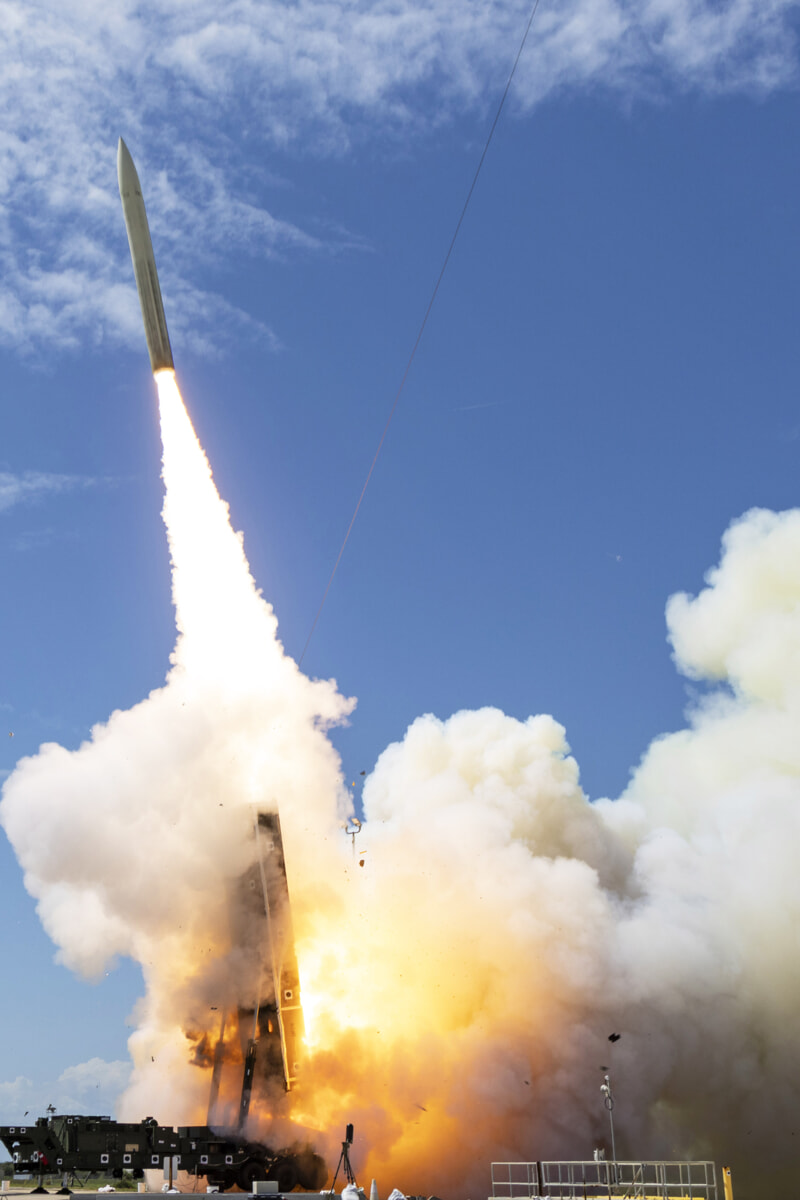
The Dark Eagle, says the fact sheet in the US Congressional archives, is “a long-range hypersonic weapon with a declared range of nearly 3,000 kilometers”, and consists of a ground-launched missile equipped with a hypersonic glide body and associated transport, support and fire control equipment. The missile, “is intended to provide a long-range conventional precision strike capability against time-sensitive and heavily defended targets, particularly in contested environments.”
LIVE – Hormuz becomes “Trump’s strait”. The hypothesis of new “short and powerful” attacks against Iran
How can we not immediately think of the Iranian launch systems which experts estimate have been reduced by only 50% – if not less -, and which need just 5 minutes to be positioned outside, fire the missile and then return to the hundreds of bunker-positions present in every strategic area of the country.