

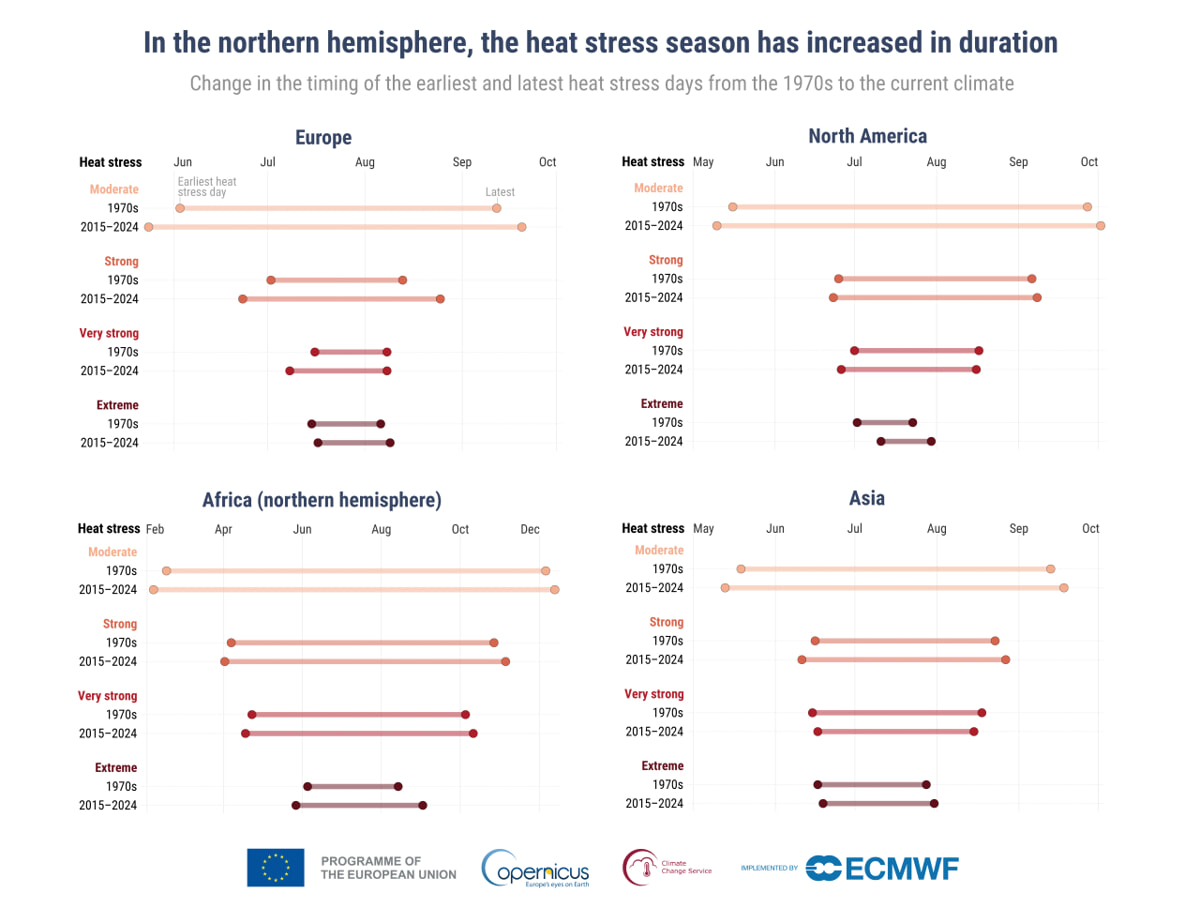
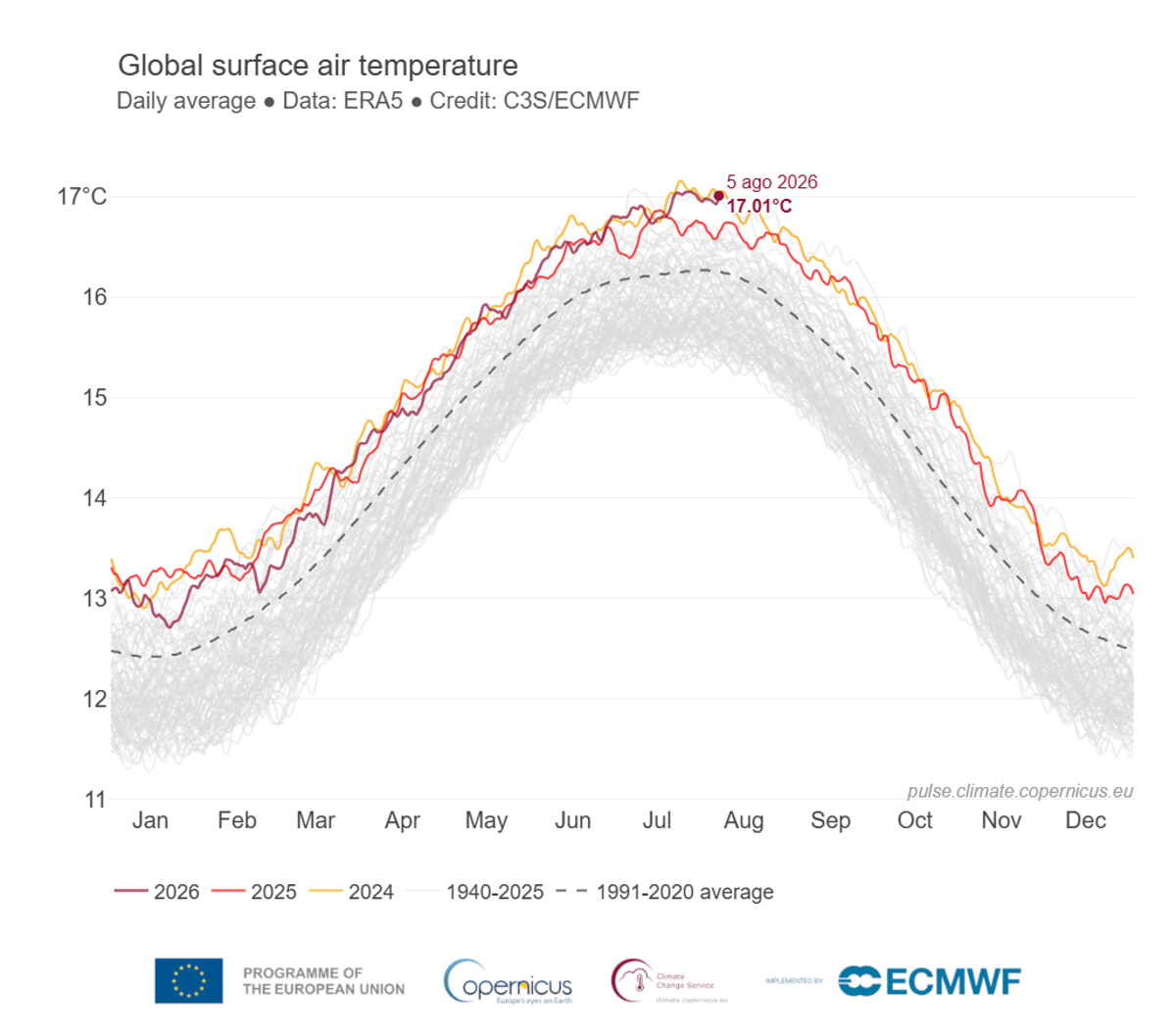
The red dots are only multiplying these days, and it seems that the heat will continue to accompany us for a while yet. Not that it’s anything new: for years now every new summer has set some new temperature records. Experts have long warned that the situation is not destined to improve, at least as long as we continue to burn fossil fuels and emit billions of tons of CO2 into the atmosphere. A problem that, unfortunately, does not seem to have a solution, at least for the moment. The question then is clear: to what extent can human physiology and our urban architecture resist the constant increase in temperatures?
What awaits us in the coming decades
Climatological projections for the next decades tell of a Europe that will experience increasingly marked and frequent summer heat waves, with particular severity in the Mediterranean basin (and therefore in Italy), which is currently one of the areas of the planet where temperatures are increasing fastest.
The main cause of climate change, as we know well, are greenhouse gas emissions resulting from the combustion of fossil fuels. And despite international agreements made over the last decade, global emission rates have only increased. The Global Carbon Budget has estimated 38.1 billion tonnes of fossil CO₂ for 2025, an increase of 1.1% which marks a new historic high. We are therefore increasingly far from the drastic contraction necessary to stabilize the global climate within the safety threshold of 1.5 degrees above the averages of the pre-industrial era.
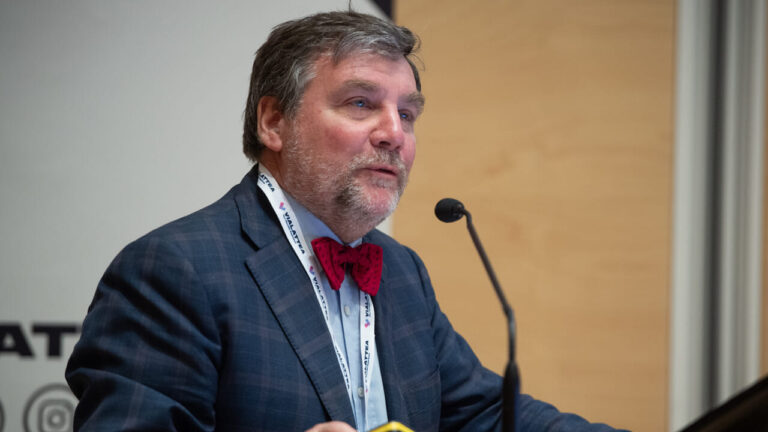
If, and when, the nations of the world finally manage to actually cut emissions, the problem will unfortunately not be solved. Not from one day to the next, at least, because the phenomenon of thermal inertia intrinsic to the Earth system intervenes to complicate the picture. As Luca Mercalli, climatologist and president of the Italian Meteorological Society, explains to Dossier The Vermilion, the atmosphere and oceans respond with decades-long delays to alterations in the chemical composition of the air. “It’s not that the moment we start to reduce emissions the increase in temperature suddenly stops – recalls Mercalli – unfortunately we loaded the climate system like a spring in the last century, and now temperatures will necessarily continue to increase: we hope it will be a smaller increase compared to the worst scenarios, but in any case there will always be a plus sign”.
Tropical nights and heat never seen before: which are the Italian cities where temperatures have increased the most in the last 30 years
Stopping the use of fossil fuels as soon as possible remains the only strategy capable of avoiding the most catastrophic scenarios emerging from climate models. But returning to warmer climates will take centuries. And so alongside climate mitigation efforts, it is essential to start working seriously on adaptation: the risk is that with increasingly important and frequent heat waves, entire areas of the planet will soon reach climatic conditions at the limits of what our organism can tolerate.
The limits of biological tolerance
The human body’s ability to disperse excess heat depends largely on the evaporation of sweat on the skin surface. When the external temperature exceeds 37 degrees, it is sweat that ensures that we keep the internal temperature within a tolerable range: in a dry climate, we can safely tolerate temperatures that exceed 50 degrees; However, if the humidity in the air is very high, evaporation is hindered, the body sweats but does not cool down and the temperature rises as if we had a fever. At that point heat stroke and all thermal stress pathologies set in.
“Between 2015 and 2025 there were the eleven warmest years on record globally”
World Meteorological Organization
To measure the body’s ability to cool itself through sweating, a parameter known as wet-bulb temperature is used. Around a wet bulb temperature of 35 degrees, it is estimated that after about six hours the thermoregulation capacity of the human organism stops completely, leading to hyperthermia and heat stroke in a few hours, even in young, healthy subjects and in conditions of total rest in the shade.
Currently, there are several areas of the planet that are at risk of experiencing similar conditions for prolonged periods in the not-too-distant future: large areas of the Indian subcontinent, the Persian Gulf and the Red Sea Region. In these regions, the combined rise in temperature and atmospheric humidity threatens the liveability of entire urban and rural contexts, determining excessive mortality rates and pushing towards future mass migrations.
Even on Italian territory the clinical and epidemiological picture shows a clear worsening. In areas with high population density such as the Po Valley, the combination of high summer temperatures and high humidity rates generates conditions of severe thermal stress. As Mercalli notes, in these areas extreme levels of hardship are regularly encountered, capable of putting the lives of vulnerable groups at risk, such as the elderly and chronically ill, but also of workers employed in outdoor physical activities in the construction and agriculture sectors.
Urban adaptation strategies
The context is therefore this: global warming is now a reality to be reckoned with, and if without mitigating emissions we risk making things even worse, it is now time to also think about how to adapt to the increase in temperatures that we already experience on our skin today. Firstly, in cities, where the “urban heat island” effect, caused by the massive presence of asphalted and cemented surfaces amplifies temperatures by up to 4 or 5 degrees compared to the surrounding rural areas.
The microclimate mitigation interventions applicable in the urban fabric include various possible solutions. Urban reforestation allows a reduction in local temperature estimated at between 2 and 3 degrees Celsius, thanks to the joint effect of solar shading and leaf evapotranspiration. Highly reflective surfaces and pavements, with the use of asphalts added with light grit or special resins, and the light painting of building roofs, allow solar radiation to be reflected instead of absorbing it, lowering the temperature of road surfaces and buildings (it is estimated that a roof that reflects 70-80% of the incident heat could reduce the internal temperatures of buildings by 2-3 degrees).
The city that lowered the heat by two degrees with just 6 euros per inhabitant
Public climate shelters are another possible solution: cooled municipal spaces accessible for free, which guarantee priority protection to the weakest socio-economic groups, and in general to anyone without air conditioning at home. In short, there are many possible routes, and they must be studied city by city, if not neighborhood by neighborhood, street by street. There will certainly come a time when designing urban spaces without keeping the problem of heat waves in mind will be impossible and dangerous. But don’t expect miracles.
“Adaptation is the last resort, it is what we can do today, when the damage has already been done, to lower the temperature of an urban area by a few degrees,” concludes Mercalli. “But when you have 45 degrees and you lower it by 3, you have 42. It’s not that suddenly you’re cool and you’ve solved the problem: you’ve just removed a few degrees, which can give a small local relief, small and momentary because it will soon be canceled out by the further increase in temperatures. Unless you decide to act once and for all on the causes.”
Dossier is the exclusive subscription investigative section of The Vermilion. If you want to support our journalistic work and subscribe, Click here.