

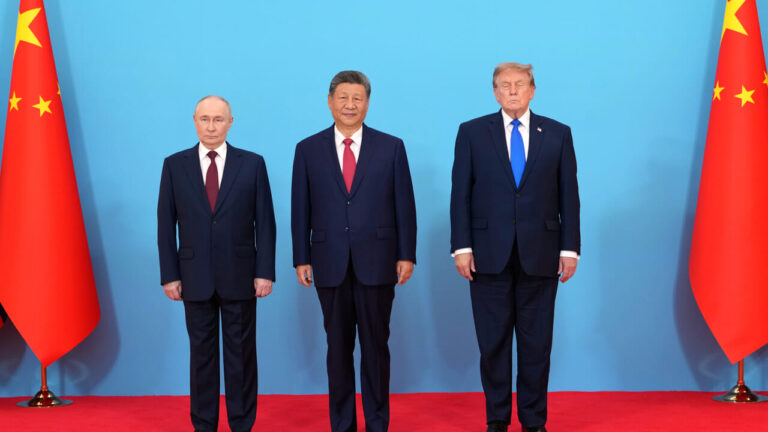
There was an American, a Russian and a Chinese…
Once upon a time, a meeting between three leaders key to the world order would have attracted great political interest. But the Shenzhen summit between Vladimir Putin, Xi Jinping and Donald Trump appeared mostly grotesque. The beginning of a joke almost comes to mind: an American, a Russian and a Chinese meet…
The three are very different in culture, education and political posture. Yet they look alike. What they share is a conception of power that is very distant from the idea of a liberal world that the West has tried to build over the last eighty years. Three leaders who do not share the same interests, but recognize themselves in a vision of international relations based on strength.
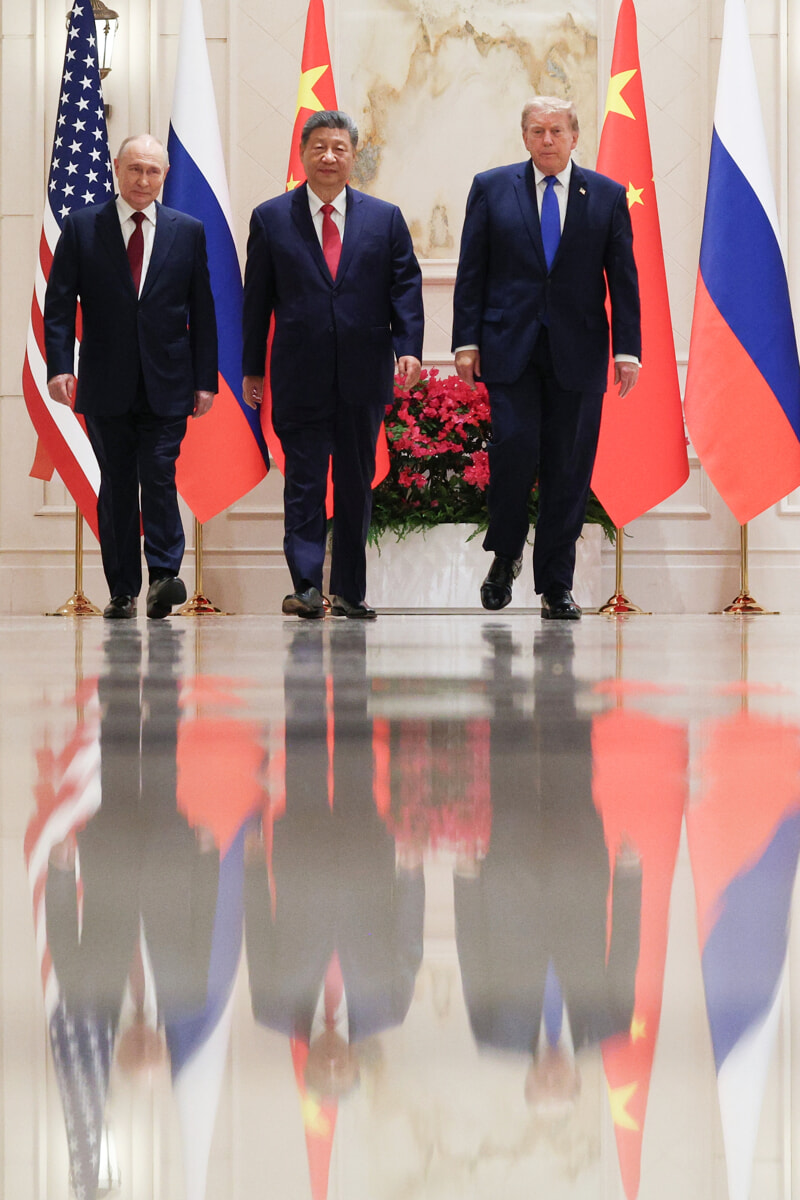
For this reason, the image of the three sitting at the same table, discussing international peace and security, was already in itself a masterpiece of paradoxes: a bit like when the UN entrusts Iran with a place on the committee that helps guide programs on women’s rights and human rights. On the one hand, Putin, recipient of an arrest warrant from the International Criminal Court for the illegal deportation of Ukrainian children; on the other, Xi, the leader who has concentrated unprecedented power in contemporary China in his hands; and then Trump, who transformed the presidency into an extension of his own business: from familyism elevated to a system of government, up to the sensational, contradictory, often immediately denied announcements that make the markets rise and fall. Three men who embody different political models, but who share a certain intolerance for the constraints of the liberal international system.
The summit, organized on the sidelines of the Apec summit, was above all an event in the world spotlight. Photographs, handshakes, solemn declarations on the responsibility of the great powers. Trump called Putin “friend.” A gesture aimed at bringing the Russian president back to the center of the international scene and, at the same time, at isolating the European Union.
And it was the EU that was the star guest of the summit. One way of defining it as irrelevant in the definition of the new international balances. But, however weak and incapable of speaking with one voice, it nevertheless remains an economic power that everyone must reckon with. It is Ukraine’s main support, a key trade and technological interlocutor for China, and an ally and key market for the United States. Of course, the three lords of the world can try to marginalize it, but they cannot erase it. And it is perhaps also precisely for this reason that there was no mention of Ukraine. By now, the idea of a peace deal made while leaving the EU and Britain off the table is good stuff for photo opportunities, but it will never lead to a cessation of fighting or treaties.
The proof arrived on the same day as the Shenzhen summit, with the meeting in Berlin of the Coalition of the Willing, organized simultaneously in a way that was not at all random. While Trump, Putin and Xi discussed the global order according to their own incompatible agendas, Zelensky and Ukraine’s main allies gathered in Berlin to reiterate that no agreement on war can be decided over the heads of the Ukrainians and without considering European security. Two images, two ideas of international order. On the one hand, the diplomacy of the great powers, based on the logic of force and which treats countries as objects of negotiation; on the other, a coalition that claims the rights of sovereign states.
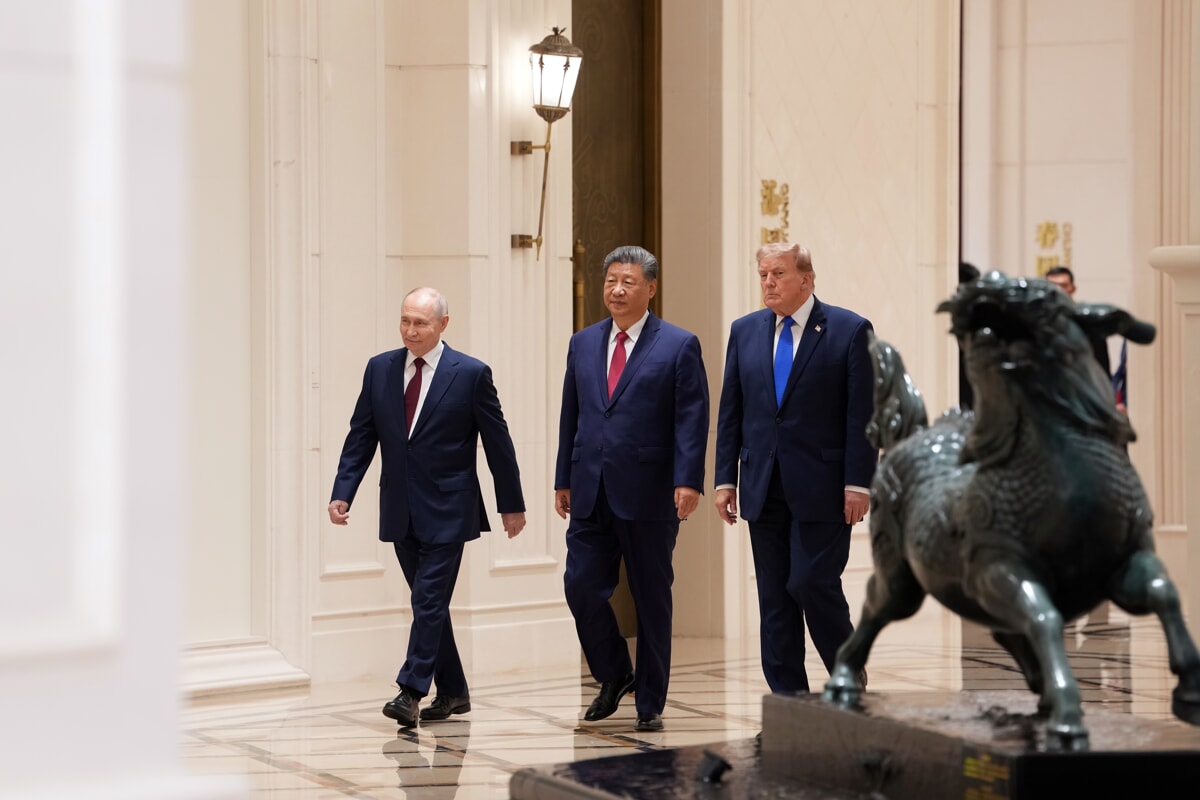
The results of the Shenzhen summit, as expected, were very modest. The final declaration was limited to energy cooperation, nuclear safety and four points on the reform of the United Nations (considering that France and Great Britain, permanent members of the Security Council, were not seated at the table, we could say that it was like calling a condominium meeting leaving half the owners out). No references to Ukraine or Iran, no concrete commitments. The three also reiterated that a nuclear war cannot be won and must not be fought: a principle that is difficult to dispute, but which does not exactly represent a diplomatic achievement. This was achieved a few decades ago.
More significant is the passage on the immunities of state officials and the limits of the jurisdiction of the International Criminal Court. Putin, recipient of an arrest warrant from the same Court, found an ally in Trump in the battle against the judges. After all, when it comes to immunity, the American president seems to have a rather personal interest. The final declaration goes in the same direction: delegitimizing the institutions and rules of international law to affirm an order in which it is no longer the rules that place limits on power, but force that determines the rules. Talking about peace while dismantling the instruments that should guarantee it is the sum of the paradox of the entire meeting.