

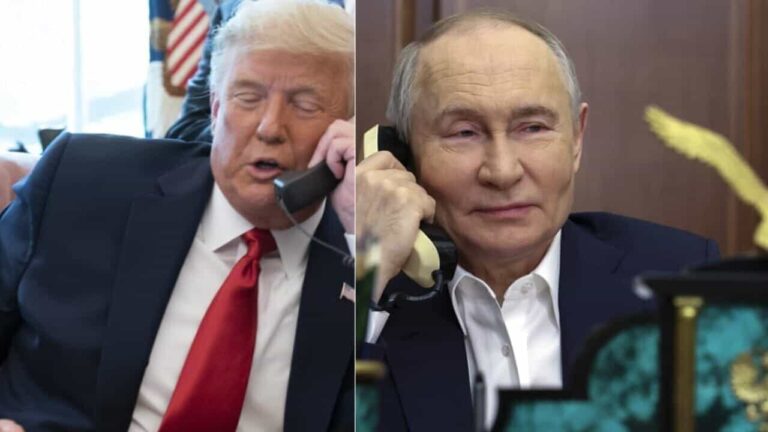
US President Donald Trump has signed a law introducing a broad package of sanctions against Russian officials, banks and a clandestine fleet of oil tankers, with the aim of reducing the resources available to Moscow for the war in Ukraine. The measure, also drafted by Democratic Senator Richard Blumenthal, was approved with a large bipartisan majority by both houses of Congress: 86-11 in the Senate and 262-159 in the House.
The law also represents the final legacy of Republican Senator Lindsey Graham, who died in July, who had worked on the measure for more than a year.
But what will actually change with the “Lindsey O. Graham Sanctioning Russia and Iran Act of 2026”? The first news directly concerns the Russian financial system. Within 30 days the administration will have to apply new restrictions on the Central Bank and sanctions against Sberbank, VTB, Gazprombank and other state-controlled institutions. American operators will also be prohibited from transferring money to the Russian government and from new investments in the country.
The crackdown on the shadow fleet
The other target is the system Moscow has built to continue exporting oil while bypassing Western restrictions. The law requires the administration to identify and block ships in the so-called “shadow fleet,” including those without adequate insurance or used to evade the price cap on Russian crude. Owners, operators, insurers, commanders and even managers of foreign ports offering services to sanctioned oil tankers may also end up in the crosshairs. The list must be reviewed every 180 days.
The risk of tariffs of up to 100 percent
However, it is outside Russia that the law can produce the most serious effects. Washington will be able to hit tariffs of up to 100 percent on all goods coming from the five largest countries that purchase Russian oil or gas and from the main countries used to circumvent sanctions. The measure therefore mainly concerns Moscow’s large energy customers and aims to put these governments before an economic choice: reduce purchases from Russia or risk a sharp increase in duties on the American market. The ranking will be updated every six months.
Russian imports into the United States could also face tariffs of up to 500 percent. However, Trump retains a wide margin of maneuver: he can grant exemptions justifying them with the American national interest and will be able to revoke the measures in the event that Moscow signs a peace agreement accepted by Ukraine and ceases hostilities.
This is the real leap compared to previous sanctions: not only targeting those who sell Russian oil, but increasing the cost for those who continue to buy it and for the entire financial and maritime network that allows Moscow to transform it into revenue.
The domino effect on oil
The law does not automatically imply more expensive petrol and gas, but it significantly increases the risk of increases if it leads to the disappearance of a significant share of Russian exports from the market. The mechanism is quite simple: if India, China or other large customers reduce Russian purchases to avoid American sanctions, some of Moscow’s oil could become more difficult to place on the market. If the world’s actually available supply decreased, the price of Brent would rise, with rapid consequences on fuels.
The risk is particularly relevant now, because the oil market is already under strong pressure and operators fear that further restrictions on Russian exports could push international prices even higher.