

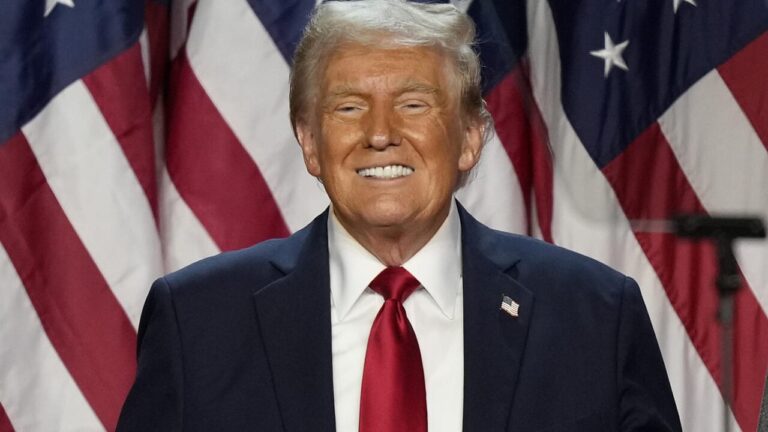
“An agreement has been extensively negotiated, pending finalization, between the United States of America, the Islamic Republic of Iran and various other countries. The final aspects and details of the agreement are currently being discussed and will be announced shortly.” With these words, written as usual on Truth, American President Donald Trump announced to the world the possible turning point on Iran. The tycoon goes further and also announces the reopening of the Strait of Hormuz as imminent.
However, the enthusiasm is chilled by a launch from the Iranian Fars news agency relaunched by Al-Jazeera. Citing the Revolutionary Guards, it states that Trump’s post on social media is propaganda and that no commitment has been made regarding Tehran’s nuclear program.
We understand better what is happening and what, according to the American press, are the key points of the agreement that has been found.
Trump’s announcement on peace in Iran
Trump spent Saturday May 23rd in his study at the White House. The news tells of him intent on working with his collaborators on the Iran dossier while, outside the building, a man opened fire near a checkpoint of the presidential building and was killed.
In the American afternoon, Trump publishes a post on Truth: it is the announcement of the most awaited turning point. “I am in the Oval Office of the White House, where we just had a very good telephone conversation” regarding “the Islamic Republic of Iran and all issues related to a memorandum of understanding on peace,” he writes, listing the leaders of Saudi Arabia, the United Arab Emirates, Qatar, Turkey, Egypt, Jordan, Bahrain, as well as the head of the Pakistani army. “Separately, I had a telephone conversation with Israeli Prime Minister Bibi Netanyahu, which, similarly, went very well,” he continues, announcing that “the Strait of Hormuz will be opened.” The tycoon also had a confrontation with Emmanuel Macron.
Only a few hours earlier in an interview with Axios, Trump had revealed that he would discuss the latest draft of the agreement with his advisors (Steve Witkoff, Jared Kushner and Vice President JD Vance) and that he could decide by Sunday whether or not to resume the war.
All parties involved had reported progress after the mediators’ visit to Tehran on Friday. An important step would therefore now have been taken with the memorandum of understanding, with the extension of the truce by two months.
The Iranian Fars news agency, however, downplays Trump’s announcement: the Strait of Hormuz would remain under the management of Iran. The agency rejected US President Donald Trump’s announcement as “incomplete and inconsistent with reality”.
What’s in the draft US-Iran agreement
According to a US official, cited by Axios, the agreement that the United States and Iran are close to signing includes a 60-day extension of the ceasefire, during which the Strait of Hormuz would be reopened, Iran could freely sell oil and negotiations would be held to limit Iran’s nuclear program. Again according to Axios, the agreement would also stop Israel’s war in Lebanon, an aspect that would have worried Prime Minister Benjamin Netanyahu.
As for Hormuz, within 60 days, it should be opened without tolls and Iran would have agreed to clear the strait of mines. However, it is not clear who would actually be in control. The United States would lift the blockade of Iranian ports and grant some sanctions waivers to allow Iran to sell oil freely.
Nuclear issues are still treated in a generic manner. There would be a commitment from Iran never to pursue the development of nuclear weapons, it is not clear what will happen to the uranium enrichment program and stockpiles of enriched uranium.