

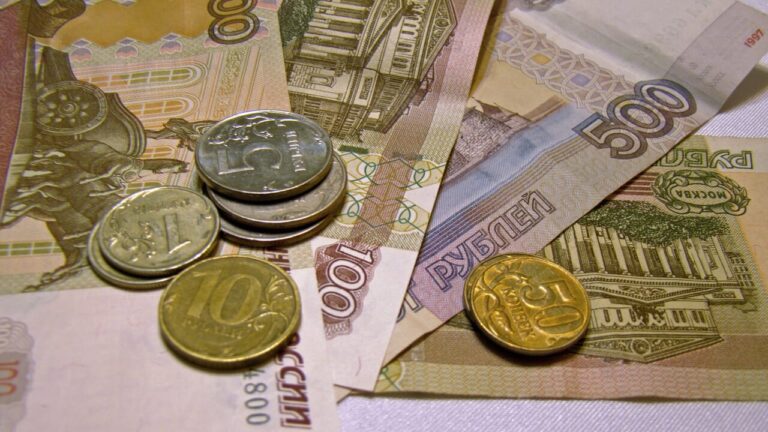
Not just energy infrastructures and strategic nodes: the incursions of Ukrainian drones into Russian territory have already produced a paradoxical effect, i.e. triggering a return to cash, compared to electronic payments.
What is pushing millions of citizens towards banknotes and coins is not only the climate of uncertainty linked to the war in Ukraine, but also the frequent blackouts of the mobile network decided by the Kremlin to counter attacks by Ukrainian drones. Added to this is a slowing economy and a growing tax burden, which is pushing many small businesses to prefer cash payments. This is the picture outlined by a BBC analysis, based on data from the Russian Central Bank.
How Ukrainian drone attacks impact the return to cash
According to figures examined by the British broadcaster, around 1,560 billion rubles (over 20 billion dollars) in cash have been put into circulation since the beginning of 2026. This is the highest increase recorded in the same period of the year since the Covid pandemic.
One of the factors fueling this trend is mobile connection interruptions. In recent months, Russian authorities have placed repeated internet blocks in large areas of the country as a security measure against drone attacks. When the network is suspended, however, many electronic payment terminals stop working, making it impossible to use credit or debit cards. This is why more and more citizens prefer to have liquid money available.
This is not the first time war has caused a rush for cash. Similar phenomena had already occurred in September 2022, after the announcement of the partial mobilization ordered by Vladimir Putin, and in June 2023 during the short Wagner group uprising.
The consequences on the Russian economy
The return of cash, however, also risks having consequences for public finances. With a growing share of payments made outside of electronic circuits, it becomes easier to hide part of the collections and reduce the tax burden. A significant difficulty for the Russian government, committed to financing the war effort while the economy shows signs of slowing.
In January the Kremlin increased VAT from 20 to 22% and lowered the threshold above which small and medium-sized businesses must apply it. According to the BBC, many businesses such as restaurants, pharmacies, shops and beauty salons are therefore encouraging customers to pay in cash, so as to limit the amounts officially recorded.
Even the financial director of Sberbank, the largest Russian credit institution, raised the alarm by speaking of worrying signs: a growing share of money, he explained, is not returning to the banking system and there is also an increase in cases of salaries paid “in the envelope”, that is, without being fully declared.
The phenomenon also emerges from a survey by the Russian association of small and medium-sized enterprises Opora Russia, according to which approximately 6% of entrepreneurs admitted to having adopted irregular practices to cope with the increase in taxes.