

Safer home-school routes, cycle connections, spaces returned to pedestrians and incentives to leave the car at home. Urban Award turns ten and returns to reward the Italian Municipalities that have been able to translate sustainable mobility policies into concrete interventions.
Created by Ludovica Casellati, director of Viagginbici.com, the award was presented at the ANCI headquarters in via dei Prefetti in Rome. The initiative has the patronage of ANCI, the support of Intesa Sanpaolo as Main Partner and of Confcommercio and Pin Bike as Silver Partners. The winners will be awarded on November 26th at 6.30 pm in Verona, as part of the ANCI National Assembly.
«A ten-year anniversary that tells of a changing Italy, through Municipalities that have chosen to rethink mobility starting from people’s needs. From the victory of Syracuse in the first edition to that of Turin in 2025, we have seen different experiences emerge: the Bicipolitana of Pesaro, the incentives of Florence for those who choose the bicycle, the Piedibus of Noceto. They are examples of how sustainable mobility can become a choice for quality of life, health and development of territories. When I created the award I wanted to give visibility to these good practices and the administrations that make them possible. With the tenth edition we want to enhance the lasting results and look to the future, encouraging the circulation of ideas and comparison between Municipalities: every successful experience can offer others a path to adapt to the needs of their own territory”, declares Ludovica Casellati, creator of the Urban Award and president of the Jury.
The selection looks at the degree of implementation of the projects, the usability of the services and the results in the area, from the contribution to the reduction of pollution to the involvement of the community. The regulation favors interventions that have already been implemented or actually started: initiatives that have only been announced or planned are not sufficient for evaluation. A role is also recognized for the communication and participation of citizens, schools, associations and businesses.
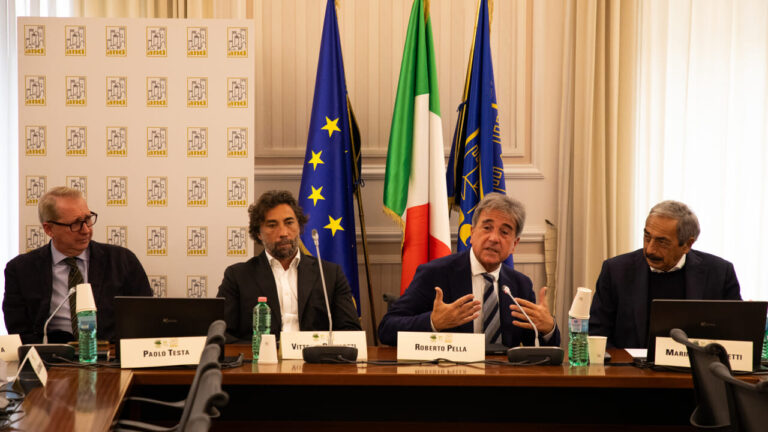
«The Urban Award has always contributed to enhancing the work of Municipalities that have chosen to invest in sustainable mobility as a lever for quality of life, health and safety of urban spaces. Thanks and compliments go to those who created and developed over time an award capable of telling and networking many good practices in the territories. Local administrations are precisely the place where these policies become concrete, through cycle routes, safer connections, services and initiatives capable of changing daily habits. Making known the experiences that have worked means offering other Municipalities tools and models to adapt to their own realities, strengthening more sustainable and accessible mobility”, declares Roberto Pella, vice president of ANCI.
The novelty of the tenth edition is the Intesa Sanpaolo Special Mention “10 YEARS IMPACT”, which joins the three main awards. The recognition is dedicated to projects that have left a lasting mark on the life of cities, consolidating the results over time and becoming part of daily habits.
«With new projects, the Urban Awards has changed the way we experience cities. Promoting more sustainable mobility means creating safer, more accessible and people-friendly urban spaces, concretely improving the quality of life of communities. These are values that I deeply share with Intesa Sanpaolo, which I thank for having involved me and which has always been committed to sustainability and responsible innovation. With the Intesa Sanpaolo Special Mention “10 YEARS IMPACT” we want to reward those initiatives that have left a lasting mark over time, demonstrating that investing in sustainable mobility generates real benefits for the environment, for the health and for the future of all generations”, declares Vittorio Brumotti, international champion, pioneer of sustainable cycling and ambassador of Intesa Sanpaolo.
Then there are other recognitions. Pin Bike will donate its platform to the top three municipalities in the ranking, which tracks bicycle journeys and transforms the kilometers cycled into prizes or shopping vouchers. An award that offers administrations a tool to encourage cycling mobility.
Pescara, Bari, Bergamo, Lecce and Florence have received the Urban Award over the years thanks to projects created with our technology. The focus is always behavioral change. Today we are making our platform available to the top three municipalities in the ranking. Those who go to work and school with their bicycle accumulate incentives to spend in the city’s shops, creating a concrete link between sustainable mobility and local commerce. Administrations can use travel data to plan infrastructure and services, while our patented, anti-fraud certification guarantees that contributions correspond to journeys actually made. In 2026 we also extended the certification technology to sharing vehicles and local public transport and opened up to cycle tourism with the national initiative “Pedala i Territori”. A further application concerns incentives for the purchase of bicycles: a part of the contribution is paid upon purchase, the remainder on the basis of certified routes, so as to support not only the purchase of the bike, but its actual use”, declares Nico Capogna, CEO of Pin Bike.
The accessibility of shops and services and the safety of routes also affect the economic vitality of neighborhoods. It is on this relationship between mobility and proximity trade that Confcommercio’s contribution focuses.
“Confcommercio, through the Cities project, considers neighborhood shops a real civic infrastructure, capable of keeping the streets alive and protecting the neighbourhoods. Sustainable mobility and proximity economies reinforce each other: a street without lit shop windows is a road that no one chooses to travel. With the Territorial Action Plan, presented by President Sangalli at the InCittà event in Bari, we propose to ANCI and the Mayors a concrete tool to combat commercial desertification and promote more accessible, livable and attractive cities. Because the quality of urban life also depends on the presence of local services and the possibility for everyone to go shopping at home”he declares Paolo Testa, head of the Urban Planning and Urban Regeneration sector of Confcommercio.
The award is part of a scenario in which the car continues to dominate even over short distances. In Italy over one in four journeys within two kilometers are still traveled by carwhich overall absorbs more than 60% of travel. According to the previews of the Audimob Observatory of Isfortpresented in September 2026 at ECO – Festival of Sustainable Mobility and Intelligent Cities, the share of travel on foot, by bicycle, by micromobility and by public transport stands at 34% in 2025, a level substantially unchanged compared to 2000.
Nevertheless, over 80% of trips take place within ten kilometers and 85% last less than half an hour: a mobility made up above all of local routes, on which the administrations can intervene to make alternatives to the car more practicable. The picture changes significantly from one territory to another: in cities with over 250 thousand inhabitants, public transport reaches 18.4% of trips, while in municipalities under 50 thousand inhabitants it drops to 4–5%. In small municipalities the weight of the car reaches almost 75%highlighting how crucial the availability of services and connections is. However, the evidence illustrated by Isfort shows that where investments are made in public transport networks, cycle paths and the safety of urban spaces, results improve. Recognizing these experiences and making them known to other administrations is one of the objectives of the Urban Award.
To complete the scenario are the data from Urban Ecosystem 2026the report by Legambiente and Ambiente Italia created in collaboration with Il Sole 24 Ore: in the Italian capitals the average motorisation rate went from 68.3 cars per hundred inhabitants in 2024 to 69.85 in 2025while the space of the pedestrian areas dropped on average from 48.6 to 48.2 square meters per hundred inhabitants.
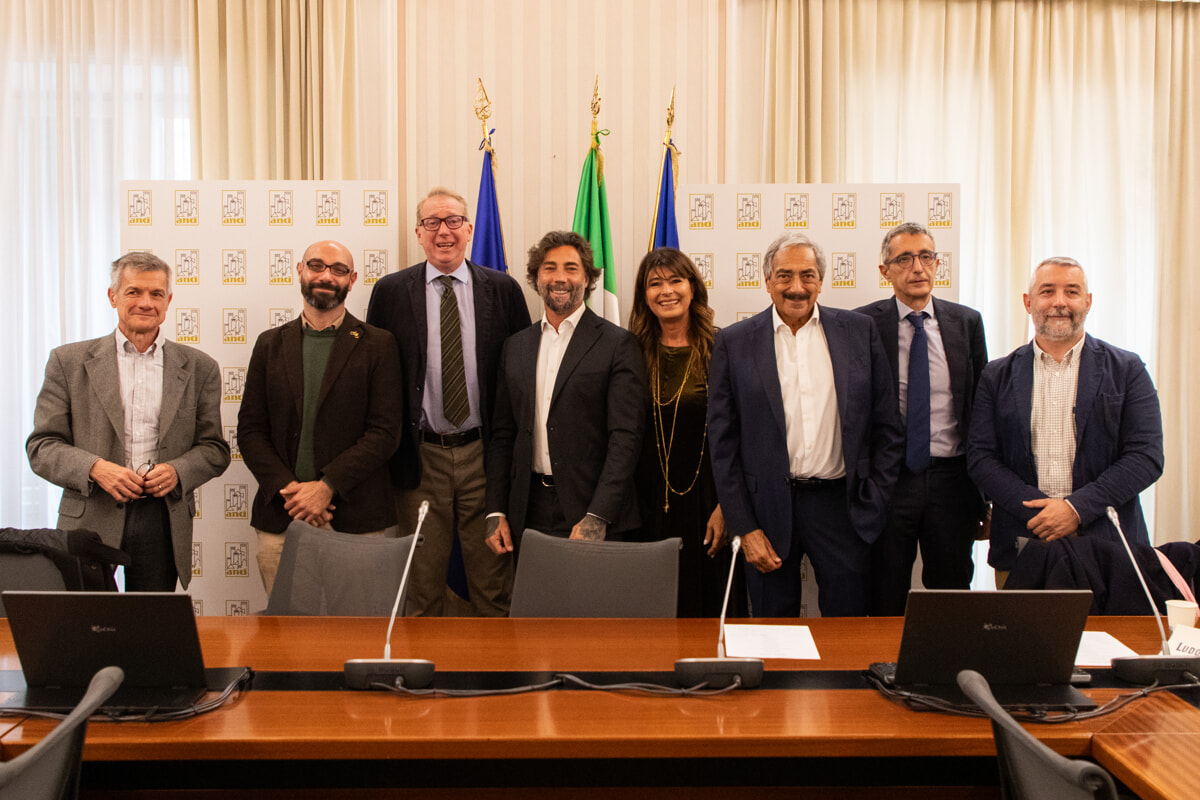
The presentation, conducted by Marino Bartoletti and Ludovica Casellati, brought together representatives of institutions, research and businesses. Speakers alongside Roberto Pella, Vittorio Brumotti, Paolo Testa and Nico Capogna were Carlo Carminucci, Isfort Research director and head of the Audimob Observatory; Riccardo Capecchi, expert in the technical mission structure of MIT, and Simone Nuglio of Legambiente.
Applications will be evaluated by a jury chaired by Ludovica Casellati. It includes Marino Bartoletti, journalist, writer and ambassador of Urban Award; Vittorio Brumotti, testimonial of Intesa Sanpaolo; Riccardo Capecchi, MIT consultant; Nico Capogna, CEO of Pin Bike; Chiara Giallonardo, Rai Isoradio; Maria Rita Grieco, director of Rai Italia; Simone Nuglio, Legambiente; Fabrizio Penna, general director of ISPRA; Silvia Livoni, Bikeconomy Observatory; Piero Nigrelli, director of the ANCMA cycle sector; Roberto Pella, deputy, ANCI vice-president and president of the Cycling League; Monica Sala, journalist and presenter of Radio Monte Carlo, and Pierangelo Soldavini, journalist of Sole 24 Ore.