

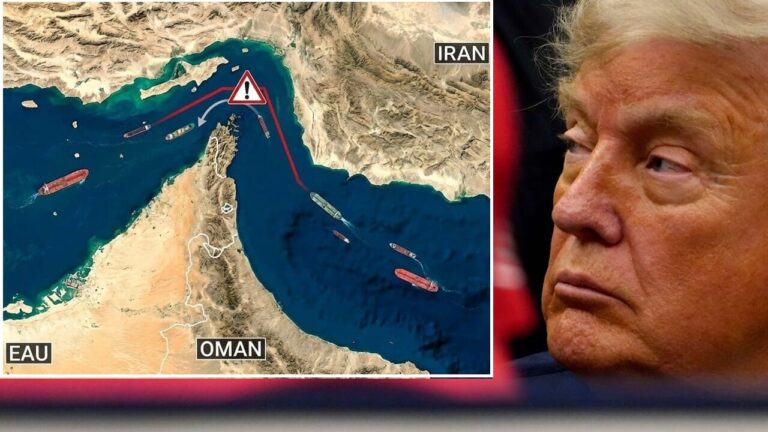
A new stage in the war between the United States and Iran. In fact, today, Monday 17 August, the 60-day deadline set by the Islamabad Memorandum expires, the agreement between Washington and Tehran which was supposed to transform the fragile truce reached in June into a definitive agreement. But the deadline is reached with negotiations practically at a standstill, the ceasefire already broken and the Strait of Hormuz back at the center of the conflict between the USA and Iran, with naval traffic close to zero and with markets remaining turbulent.
The truce that doesn’t exist and the bounty on US soldiers
The text of the memorandum committed Iran and the United States to reaching the “final deal” within a maximum of 60 days, extendable with the consent of both parties. At the same time it provided for the “immediate and permanent cessation of military operations on all fronts”.
That part of the agreement, however, did not hold up. On July 7, the United States resumed attacks on Iran after accusing Tehran of hitting three commercial ships in the Strait. Donald Trump then declared the agreement “over”, while Iran and the United States resumed hostilities and accused each other of violating the memorandum.
A high-level Iranian source told Reuters that no negotiations to extend the ceasefire were underway and that the United States would first have to return to compliance with the memorandum. “There is no discussion about an extension because the US violated the interim agreement 48 hours after it was reached and withdrew from it a few days later,” the source said.
Meanwhile, the commander of Tehran’s army, Amir Hatami, has announced that he has placed a bounty on American soldiers defined as “aggressors”, setting a reward of 30,000 dollars to be paid to anyone who captures or kills one. A move that further distances the possibility of resuming dialogue.
Trump: “I will declare Hormuz a territory of the United States”
The Strait of Hormuz is always at the center of the conflict. Trump raised his tone further during a rally in Garden City, New York. “After we finish defeating Iran, very soon I will declare the Strait of Hormuz a territory of the United States,” the American president said. And he added: “Essentially it’s already like this. We have the blockade. No ship passes if we don’t want it to.”
Iranian Deputy Foreign Minister Kazem Gharibabadi responded directly to Trump: “This Strait will be opened and closed only under the command of Iran.” And again: “The Strait of Hormuz cannot be conquered with a tweet or an aircraft carrier, issuing an order or making an election speech.”
What the Islamabad Agreement Really Envisaged
The memorandum signed in June contained 14 points. In addition to the cessation of military operations, Washington committed to removing the naval blockade against Iran, while Tehran was supposed to guarantee the safe and cost-free passage of commercial ships between the Persian Gulf and the Gulf of Oman for 60 days. Traffic was expected to gradually return to pre-war levels.
The text also provided for negotiations on the end of sanctions, the release of Iranian funds frozen abroad and a plan of at least $300 billion for the reconstruction and economic development of Iran. On the nuclear dossier, Tehran reiterated its commitment not to develop atomic weapons, while the fate of the stockpiles of enriched uranium should have been defined in the final agreement under the supervision of the IAEA.
It is precisely the implementation of these commitments that has become the main terrain of conflict. Iran is demanding an end to sanctions and military threats, the unfreezing of its assets abroad and compensation for war damage before Hormuz fully reopens. Trump responded by asking in turn that Iran should pay damages and compensation for victims and conflicts of recent decades.
Very few ships now pass through the Strait
Meanwhile, Hormuz remains almost paralyzed. According to Kpler data reported by Reuters this morning, only 5 commercial ships passed through on Saturday and none on Sunday, compared to 31 recorded the previous weekend.
Duties, money and influencers: this is how Trump’s “machine” wants to dismantle Europe
Before the war the Strait was the main energy bottleneck on the planet. In 2024, an average of around 20 million barrels of oil per day passed through it, equivalent to around 20 percent of global consumption of petroleum products. In the second quarter of 2026, flow plummeted to 4.9 million barrels per day, compared to 21.6 million in the final quarter of 2025, according to the U.S. Energy Information Administration.
UPDATE | Observable commercial traffic through the Strait of Hormuz fell to near-standstill over the weekend.
Kpler recorded just five commodity vessels transiting on Saturday and none on Sunday, down from 31 the previous weekend. Before the war, more than 130 ships typically… pic.twitter.com/ttEoIit0vR— GeoInsider (@InsiderGeo) August 17, 2026
The impasse also weighs on the markets. Brent this morning approached 90 dollars a barrel, while hopes of a permanent solution between Washington and Tehran have diminished again.