
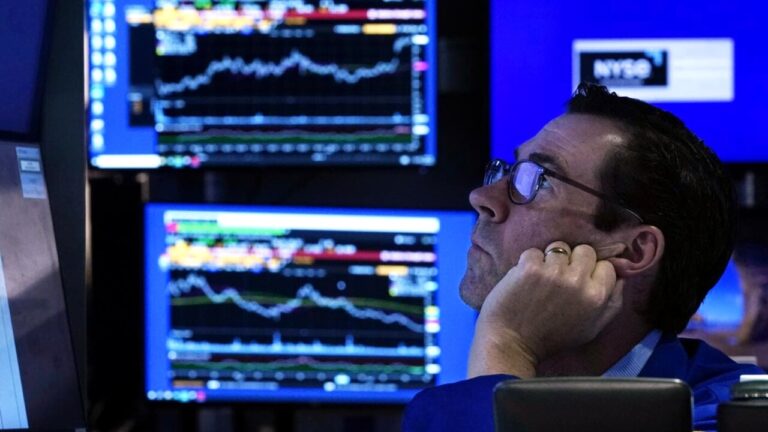
Yesterday’s rebound is already a memory. Today, Wednesday 25 November, the Nasdaq (the index of the major US technology stocks) lost over 3% at the start and widened the decline to around 4% during the session. The Dow Jones and S&P 500 also opened sharply lower. AI-related stocks led the sales, with Nvidia down more than 8%. Adding to the doubts about the sector’s ability to transform the billions invested into profits is the risk of a new commercial escalation.
Nvidia, Huang’s return and the Anthropic case
Yesterday, Nvidia’s board of directors unanimously reinstated co-founder Jensen Huang as CEO, following his resignation on November 12 and Donald Trump’s intervention in favor of his return. The stock had closed that session up 31.5%, only to lose almost 6% on Tuesday. Wednesday’s sales also hit other chipmakers, as well as giants like Alphabet and Amazon.
The slowdown is also seen in Anthropic, the company that develops the Claude chatbot. On November 19, its shares debuted on the Nasdaq at $111.50, more than 30% above the placement price of $83. On Tuesday, in the fourth session, the stock closed at $81.90 and lost further ground on Wednesday. The drop comes as investors question how long it will take for AI companies to repay spending on chips and data centers.
The weight of Trump’s tariffs on the market
Adding to the difficulties are the new measures of the Trump administration which has proposed new duties against 14 trading partners, accused of supporting a production capacity higher than demand. For the European Union, the proposal provides for a ceiling of 15%, which includes ordinary duties already in force. For China, Washington is instead hypothesizing an additional levy of 20% as part of the trade truce expiring on January 10th. Beijing has rejected accusations of overproduction.
Trade tensions add to the pressure on energy prices linked to the war between the United States and Iran. The price index tracked by the Federal Reserve rose 3.8% year-on-year in October, from 3.6% in September. Inflation still above the 2% target fuels expectations of a rate hike in December, which would make it more expensive to finance investments in the technology sector. And at the moment the scenario does not seem (at all) serene.