

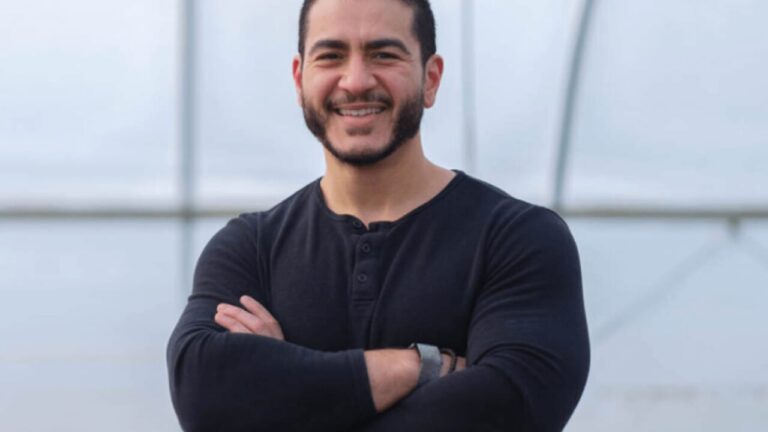
Donald Trump calls him a “terrorist sympathizer”, associates him with jihad and claims that his values are incompatible with those of the United States. The attack arrived on the evening of Wednesday 7 October, with a message published on Truth Social. The target is Abdul El-Sayed, Democratic candidate for Senate in Michigan. In the post the president repeatedly calls him “Mohammed” and invites voters to support his Republican opponent, Mike Rogers, for whom he renews his support. Very serious accusations against a man who could become the first Muslim senator in American history.
The stakes go beyond personal conflict. El-Sayed and Republican candidate Mike Rogers are competing for the seat vacated by Democrat Gary Peters, who has decided not to run again. The midterm elections on November 3 can change the balance of Congress and Michigan is one of the states where the majority in the Senate is at stake. A competitive race that saw quite a bit of friction even within the Republicans and in which Rogers himself distanced himself from Trump on the duties against Canada, asking to stop a trade dispute that is weighing on businesses and consumers in the state.
A doctor who comes from public health to politics
Born and raised in Michigan, the son of an Egyptian immigrant, El-Sayed has a path that intertwines academic education and public administration. He studied at the University of Michigan, received his medical degree from Columbia and a doctorate from Oxford. Before national politics he led the Detroit Health Department and later the Wayne County Health Department.
Healthcare is also the center of his political proposal. He supports “Medicare for All”, a system that extends health coverage to all Americans, and proposes interventions against medical debt and the cost of drugs. In his program he combines these objectives with reducing the influence of corporate money on politics, affordable housing and greater taxation of billionaires’ wealth.
This is not his first attempt at elected office: in 2018 he unsuccessfully ran for governor of Michigan. This time, however, he overcame the obstacle of the Democratic primary, beating the establishment-backed Congresswoman Haley Stevens. A victory which arrived with a margin of less than one percentage point, which gave him the candidacy but also the task of mending a divided party.
The stakes go beyond personal conflict. El-Sayed and Rogers are vying for the seat vacated by Democrat Gary Peters, who has decided not to run again. The midterm elections on November 3 can change the balance of Congress and Michigan is one of the states where the majority in the Senate is at stake. A competitive race, in which Rogers himself has just distanced himself from Trump on tariffs against Canada, asking to stop a trade dispute that is weighing on businesses and consumers in the state.
Why Michigan matters
El-Sayed is a member of the Democratic left, supported by Bernie Sanders and Alexandria Ocasio-Cortez. On foreign policy he contests American military support for Israel: in his program he defines what is happening in Gaza as genocide and calls for an arms embargo. A position that clearly distinguishes him from the more moderate wing of the party.
The candidacy has become a test for Democrats: can a progressive program win in a state also contested by Republicans? For El-Sayed the challenge is to transform the success in the primaries into a broader coalition, capable of convincing even those who had chosen Stevens and independent voters.
Barack Obama’s speech, expected in Detroit on October 24th for a rally alongside him, fits into this framework. The appointment coincides with the start of early in-person voting and can help mobilize voters and consolidate democratic unity.
This is where El-Sayed’s run takes on national significance. A victory would defend a crucial Democratic seat and strengthen the party’s left; a defeat would fuel debate over the progressives’ ability to conquer swing states. Trump’s attacks come within this game: the one for a seat that can help decide how much space the president will have in the second half of his mandate.