

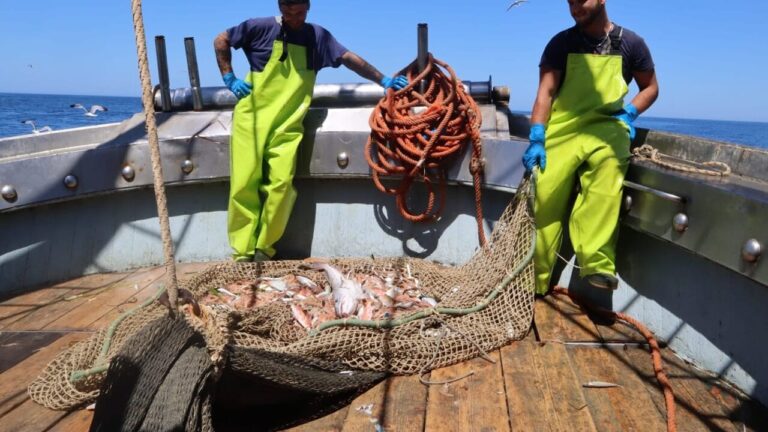
In the ports of the Adriatic the boats remain moored: a hundred already in September, even before the surge in the price of diesel fuel which pushed 43 marinas across the peninsula to stop in protest. In fact, the cost of fuel is only part of the problem, because the lack of raw material also makes fishing trips unsustainable: fish are scarce after the summer heat. And what we manage to catch is not enough to cover the ever-increasing expenses.
It is not a local or temporary crisis. There is simply less and less fish in our waters, species of commercial interest are in trouble while new predators are spreading and contributing to the impoverishment of the aquatic ecosystems of the Mediterranean. This is the situation experienced today by a sea that is warming at an unprecedented rate, and which risks bringing those who survive by fishing to their knees, further increasing costs for consumers and – above all – indelibly compromising the biodiversity of our sea.
A record-breaking summer
2026 has added a new chapter to an already long series of nightmare summers for the Mediterranean. According to data from the European Copernicus Marine service, June closed with an average temperature of the entire basin of 24.07 degrees, an absolute record for the month. As the Lamma Cnr consortium reports, July was therefore the warmest since 1993, with an average surface temperature of sea waters of around 27 degrees, and 79 percent of the Mediterranean experienced at least one day of a strong or higher marine heat wave.
In the past summer, the “Mare Caldo” project by Greenpeace and the University of Genoa measured a wave on the Island of Elba that lasted 68 days, with peaks of almost 5 degrees above average. In Miramare, in the Northern Adriatic, the peak of surface temperatures reached an anomaly of 4.63 degrees; in Portofino in Liguria the anomaly was 4.36 degrees; in Ustica, in the Strait of Sicily, 4.54.
The old record for average surface temperatures, which dated back to July 2003 when the daily average reached 28.25 °C, had already been surpassed in July 2023 and again on 15 August 2024. This year, in August the average temperature of the Mediterranean waters rose to 28.6 degrees. Partly, of course, temperatures have to do with the normal natural variability of the climate. But this is part of an underlying warming trend, which sees the average increase by around 0.7 degrees every 10 years. These are not exceptions, therefore, but the rule: the waters of the Mediterranean are continually warming.
What happens beneath the surface
To understand why the increase in water temperature translates into empty nets for fishermen, we must start from biology. “Temperature is one of the main factors that regulate the life cycle of marine organisms: it influences growth, metabolism, sexual maturation, reproduction and even the behavior of species”, explains Ernesto Azzurro, researcher at the Research Institute on Biological Resources and Marine Biotechnology of the Cnr (Cnr-Irbim).
“Consequently – adds Azzurro – if the average temperature increases, the effects are manifold: for many marine species, significant changes have already been detected in the distribution areas, a lower growth, a change in the reproductive periods and other aspects of the life cycle which have put various species in difficulty, and at the same time increase the abundance of others. As regards the effects of marine heat waves, it is easy to understand that extreme temperatures for prolonged periods of time can put the very survival of many organisms at risk. And in fact mortality of mass for over one hundred Mediterranean species”.
“Increasingly frequent and severe episodes of mass mortality in the Mediterranean”
Ernesto Azzurro, Cnr
The most vulnerable species are the benthic ones, that is, those tied to the seabed, which cannot escape to cooler waters, such as gorgonians, sponges and numerous invertebrates. But among the victims there are also bivalve molluscs that build habitats and which have, Azzurro recalls, a clear economic and cultural value. In the Adriatic, from North to South, fundamental resources for the local economy such as mussels are experiencing increasingly frequent and severe episodes of mass mortality.
The long-term risk of these temperature increases, however, is not a depopulated sea, but rather an unrecognizable sea, very different from the one we have known for millennia. “Warmer waters do not necessarily imply less biodiversity: tropical seas are among the richest ecosystems on the planet – recalls Azzurro – but Mediterranean species have evolved in very different climatic conditions from those we are facing, and for many native species the waters are becoming increasingly inhospitable. This while they have to face the arrival of new parasites and pathogens and competition from alien species arriving from tropical seas”.
Victim and accused
Therefore, the fishing crisis is part of this scenario of degradation of marine ecosystems. Until a few decades ago, intensive fishing was considered the main danger to the health of our seas. Today, however, the commercial exploitation of water is both victim and executioner: “The effects of climate change have been added to the overexploitation of resources, which reduce the productivity of ecosystems, alter the distribution areas and size of species of commercial interest, and generally increase the vulnerability of many stocks”, points out Azzurro. Some have already suffered strong reductions or local collapse: Adriatic clams, sprat, scampi, small pelagics such as anchovies and sardines, sea urchins.

Fishing too much today also means fishing less and less, but it is difficult to establish new rules with a constantly changing sea. The sector, for its part, claims to be the first to pay the bill. “The decline in catches is no longer a cyclical phenomenon, but a structural trend that has been going on for decades”, clarifies Francesca Biondo, general director of Federpesca.
“The Italian fleet, according to Eurostat 2025 data – explains Biondo – lands around 115 thousand tonnes of fish per year with a value of 680 million, almost half compared to fifteen years ago. This reduction is mainly attributable to a significant reduction in the Italian fleet, which, in the last twenty years, has lost 22 percent of its boats” going from 14,873 boats in 2004 and 11,566 in 2025.
80% of the fish products consumed in Italy come from abroad
The Adriatic – continues Biondo – is among the most suffering basins. Anchovies and sardines, the backbone of entire fisheries, have increasingly uncertain availability, due to high temperatures and the strong growth of bluefin tuna, the main predator of small pelagics.
In the Po Delta, blue crab and climate emergency have caused damage for over 200 million euros. But the segment most in difficulty is trawling (which, coincidentally, is also among the most criticized for the harmful effects it causes on marine ecosystems), crushed by expensive fuel and European cuts to fishing days.
The numbers tell the situation clearly: diesel comes to account for 50-60% of operating costs, with peaks of 1.60 euros per liter after an increase of over 60% in a few weeks. At the same time, from 2019 to 2024 fishing days were reduced by 23 percent, 9% less in the last year alone.
“This way you fish less, you earn less and going out to sea costs more,” summarizes Biondo. And since the drop in volumes does not increase prices, due to import competition, the result for consumers is that almost 80 percent of the fish eaten in Italy comes from abroad.
Is biological detention still enough?
What tools should be put in place to preserve biodiversity and fish stocks in the Mediterranean? Scientists and fishermen seem to agree on one point: the fishing ban, which was created to protect fish in the most delicate phases of the reproductive cycle, remains the main tool to guarantee the sustainability of the sector. But it should be remodulated because the calendars have largely been the same for decades, while the heat shifts the breeding periods and there is the risk of stopping the boats in the wrong weeks.
“The principle of biological closure remains absolutely valid – underlines Azzurro – as long as it is based on updated information on stocks, biological cycles and the distribution of species”. Federpesca’s recipe insists on flexibility: calendars differentiated by basin, updated with recent scientific data and built together with fishermen, “who are the first observers of what happens at sea”. In the Adriatic – adds Biondo – the detention only makes sense if coordinated with Croatia and the other countries that fish the same stocks, otherwise the sacrifices of the Italian navies risk being wasted. And the compensation for shipowners and crews must be adequate and arrive within certain times, which today “too often does not happen”.
The few solutions still possible
Where positions diverge most is on the need for cuts to fishing days. Federpesca asks Europe for a truce for 2027: “Before imposing new sacrifices – explains Biondo – we need to measure what those already made have produced”. Azzurro’s, however, is an opposite recipe, marked by caution: if the climate makes stocks more fragile, easing the pressure becomes imperative.
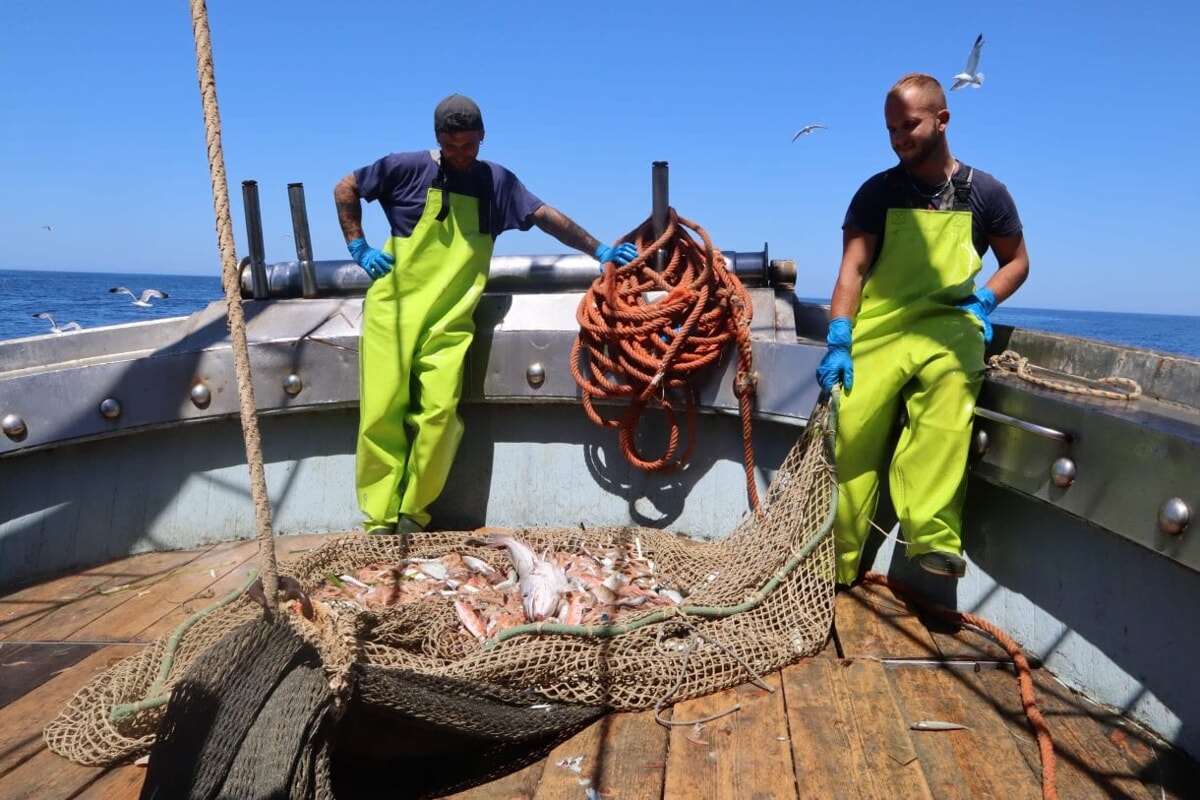
The solutions, for the researcher, involve a more sustainable management of resources, the protection of essential habitats, the strengthening of marine protected areas and the reduction of cumulative impacts; and, where appropriate, the ability to exploit new resources, including many alien species exploitable by fishing.
“Marine ecosystems are not a luxury to be protected whenever possible: they represent the natural capital on which fishing, tourism, food security and the well-being of coastal communities depend – concludes the researcher -. And there is no time to waste: the Mediterranean as we have known it no longer exists”.
Dossier is the exclusive subscription investigative section of The Vermilion. If you want to support our journalistic work and subscribe, Click here.