

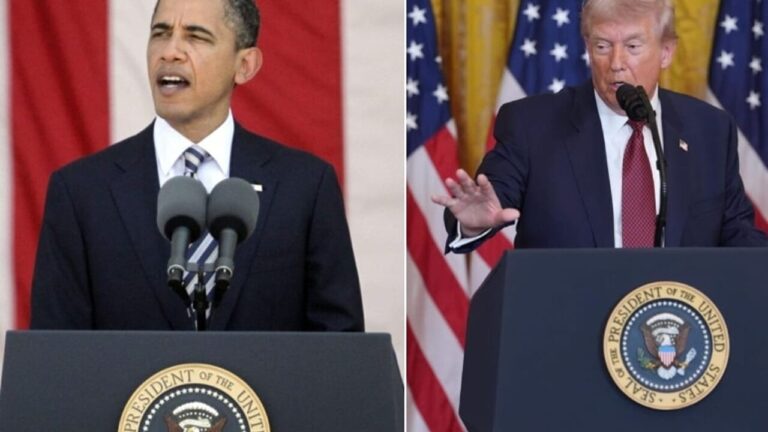
They called it an “emergency operation” against migrants. But it was only a label to justify the arrival and – above all – the bloody actions of Ice. Now, the mission seems to have come to an end. The border ‘czar’, Tom Homan, proposed to Donald Trump to conclude the “special operation” in Minnesota and the president agreed.
Gradually, at least 700 of the approximately 3,000 federal agents will be recalled, who were initially placed under the control of the Border Patrol commander, Gregory Bovino, who was later removed from his position after the killing of two protesters, Renee Good and Alex Pretti. Federal Ice agents, who numbered 22,000 under the Trump administration, have sown panic and terror in many cities across the country in the name of implementing the anti-immigration policies desired by the Trump administration. Policies which, according to a Marist poll, have become increasingly unpopular: 65% of Americans believe that the actions of Ice agents have gone too far, generating a feeling of insecurity in citizens.
Trump has failed in his own goals
Hunted down on the streets, taken from their homes or their workplaces, irregular migrants are expelled – without any trial – from the United States. The path was paved last January 20 when Trump, on the occasion of the first anniversary of his second term, proudly announced that he had achieved historic records in the expulsion of foreigners from the country. “In Donald Trump’s first year back in office, nearly 3 million illegal immigrants left the United States due to the Trump administration’s crackdown on illegal immigration, including approximately 1.9 million self-deportations and more than 605,000 deportations,” the Department of Homeland Security said in a statement. The numbers, however, tell a story that is difficult to confirm: it is not possible to verify them independently or understand how they were collected.
What refutes them, first of all, is the data coming from the administrations of Barack Obama and that of Joe Biden, during which period more people were deported. There is another clarification to be made: there are important differences in the types of deportations that occurred in the years examined. The two Democratic presidents focused on the expulsion of criminals, while the Republican president – contrary to what the Trump administration itself constantly repeated – did not discriminate on this basis. Only 25-35% of deported migrants had criminal records. The milestone of 605 thousand expulsions celebrated by the current administration is well below the million annual deportations that Trump had set himself as a goal during the election campaign, during which he promised the “largest deportation operation in American history”. However, according to an analysis of federal data conducted by the New York Timesin the last year President Trump’s administration has deported approximately 230,000 people arrested inside the country and another 270,000 at the border.
Obama, the “deporter in chief”
During his two terms in office, Democratic President Obama earned the label of “deporter in chief.” In his eight years in the White House, the expulsion machine reached unprecedented rates, involving over three million people, a peak never exceeded, not even by subsequent administrations. The crux of the issue lies in the very nature of the measures. Under the Obama administration, priority was given to so-called formal expulsions (removals): acts carried out by order of a court which mainly affected individuals with criminal records, often taken directly from prison facilities. On the contrary, the data released during the Trump administration often grouped very different legal categories under a single heading: from administrative expulsions (cases in which the asylum seeker voluntarily withdraws his application) to rapid rejections carried out directly at border crossings.
Another difference between the Trump administration and the Democratic ones that preceded it concerns the specificity of the expulsions. The White House led by Obama and Biden expelled irregular migrants, taking into account the length of their residence in the United States (many had lived in the country for decades) and trying to avoid the separation of families. The Trump administration, in contrast, has not prioritized some of these factors. The Department of Homeland Security considers all foreigners with irregular documents – about 14 million, according to official estimates – as potential criminals and therefore targets of the deportation campaign. Among them there are numerous migrants with pending asylum requests and even valid work permits.
Deportation data
Between 2008 and 2015, expulsions carried out in the United States by the US Immigration and Customs Enforcement (ICE) first increased and then decreased markedly, while the weight of people with criminal records among those repatriated progressively increased. Let’s see them in detail, based on the annual ICE reports.
In 2008, a year before Obama’s presidency, there were 369,221 repatriations, with a clear prevalence of people without convictions (69%). The following year, when the Democrat was in the White House, they rose to 389,834 and continued to grow up to 392,862 in 2010 and 396,906 in 2011, a period in which the share of expulsions of convicted people reached more than half. The peak was recorded in 2012 with 409,849 expulsions, of which 55% concerned individuals with criminal records. From 2013, however, a phase of decline began: expulsions fell to 368,644, then to 315,943 in 2014, up to 235,413 in 2015. In that last year, 96,045 repatriations involved people without convictions, while 139,368 involved individuals with criminal records, equal to approximately 59% of the total.
In 2016, ICE conducted 240,255 deportations, up slightly 2 percent from the previous year but down 24 percent from 2014. Of those, 65,332 involved people apprehended inside the country and not at the border, and 92 percent of those were individuals with criminal records. In the following years, however, the number of administrative arrests for civil violations of immigration laws grew markedly: 143,470 in 2017, the highest figure in the last three years and 30% more than in 2016, which then rose to 158,581 in 2018, with a further increase of 11% and the highest level since 2014.
Detention has remained a central tool in repatriation policies: in 2019 around 85% of expelled people had spent a period in detention centres, and expulsions involving detention reached 226,400, a slight increase compared to the previous year. In 2020, thanks to the pandemic and health restrictions at the southern border of the United States, expulsions fell to 185,884, approximately 30% less than in 2019, although the vast majority of internal repatriations – 92% – continued to concern people with criminal convictions or charges. The decline continued in 2021, when expulsions plummeted to 59,011; However, in that year the share of people with criminal records rose to 66%, including thousands of alleged gang members and a few dozen individuals classified as suspected terrorists.
Since 2022, under the Biden presidency, the numbers have started to grow again: 72,177 expulsions to over 150 countries, about half carried out via charter flights, and more than 44 thousand people with criminal records. In 2023, a further increase was recorded, with over 142 thousand repatriations on expulsion flights and, overall, more than 271 thousand people removed to 192 countries, of which over 30% with a criminal history, often serious and, in some cases, linked to terrorism, drug trafficking or violent crimes.
Who has, therefore, the record of true deporter
The absolute record for expulsions in the United States, therefore, belongs to Barack Obama: in 2012, 409,849 people were repatriated, with the two mandates seeing numbers consistently higher than 350-390 thousand per year, well above those recorded in subsequent years. Contrary to common perception, during Donald Trump’s first administration the overall numbers were lower than Obama’s highs, fluctuating between approximately 240 and 270 thousand repatriations between 2016 and 2019, before dropping dramatically in 2020 due to the pandemic.
Under Joe Biden, after the historic low in 2021 with around 59 thousand expulsions, repatriations began to grow again, exceeding 271 thousand units in 2023. However, they still remain far from the record levels of the years 2010-2012. One fact emerges clearly: if the total number of expulsions was higher under Obama, the Trump and Biden presidencies have increasingly focused on the repatriation of people with criminal records. So far, the system put in place by Obama has not yet found equals.