


Last Saturday, former American President Barack Obama was a guest on YouTuber Brian Tyler Cohen’s podcast. In a 40-minute interview we talked about the ICE raids in Minneapolis; of the famous video posted by Trump which portrayed the faces of the former president and his wife Michelle glued to the bodies of two monkeys; of the state of the nation, and much more. What exploded interest online, however, was a theme that was barely mentioned, en passant, in one of Obama’s answers: aliens. Responding to a direct and ironic question from the host, the former president stated: “Aliens exist”; and it matters little that the sentence continued with “but I have never seen them and they are not kept in Area 51”. For ufologists around the world, the American president had just admitted that we are not alone in the Universe.
In the following days, Obama clarified the meaning of his statement, assuring that he had never seen any evidence of the existence of alien life forms during his two terms at the helm of the United States, and that he responded by expressing his personal opinion based on statistics: the Universe is so vast that the chances of being the only ones to inhabit it seem very few.
Obviously, it wasn’t enough to quench the internet’s interest. So much so that Donald Trump went so far as to accuse the former president of having made a big mistake in disclosing classified information. And to promise, in a post on Truth, that he will release as soon as possible all the documents in the possession of the federal government that concern aliens and unidentified flying objects.
What can we really expect from these “Alien files” (which Trump probably hopes will help divert attention from the much more scandalous Epstein files)? And how likely is it according to science that other forms of life and other civilizations exist in the Universe, and that one day we will be able to come into contact with them?
Drake equation
Obama’s position, the idea that with an almost infinite number of worlds it is unlikely that life only appeared on ours, is actually quite ancient. Already in the 16th century, for example, Giordano Bruno, a supporter of the infinity of the Universe and the plurality of worlds, considered it absurd that the Earth was the only birthplace of intelligent life. In more recent times, science has often reasoned on these issues. And we have attempted to actually estimate how likely we are to come into contact with other forms of extraterrestrial life. To answer, the so-called Drake equation is usually brought up, a mathematical formula that attempts to calculate the number of extraterrestrial civilizations present in our galaxy and with which we could come into contact, using a series of parameters such as the number of stars that form in the Milky Way every year, how many of these have planets, how many planets are actually habitable, how many have seen intelligent life evolve, and so on.
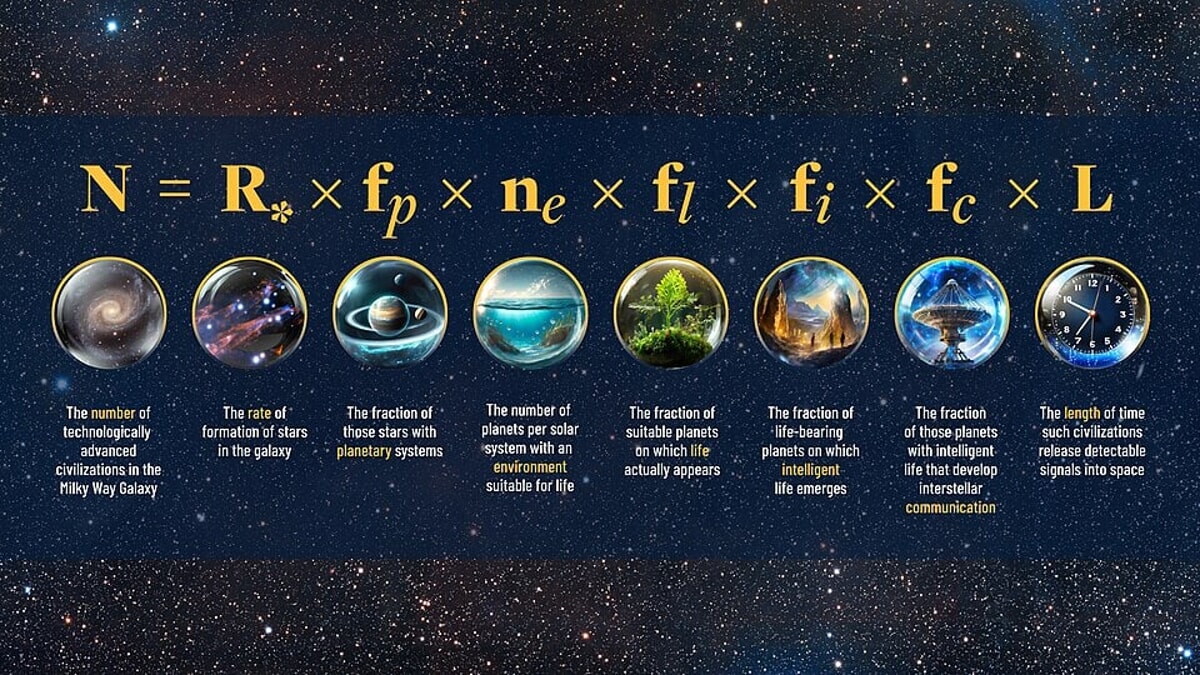
Obviously, it is a calculation that today cannot provide rigorous or unambiguous answers, because we have no certainties about any of the parameters it calls into question. But it helps to put the question into perspective, and often – given the enormous quantity of planets available – leads to rather optimistic conclusions: the solution proposed by Drake, for example, established that at any moment in the Milky Way there would be at least 10 civilizations ready to come into contact with each other. At this point, however, the question becomes another, masterfully formulated (it is said) by Enrico Fermi in 1950 during a lunch in the company of other great physicists of the time: “But where did they all end up, then”?
The paradox and possible explanations
Fermi’s is obviously a paradox only if you think that the probability that other forms of life exist outside our planet are very high. Even in this case, there are several possible explanations for the lack of contact. It is possible, for example, that there are insurmountable physical limits – such as the speed of light – even for civilizations much more advanced than ours. In this case, the sidereal distances would almost certainly prevent any contact between interstellar civilizations: the Milky Way is about 100-200 thousand light years wide and a thousand light years thick, and similar distances make it practically impossible to send messages or make movements, even moving at the speed of light.
Another possibility is that the so-called “great filter” exists, an evolutionary barrier that prevents most civilizations from reaching the stage of development necessary to begin traveling between the stars, or attempting to make contact with other civilizations. For example, the development of intelligence could be very rare. Or perhaps, it is difficult to survive one’s own technological development, as one might think when looking at wars, climate change, and all the problems that our species also faces at the moment. Or maybe, it’s something our species still faces in the future, like the rise of artificial intelligence or robots, or some other potentially fatal technological singularity.
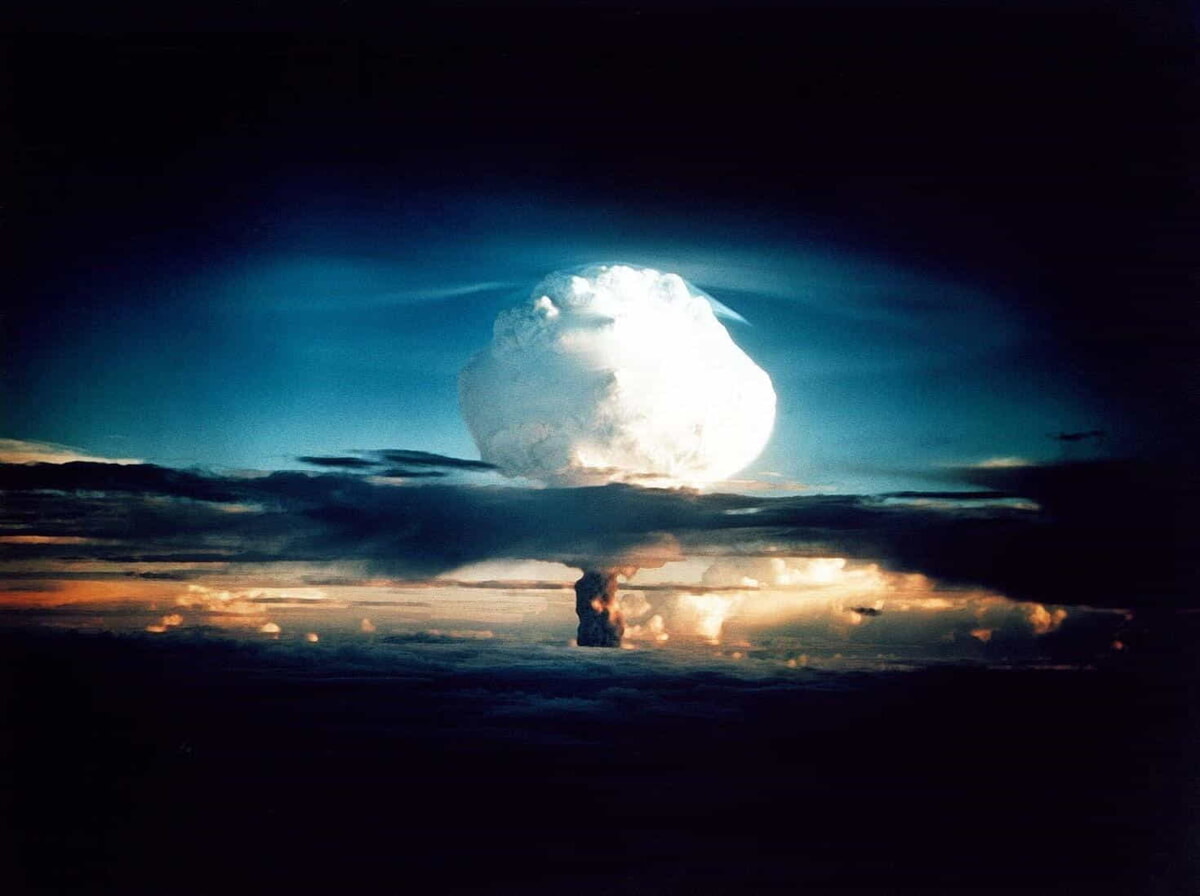
A last rather controversial hypothesis is perhaps the most disturbing, and that is that we have never encountered other life forms because no life form in the Galaxy wants to be found. It is known as the “dark forest hypothesis”, and was made famous by the Chinese science fiction writer Liu Cixin in the second volume of the trilogy “The Three Body Problem”. It is based on the idea that the resources in the Universe are finite, as opposed to the need for continuous expansion of any civilization. And therefore conflicts, in case of contact with other civilisations, are practically inevitable. In this context, the Universe is a dark forest in which intelligent species move like armed hunters, aware that other hunters might be hiding among the trees ready to kill them. Revealing one’s position, therefore, is equivalent to a death sentence: whoever did it has been annihilated, and all the others – however present – do everything possible to avoid being noticed.
Or, of course, it is possible that there are multiple intelligent species in the Galaxy. May everyone be interested in getting in touch with us. Indeed, they have already done so, and the US government has hidden it from us. Anything can be, of course. Especially for those who “want to believe it”, as the poster hanging in Agent Mulder’s office in The X-Files said.