

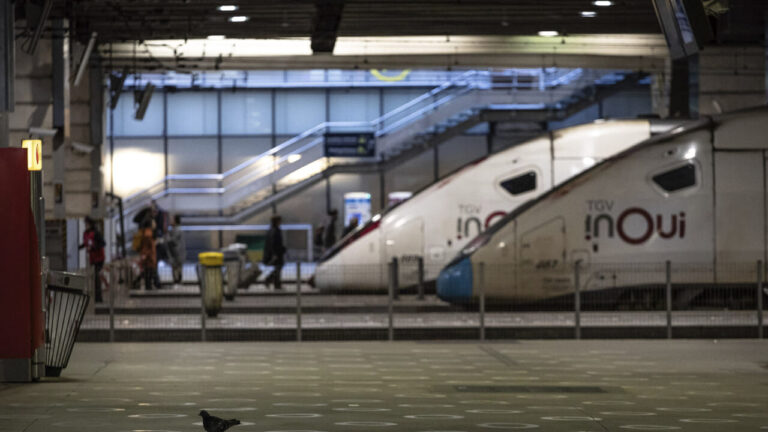
The challenge to Italo and Trenitalia begins. The Competition and Market Authority (Agcm) has given the green light to the entry into the high-speed market of Sncf Voyageurs, the French TGV giant which will break the current duopoly by further increasing competition. The decision, explains the guarantor authority, was taken as part of an investigation to ascertain an alleged abuse of “dominant position” and “marks a decisive step for the high-speed rail market”.
In particular, we read in the document, an “obstructive behavior on the part of RFI” (the company controlled by Fs which manages the railway network) had been reported “in response to the request made by Svi to have access” to the infrastructure “to carry out high-speed passenger transport services on the” Turin-Milan-Rome-Naples and Turin-Milan-Venice lines.
The Agcm considered the assignments of the network manager, RFI, “potentially suitable to hinder” the entry “of new operators in the high-speed passenger transport market”. Hence the decision arrived today that “opens new opportunities to improve services, quality and competitiveness for the benefit of passengers”.
In Italy, double-deck TGVs with 320 km/h
Svi (Sncf Voyages Italia) will be assigned a minimum package of 18 hourly channels on the Turin-Milan-Rome and Turin-Milan-Venice high-speed routes for ten years. So nine connections a day, round trip. In a note the company announces that it intends to “develop, starting from September 2027, a new offer for high speed in the country”. The plan includes 15 new generation trains “capable of accommodating a greater number of travellers” ensuring “high speed access to over 10 million passengers per year in Italy”. These are the new TGV M trains produced by Alstom which boast double-decker carriages and a maximum speed in service of 320 km/h.
undefined
The company estimates impacts of over 480 million euros per year, “between GDP growth, new tax revenues and over 4,000 new jobs, direct and indirect, also generating time savings and a reduction in average ticket costs”.
The “missing” link and the company’s demands
Sncf underlines that “although it represents a step forward”, the Agcm’s decision is not sufficient “to implement the entire industrial plan” which provides for a total of 13 daily return journeys (9 from Turin to Naples and 4 from Turin to Venice). “Without this minimum level of activity – it is specified -, the company does not have the necessary conditions to justify the investment and maintain operations”.
Sncf therefore asks for “the timely implementation of the additional commitments” and as “another indispensable condition” the certainty “of being able to access the maintenance systems in Italy and to obtain the approval of the trains”. Contacted by Today, the company confirmed that it intends to start from September 2027 with the first 9 round trips (which correspond to the 18 hourly channels indicated by the guarantor authority), but expects the other connections to also be “unblocked”.