

Dossier is the exclusive subscription investigative section of The Vermilion. If you want to support our journalistic work and subscribe, visit our showcase by clicking here.
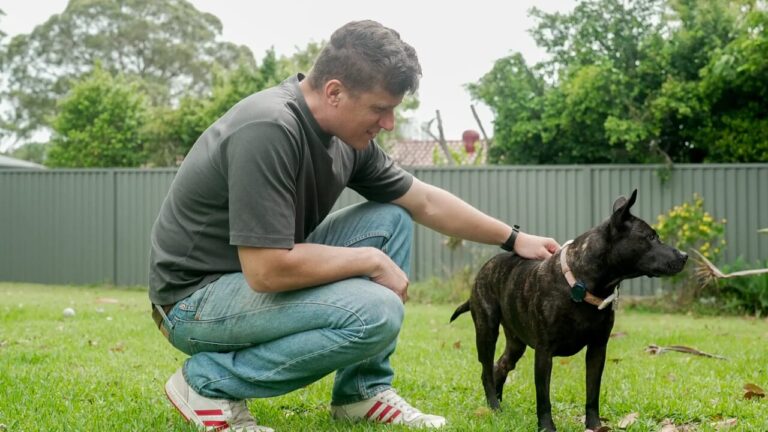
A dog suffering from cancer. An owner ready to do anything to cure him. And artificial intelligence, which makes the impossible possible. They are the protagonists of a story that is exploding on social media: Rosie is a five-year-old dog suffering from incurable cancer; the owner, Paul Conyngham – an Australian entrepreneur in the tech sector – would have used the capabilities of the conversational chatbots ChatGpt and Grok to design a personalized mRna vaccine, in time to save her life. A story that shows the giant strides of AI-assisted medicine, but which also presents dark points that should not be underestimated.
Rosie’s story
It all begins in 2024. Rosie is diagnosed with mastocytoma, an aggressive tumor with a life expectancy of just a few months. Paul Conyngham, the owner, isn’t up for it, and decides to transform Rosie’s illness into a high-tech project: he asks Chat-Gpt to help him formulate a strategy, and little by little the plan takes shape. First, the tumor’s DNA must be sequenced to look for mutations that could become a therapeutic target. And then we will need to find an experimental therapy capable of attacking it.
For the sequencing he turned to the Ramaciotti Center for Genomics of the University of New South Wales in Sydney (UNWS), where with 3 thousand dollars in a few days he obtained the complete genetic profile of Rosie and that of her tumor. At this point, it is a question of comparing them to identify the mutations that fuel the neoplasm and distinguish its cells from healthy ones. It does this with the help of AlphaFold, the revolutionary Google program that allows you to model the three-dimensional structure of proteins starting from their genetic sequence.
On AI’s advice, the analysis focuses on a protein known as c-Kit, which represents one of the main tumor drivers in canine mastocytomas. And by studying its structure, he identifies some characteristics of Rosie’s tumor that could be a good drug target, and finds an experimental drug in the USA. But the bureaucracy is slow and Rosie doesn’t have time.
The personalized vaccine
The turning point comes in November 2025. Paul joins forces with Pall Thordarson, director of the UNWS RNA Institute, and we move on to a new strategy: a personalized mRNA vaccine, which targets a neoantigen, i.e. a protein present only on the surface of Rosie’s tumor, which would allow the immune system to recognize and attack it easily, without harming healthy cells.
With the help of AI (in this case Grok, claimed in a note by Elon Musk’s press office, who when contacted by Dossier The Vermilion admitted however that he had no proof of his involvement and that he had read the news on the Internet), Paul identified seven promising neoantigens and developed the formula for an mRna vaccine, which could teach Rosie’s immune system how to recognize them. After convincing Thordarson of the validity of the project, the two produce the vaccine and administer it to the dog, in tandem with an immune checkpoint inhibitor, an immunotherapy drug designed to remove the brake on the immune system and unleash it against the neoplasm.
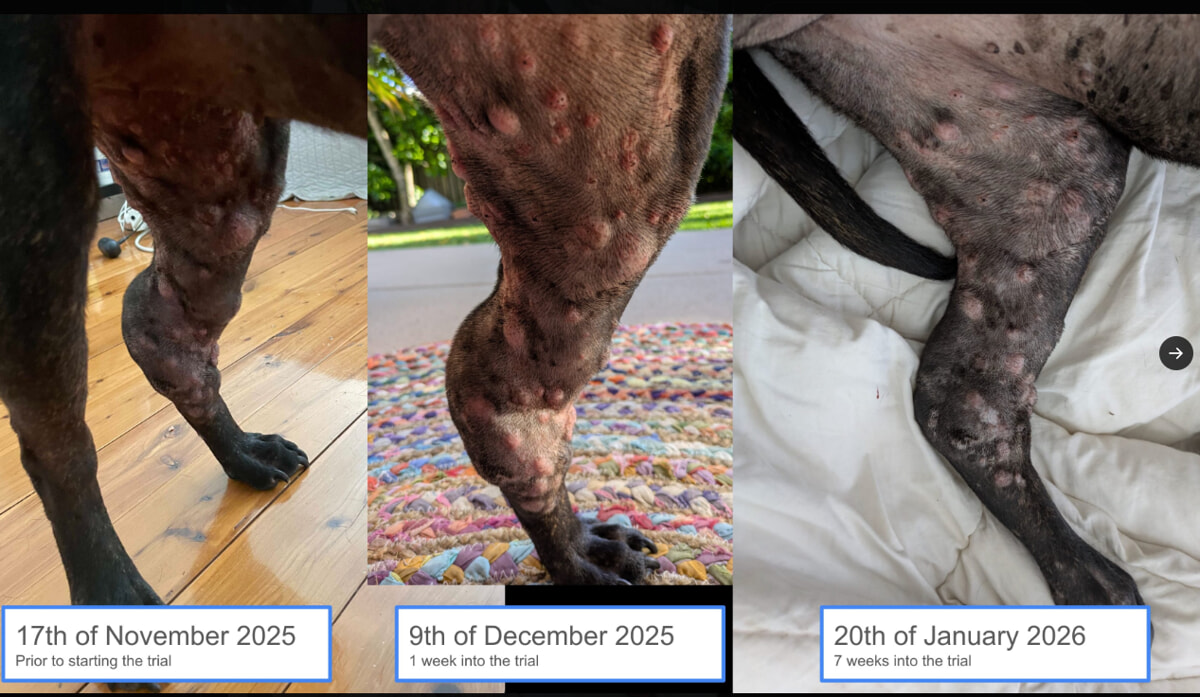
The results were not long in coming: in a few weeks the tumor would have regressed by 75 percent, so much so that the dog would be able to run and play again like it hadn’t happened for more than a year. The disease is not conquered, and in all likelihood it never will be. But Rosie may have gained years, and has rediscovered a quality of life that now seemed lost.
The doubts of the scientific community
This is the story as its protagonists told it. It’s incredible, but many in the scientific community urge caution, for three fundamental reasons. The first, and most obvious, is that no one can say whether the personalized vaccine has really helped Rosie: the dog has in fact received several cycles of chemo and immunotherapy, and the vaccine was administered in conjunction with immune checkpoint inhibitors, therapies known to be – in themselves – effective in the case of tumors with a high mutational burden, such as canine mastocytomas. It is therefore impossible to establish which treatment could have actually produced the observed benefits.
The risk of lethal autoimmune reactions
Another critical aspect concerns security. Using mRNA vaccines as personalized immunotherapy is not a new idea, on the contrary: there are already several human trials underway, and with promising results. The fact is that in order to use such technology on humans, much more care is needed than is the case in the veterinary field (because it can easily produce lethal autoimmune reactions), and its effectiveness must be demonstrated beyond any reasonable doubt. The third problem concerns the real costs of such personalized therapy.
The vaccine for Rosie was developed on an experimental basis by a research institute, and obviously the costs – which were not charged to her owner – exceed hundreds of thousands of dollars. Also considering that a preparation for human use would have to meet much higher safety and purity standards than those necessary for an experimental veterinary product, it is clear that at the moment a personalized therapy of this type would still have prohibitive prices.
We must therefore resist the temptation to cry out a miracle, or to push for dangerous deregulation in the pharmacological and healthcare fields. Many believe that mRNA vaccines and AI will be the protagonists of the next revolution in oncology (and not only), but the road to making them safe, economical and truly “for everyone” is still long.