

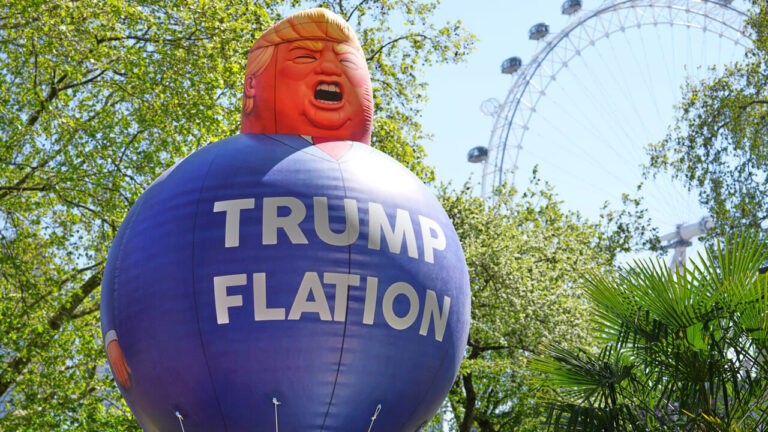
“Hormuz? Let the countries that use it go and reopen it.” With these rather lapidary words, on March 31st, Donald Trump launched yet another signal of distance towards his European allies, once again insisting on the theme of American energy independence. “Under my leadership the United States does not need oil from the Middle East”, reiterated the tycoon, relaunching the “sovereignist” narrative and not easing military pressure on Iran.
What is certain is that, if the president’s goal was to “make America great again,” part of that mantra found a concrete translation. Not for everyone, obviously, but for some large US companies which, in a context of international instability, are benefiting from high profits and significant competitive advantages.
The primacy of US oil and corporate affairs
The fact is one: after the closure of the Strait of Hormuz, the USA became the leading oil exporter in the world, displacing Saudi Arabia. In April, US crude oil exports reached 5.2 million barrels per day, an increase of around 30% compared to February volumes. In fact, the United States has transformed itself into a supplier of last resort, filling the shortage of oil from the Persian Gulf. The main hub is the port of Corpus Christi, Texas: here the tanker traffic has literally doubled compared to last year.
Oil, after all, is one of the focal points of Donald Trump’s inauguration speech, summarized in the motto “Drill, baby, drill” (translated: we will drill to look for new deposits, regardless of environmental impacts). This process is generating record profits for large American oil multinationals. ExxonMobil shares have risen 36% over the past six months, ConocoPhillips shares have risen 19%, while Chevron shares have risen 7% over the past three months and 42% year-over-year.
Last April 14, Venezuela signed an agreement with an American multinational to increase oil extraction. The tycoon himself had left no doubts after the daring capture of Nicolas Maduro and the change of regime. “The oil will flow again” Trump declared; in which direction it is obviously obvious to ask.
The paradox, however, is one: even in the United States, despite record exports, the price of petrol is rising, a factor that is eroding the tycoon’s electoral consensus. A dynamic that depends on various factors, including the push for margins by multinationals. But also by a structural characteristic: the majority of American crude oil is made up of “shale oil” which is generally “lighter” than conventional oil. Many refineries, in Asia as well as in the US itself, are instead designed to process “heavier” conventional crude oils. An imbalance that pushes part of the production towards export and contributes to keeping prices high also on the domestic market.
The “golden age” of the American gas industry
However, we don’t live on oil alone. Gas is also part of the crisis triggered by the closure of the Strait of Hormuz which has especially penalized Qatar, one of the main world exporters together with the United States and Australia. Approximately 20% of global liquefied natural gas (LNG) transits through the Strait and, again, many American companies are taking advantage of this impasse.
Natural gas can be transported in two ways: in the gaseous state (via gas pipelines) or in the liquid state (LNG), thanks to a cooling process. U.S. liquid gas exports rose from about 0.5 billion cubic feet per day in 2016 to about 15 billion in 2025 — an increase of more than 2,500% in less than a decade, driven largely by Europe’s renunciation of Russian gas after the invasion of Ukraine. With the crisis in Iran, the USA has also significantly increased natural gas exports to Asia. And the repercussions can also be seen on the markets.
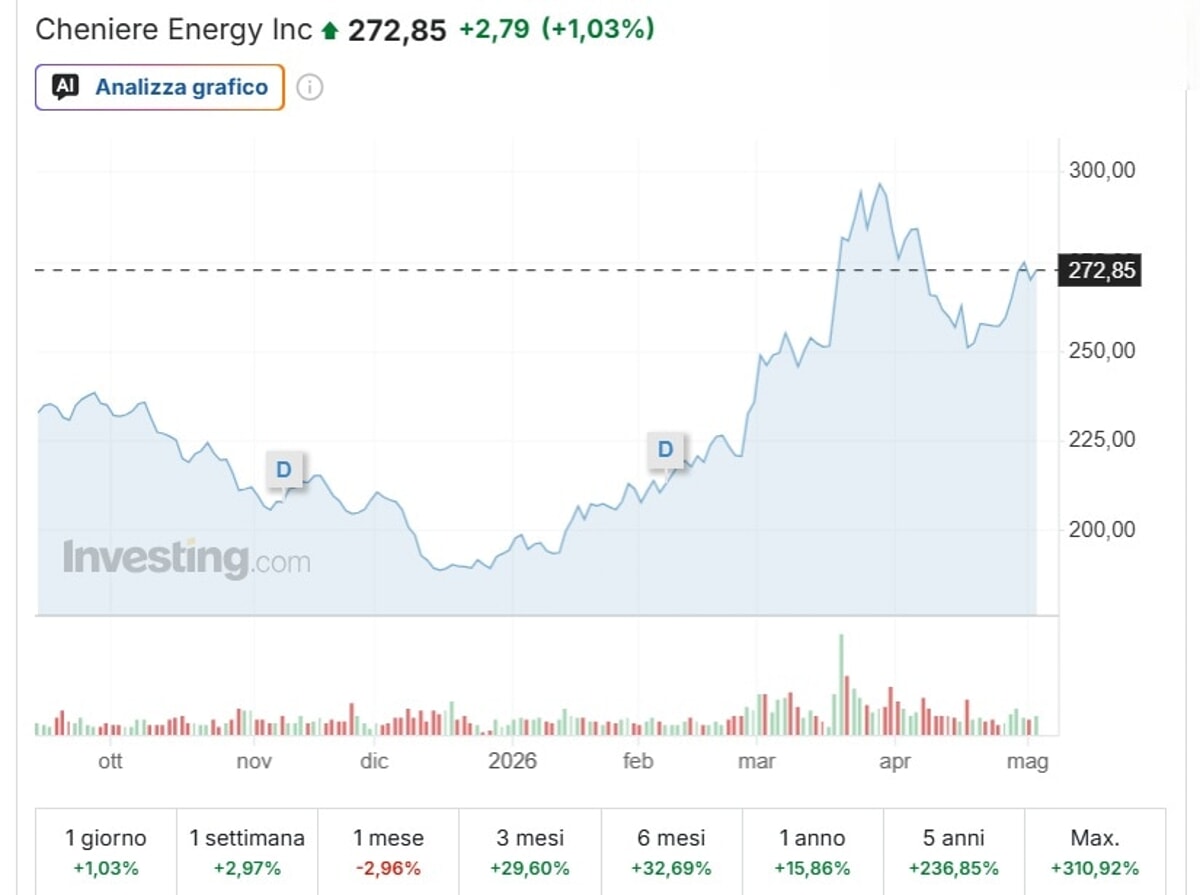 Cheniere Energy, a natural gas giant based in Houston and one of the first American companies to export LNG overseas, has seen its share value grow by almost 30% in the last six months. In the last five years the increase has been 236%, a real record.
The business of the century: weapons
But, trivially, one of the sectors that is most affected by the war that the USA has brought to Iran is the defense sector. And, in this case, the dominance is largely American. Today, US companies represent about half of the global turnover of a sector that has seen a 26% increase in revenue between 2015 and 2024. According to some Pentagon estimates, the conflict could generate up to 200 billion dollars in new contracts, with programs to increase the production of weapons and a surge in global demand. Meanwhile, the American defense giants are growing on the stock market, albeit with some differences.
First-quarter 2026 results released this week by Lockheed Martin, Northrop Grumman, RTX Corporation and Boeing showed more subdued growth. Above all, the delays in production and supply chains, which slow down the increase in revenues, as well as very high market expectations after the increases of recent years, weigh heavily. Wars increase orders, but profits take longer to materialize, while rising costs squeeze margins in the short term. Margins that still remain significant if the horizon is broadened: in the last year the share value of these companies has grown by at least 10%.
The real beneficiaries: the financial giants that dominate the market
If you look at the shareholdings of the large energy and defense companies mentioned above, quite clear evidence emerges: among the main shareholders there are a few large financial groups, which directly benefit from the economic results of these multinationals.
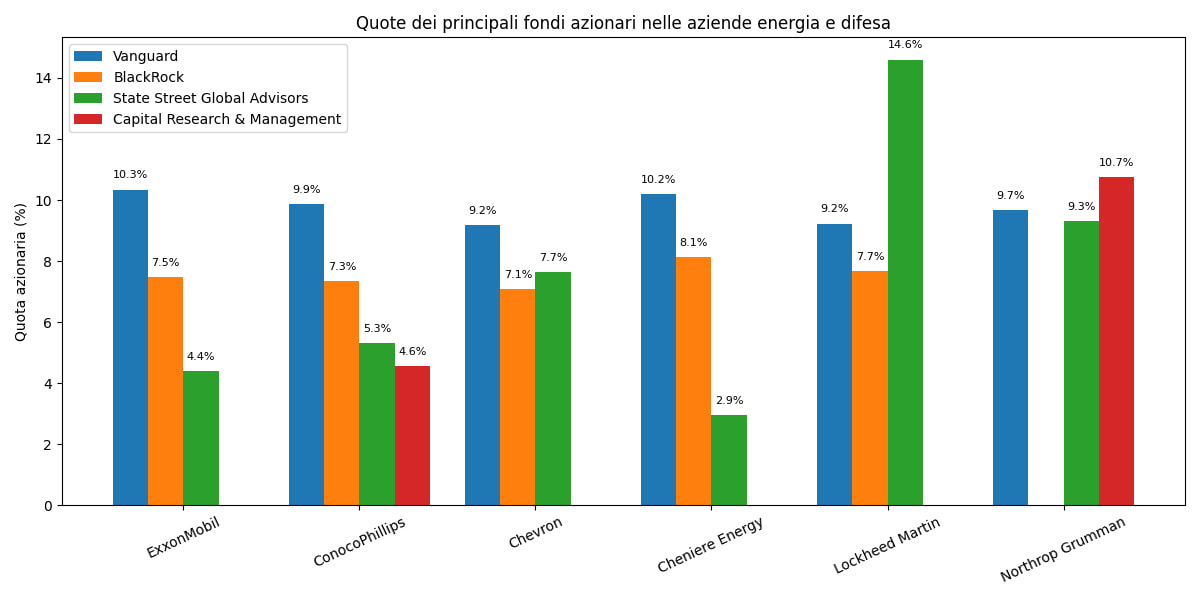
US financial giant The Vanguard Group holds the largest individual stakes in several large energy companies, including ExxonMobil, Chevron and Cheniere Energy. A leading role also belongs to State Street Corporation, the largest individual shareholder of defense groups such as Lockheed Martin, while Capital Research and Management Company represents the main shareholder presence in Northrop Grumman. Finally, there is a transversal presence for BlackRock, which appears permanently among the main shareholders in most of the companies mentioned.
It is these large institutional investors who reap a significant share of the benefits deriving from the growth in revenues and profits in a context marked by international tensions. Instead, it is the citizens who pay the price, even in the United States itself.
Public debt and inflation: the cost of war
The Pentagon told Congress that the war in Iran has cost $25 billion so far, with most of the spending concentrated on munitions. But this figure is almost certainly an underestimate. According to Harvard public finance professor Linda J. Bilmes, the first days of the war cost about $2 billion a day, and the initially indicated total of $11.3 billion would actually be closer to $16 billion, because the Pentagon accounts for munitions at historical inventory value, not current replacement cost.
Meanwhile, American public debt exceeded $39 trillion in the first weeks of the conflict, marking a new historical record. Inflation, however, started to rise again in the United States up to 3.5%, the highest level in the last two years.

And if the war increasingly distances Trump from his “Maga” base, in recent months it has only been big American finance that has become truly great. A very different scenario from the “golden age” promised in the election campaign.