

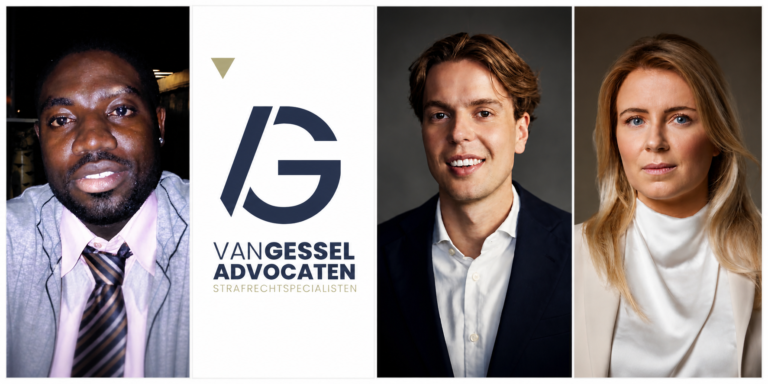
Entrepreneur, civil engineer, and cultural producer G. G. Sam-Korsah sues Amsterdam law firm over alleged legal failures, linking the case to systemic training gaps.
Amsterdam, Netherlands / Geneva, Switzerland / 04/05 May 2026
Ghanaian-Dutch civil engineer, entrepreneur and cultural producer G. G. Sam-Korsah has filed a civil lawsuit against Amsterdam-based law firm Van Gessel Advocaten, alleging professional misconduct and negligence that he claims irreparably damaged his legal case against the Dutch police authorities.
The dispute centers on a formal complaint related to an 11 May 2023 police incident in Amsterdam, the capital city of the Netherlands. According to Mr. Sam-Korsah, the complaint was ultimately rejected after police authorities determined it had been filed outside the one-year statutory deadline.
However, a key point of contention remains unresolved: police records indicate the complaint was submitted on 14 May 2024 — after the deadline — while the law firm reportedly maintained it had been filed on 2 May 2024, which would have been within the legal time limit. Sam-Korsah argues that this discrepancy was never adequately explained and directly resulted in the collapse of his case.
Allegations of procedural failure
Beyond the disputed filing date, the lawsuit outlines broader concerns about how the case was handled. Sam-Korsah claims that much of the legal work was carried out by Bram Korver, supervised by Simcha Plas, the main lawyer in charge. Bram Korver, who, according to the Dutch Bar Association (NOvA), was not yet formally sworn in as a lawyer at the time, was acting in a legal support capacity — As a paralegal. The Bar notes that Mr. Korver was sworn in as an attorney one day after the critical filing date — On 15 May 2024.
Sam-Korsah further alleges a lack of clear legal strategy, insufficient communication, and failure to take corrective action once procedural issues emerged. Although the firm refunded his legal fees following an internal complaint process, he maintains that this did not address the legal consequences of the missed deadline and wrongful application of law.
Escalation to disciplinary authorities (NOvA)
In December 2024, the matter was subsequently brought before the National Dutch Bar Association and referred to the disciplinary board (Raad van Discipline). In its findings, the board confirmed the timing of Korver’s swearing-in 15 May 2024, creating a complex legal situation regarding professional accountability at the moment the alleged error occurred on 14 May 2024.
While certain professional shortcomings were acknowledged during disciplinary proceedings, setting the basis/ grounds for this lawsuit, Sam-Korsah contends that these findings did not result in any meaningful remedy or restoration of his legal position. He has since appealed aspects of the decision to the Hof van Discipline (Disciplinary High Court), arguing that the case involves a broader pattern of professional errors, including incorrect application of law and wrongful legal advice given by Bram Korver, which continued after he was sworn in as a lawyer, and a failure to repair procedural damage.
Geneva summit 2026: linking personal case to systemic reform
While participating in this year’s European Youth Summit in Geneva, Switzerland, Sam-Korsah connects his legal experience to what transpires as a broader structural issue in professional education and training.
Reflecting on the circumstances of his case, he suggested that the situation raises questions about whether sufficient practical preparation and supervision were in place during a critical phase of legal representation. He pointed to the handling of procedural deadlines and legal interpretation as examples of where gaps between theory and practice may have had serious consequences.
When asked by the Centre for Diplomatic Advancement, CDA, the organization behind the summit, what single systemic reform he would prioritize if given the opportunity — in other words, “If he was given the power to redesign one broken system in his country, what would he change and how would it impact people?” — Sam-Korsah responded:
“I would integrate classroom education with on-the-ground education.”
During the interview G.G Sam-Korsah argued that bridging the gap between academic training and real-world experience would better equip professionals to handle complex, high-stakes situations with greater competence, accountability, and judgment.
Sam-Korsah added that, in his view, the shortcomings in his case reflect what can happen when that integration is lacking. He has raised concerns about whether the failures resulted from negligence, a deliberate legal sabotage or deeper structural issues within professional preparation, while emphasizing that his focus remains on accountability and constructive reform.
Civil case seeks accountability
The civil lawsuit represents Sam-Korsah’s primary effort to seek accountability and damages. He argues that the law firm’s actions — or failures — effectively deprived him of the opportunity to pursue his complaint against the Dutch police.
I did not expect perfection. I expected diligence, transparency, and accountability,” he said. “What I experienced instead was procedural failure and a lack of clarity at a critical moment.”
Broader implications
The case raises wider questions about client protection within the Dutch legal system, particularly in situations where professional errors are acknowledged but do not lead to substantive remedies.
Separate proceedings related to the underlying police incidents 11 May, 4 and 6 September 2023 remain ongoing through other legal channels including the National Ombudsman and Public prosecution office. The civil case is expected to proceed in the Amsterdam courts.
Summary: Background Leading to the Police Arrest of 11 May 2023
Initial Incident (4 January 2021 — onwards)
The situation originates from a protest and campaign addressing structural discrimination, systemic racism, racial profiling, and police violence. This followed an incident at a Lufthansa check-in in Italy, which resulted in a lawsuit against the airline Deutsche Lufthansa AG.
Subsequent Interactions with Authorities (January 2021 — September 2023)
Following this, G. G. Sam-Korsah experienced repeated encounters with police, which he believes constitute systemic harassment and targeted victimization aimed at silencing him.
Request for Transparency (February 2023 — June 2023)
During this period, he received advice from a well-known activist specializing in complaints against police, as well as advocacy against victimization, criminalization of activists, and police violence and brutality. He subsequently initiated a request to access his personal records and any existing police dossiers. Shortly after taking this step, he experienced what he perceives as immediate retaliation from the police department.
Arrest and Physical Harm (11 May 2023)
On the night of 11 May 2023, a few weeks prior to a scheduled file inzageverzoek politie Amsterdam inspection, he was subjected to an arrest which he believes was unlawful and involved excessive force, resulting in knee and back injuries. He believes this arrest was an attempt to scare and block him from attending the scheduled police file inspection. He did record a video of this incident and also attended this meeting on 2nd June 2023.
Alleged Cover-Up and Obstruction (12 May 2023–4 September 2023 & Beyond)
Following the incident, he encountered:
- Bureaucratic barriers that delayed or obstructed access to information
- Legal misrepresentation and lack of adequate legal clarity
- Patterns of institutional resistance, intimidation, and procedural complications that hindered accountability
Ongoing Barriers to Resolution (February 2024–23 July 2024 /Onwards)
Attempts to seek justice have been met with prolonged delays, increasing legal costs, and procedural obstacles. These delays have effectively limited access to timely justice.
‘Democrazy’ Hijacking
Democracy, in principle, is built on participation, accountability, and the protection of individual rights. It promises that citizens can speak, assemble, question authority, and seek justice without fear of retaliation. But when these very actions trigger repression instead of protection, democracy begins to fracture. What remains is not democracy — but something distorted. A system that performs legitimacy while quietly undermining it. A democrazy.
This hijacking does not happen overnight. It unfolds in stages — subtle at first, then increasingly overt.
It often begins with expression and dissent. A protest against discrimination, racial/ethnic profiling, or police violence should be a legitimate democratic act. Instead, it can become a point of entry into surveillance or targeting. Individuals who speak out may find themselves no longer treated as participants in democracy, but as subjects of suspicion.
What follows can feel like patterned encounters — repeated interactions with authorities that go beyond coincidence. Stops, questioning, monitoring, or administrative pressure begin to accumulate. Each instance may appear minor in isolation, but together they form a pattern that is difficult to ignore and even harder to prove.
The situation escalates when one seeks transparency and accountability. Requesting access to personal records or police files — an act meant to clarify truth — can provoke resistance. In some cases, it is perceived as a challenge to the system itself. The response may not be direct denial, but something more complex: delays, silence, or sudden complications.
Then comes the turning point: enforcement. An arrest — especially one perceived as unjust or excessive — can serve as both punishment and deterrent. Physical harm, whether incidental or disproportionate, deepens the impact. It transforms a bureaucratic struggle into a personal and bodily one.
After this, the system often shifts into self-protection mode. Bureaucratic processes become tangled. Information becomes difficult to access. Legal pathways grow confusing or costly. Representation may feel inadequate or misaligned. Each layer adds friction, slowing down any attempt to seek clarity or justice.
This leads to a final stage: exhaustion through delay. Legal processes stretch over time. Costs rise. Momentum fades. What began as a pursuit of accountability risks becoming a prolonged struggle just to be heard. The phrase “justice delayed is justice denied” stops being a cliché and becomes a lived reality.
This is how democracy is hijacked — not by abolishing its structures, but by overloading them, bending them, and selectively applying them. Rights remain on paper, but accessing them becomes a challenge few can sustain.
Calling this phenomenon Democrazy is not just wordplay. It reflects a system that appears rational on the surface but operates in ways that feel disorienting, contradictory, and, at times, irrational to those caught within it.
Yet documentation, articulation, and persistence matter. Naming patterns is the first step toward exposing them. Whether through legal channels, public discourse, or collective advocacy, pushing back against systemic distortion is essential.
Because democracy does not only depend on institutions — it depends on whether people can still use them without fear.
And when they cannot, the question is no longer whether democracy is intact, but how far it has already been taken.
The story unfolds.
The story of Incident 4 September 2023 to be continued…
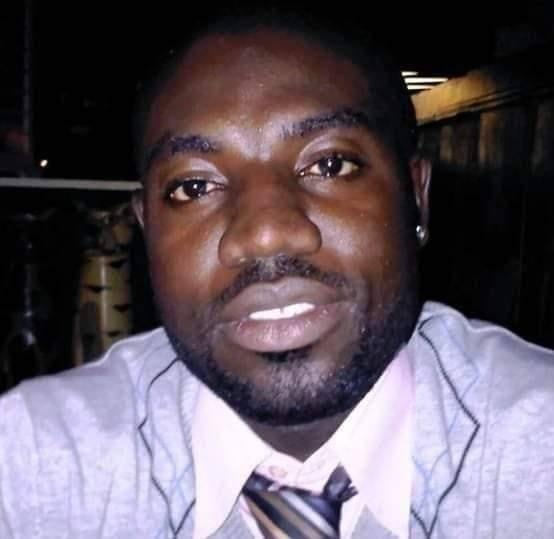
Justice4G.org:
Documentary & Book as mediums to inform, educate, & drive action. Exposing systemic discrimination & social injustices through real-life experiences.
George Geronimo Sam-Korsah