

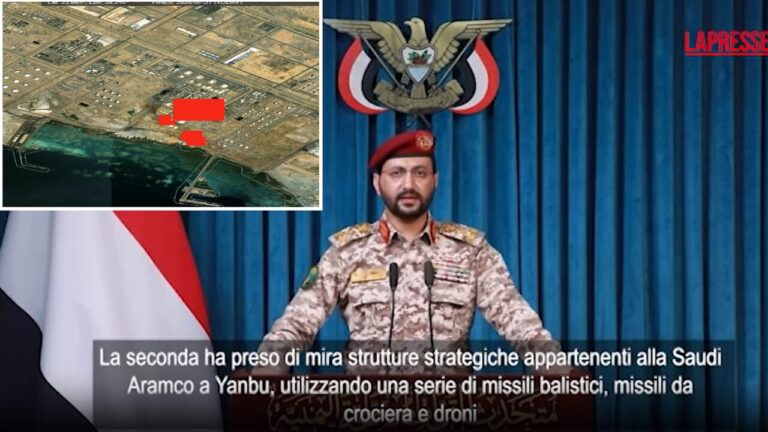
A new Houthi drone attack has targeted the network used to transport oil from eastern Saudi Arabia to the Red Sea port of Yanbu, one of the most important nodes in the global oil system. The company exposed and managing the plants is Saudi Aramco, the Saudi state oil giant. The military spokesman for the Iran-backed Yemeni militia, Yahya Saree, said the operation was a response to what he called Saudi drone incursions into Yemeni airspace.
The claim of the Houthis
Houthi military spokesman Yahya Saree says Yemeni forces have struck “some targets and sensitive points related to security and the transportation of crude oil from eastern Saudi Arabia to Yanbu” with several drones.
Meanwhile, the Saudi Ministry of Defense says that air defense systems have destroyed drones coming from Iraq. Unmanned aerial vehicles attempted to strike oil facilities in the eastern region of Saudi Arabia, according to a statement. The ministry said the drones were launched by pro-Iranian armed groups in Iraq, reiterating its “right to respond against the source of the attacks.”
According to officials and diplomats who have dealt with the militia and who were cited by the New York Timesthe war-hardened Houthis appear to believe they have little to lose and much to gain from escalating confrontation with Saudi Arabia. They act to help their main ally, Iran, but also to force the kingdom and the international community to make political concessions. “The Houthis have only one solution for every problem in the world: war,” he told the Nyt Farea al-Muslimi, researcher specializing in Yemen at the London-based Chatham House research group, “The Saudis solve every problem by trying to flood it with money, while the Houthis solve it by shooting at us.”
Saudi oil under attack: a new threat to prices
The new claim comes after the July 25 attacks on Aramco’s Jizan and Yanbu plants. Satellite images show columns of smoke tens of kilometers long rising from the Yanbu plants. The complex is connected to Abqaiq, in the east, via the pipeline that allows Saudi Arabia to transfer oil from the eastern province to the Red Sea without crossing the Strait of Hormuz.
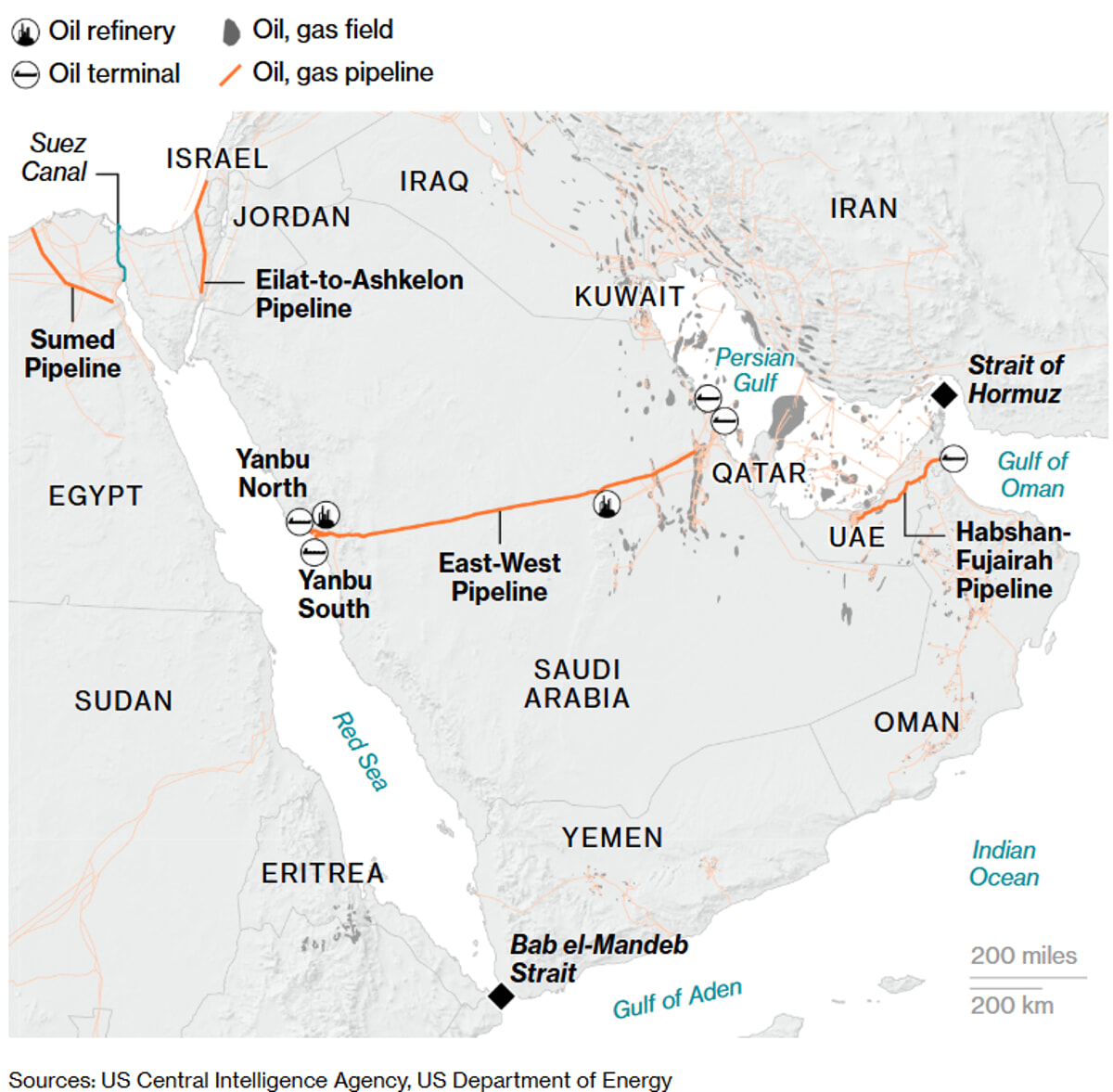
Saudi Aramco describes Abqaiq as “the world’s largest crude oil stabilization facility” and says it processes between 5 and 7 million barrels of oil per day, equivalent to about 5 percent of global supplies, as well as stabilizing half of Saudi daily production.
A few days ago, the Houthis declared a maritime blockade against Saudi Arabia. Given Yemen’s strategic location on the Red Sea, the Houthis are well positioned to destabilize energy markets. Saudi Arabia, the world’s largest oil exporter, usually ships most of its oil through the Strait of Hormuz, near Iran, but due to the war it was forced to divert the flow through the Red Sea: now this passage is also at risk again.