

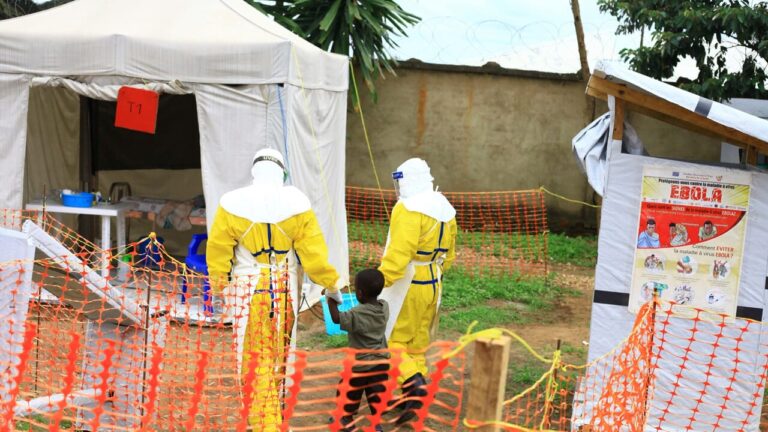
Almost 5 thousand infections and over 2,300 deaths in just three months, with the virus having now reached six provinces of the Democratic Republic of Congo. The World Health Organization is raising a new alarm on the Ebola epidemic caused by the Bundibugyo virus, which has become the most serious ever recorded in the country and the second deadliest in the world after the one that hit West Africa between 2014 and 2016.
“We must be frank: the epidemic is far from being under control,” warned WHO Director General Tedros Adhanom Ghebreyesus, opening the second meeting of the Emergency Committee convened to assess the situation. Experts will have to determine whether to maintain the classification of “public health emergency of international concern” (PHEIC), declared by the WHO on May 17, two days after the official announcement of the outbreak by the Congolese authorities.
Almost 5 thousand infections and over 2,300 deaths
Since May the situation has rapidly worsened. According to the latest available data, as of August 16, 4,945 confirmed cases and at least 2,325 deaths had been recorded. The toll has already exceeded that of the epidemic that hit Congo between 2018 and 2020, when 2,299 people died. The current outbreak is therefore the deadliest ever faced by the Democratic Republic of Congo and the second most serious in the history of Ebola after the West African epidemic of 2014-2016.
What worries the WHO is not only the numbers, but above all the speed with which the virus continues to spread. “It is spreading faster than any previous epidemic,” Tedros explained. The insecurity affecting large areas of the country, displacement and intense movements of the population along roads, rivers and routes linked to mining activities are favoring the infections.
The main problem remains the existence of numerous chains of contagion that the health authorities are still unable to intercept. Many sick people die in their homes or in their communities, without ever having arrived at treatment centers and without having previously been included in the contact lists of infected people.
Every death of this type, the WHO director general warned, may indicate the existence of a still unknown transmission chain. According to information collected by Reuters, between 70 and 80% of new cases do not currently have a clearly identified epidemiological link.
The virus has also arrived in France
The risk, however, does not only concern Congo. “Borders can slow down the response, but they don’t stop a virus,” Tedros stressed. Uganda, where the virus had arrived from the neighboring country, managed to interrupt transmission: on 28 July the authorities declared the outbreak over after 42 days without new confirmed cases of local transmission.
In June a case was also identified in France. He was a middle-aged doctor who had returned from the Democratic Republic of Congo, where he had worked for five weeks caring for patients affected by the virus. The man, who arrived at Charles de Gaulle airport on June 23, had spontaneously reported symptoms and was immediately isolated. The infection was confirmed the following day. The patient then recovered and was discharged on July 4 after two negative PCR tests. No secondary infections have been detected in France.
The race to find a vaccine
The emergency is made more complex by the variant responsible for the outbreak. The Bundibugyo virus belongs to the Ebolavirus genus, but there are currently no specific vaccines or treatments already approved against this specific form of the disease.
WHO is therefore scaling up the response, increasing the capacity of treatment centers, strengthening surveillance in communities and supporting procedures to ensure safe burials. At the same time, testing of new tools against the virus began.
For the first time, two vaccines developed specifically against Bundibugyo have entered human trials, while another vaccine, which reportedly showed possible cross-protection in animal studies, is approaching phase 3 clinical trials. The “Partners” study, sponsored by the WHO to evaluate possible therapies, has also already enrolled around a hundred patients.
The health response, however, must deal with a country affected by armed conflicts, population movements and serious deficiencies in the health system. WHO believes that continuous funding, greater data sharing, more effective surveillance and above all safety conditions that allow operators to reach the affected areas are necessary.
And Ebola, Tedros recalled, represents only one of the health emergencies affecting the Democratic Republic of Congo. Malaria, cholera, pneumonia, diarrheal diseases and maternal mortality continue to cause a very high number of victims. The challenge is therefore to stop the virus without taking resources away from other essential health services.
Despite the picture, the WHO still believes it is possible to bring the epidemic under control within about three months, provided that the response is strengthened and has the necessary resources. So far, around 60% of the estimated $115 million to address the emergency has been raised.