

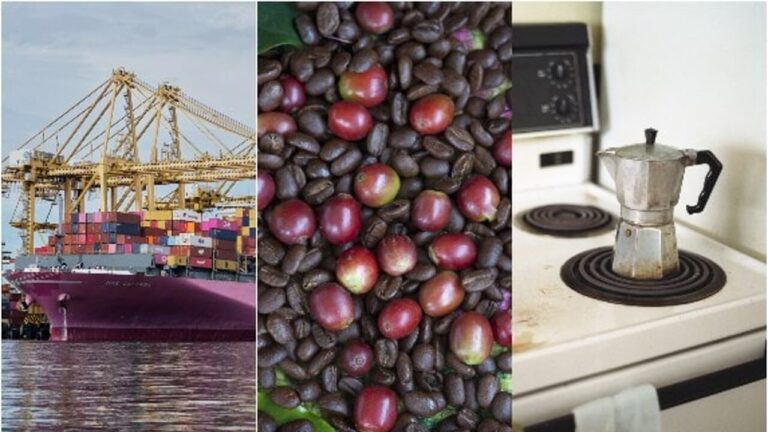
An espresso at a bar costs almost a quarter more in Italy today than it did five years ago. This was stated by the Consumer Training and Research Center (Crc) which, in collaboration with Assoutenti, carried out a new study on cup prices by analyzing the price increases that affected coffee during 2026. And the tensions do not seem destined to stop. Colombian coffee exports are suffering a serious logistical disruption due to the 7.4 magnitude earthquake that hit the country, adding a new element of risk to a market already subjected to raw material price pressure in recent years. Based on official data from the Ministry of Business and Made in Italy collected in the various Italian provinces, it emerges that an espresso costs on average 1.29 euros, 25 cents more than in 2021, with an increase of 24.2%. But the situation varies a lot from city to city. Bolzano remains the most expensive, with 1.51 euros per cup. At the other extreme is Messina, where the average price is 1.06 euros.
Faced with an espresso that is getting ever closer to 1.30 euros at the bar, the question becomes inevitable: how much does it cost to prepare it at home? Ten cents? Winds? Fifty? The answer depends above all on a choice made long before pressing the button on the machine or putting the moka pot on the stove: the format in which we buy coffee.
A cup with mocha? Up to 20 cents
A survey of the prices available in large-scale retail trade in mid-August 2026 immediately gives the order of magnitude. Ground coffee can cost just over 11 euros per kilo for some distribution brand blends, around 19-24 euros for many products of the most popular brands and almost 29-30 euros per kilo for some premium blends. In the same point of sale, a compatible capsule can cost from 18 cents to over 50 cents per single coffee. To make the different methods comparable we can assume around 6 grams of coffee per cup. The actual quantity varies based on the size of the moka and how much the filter is filled. However, a home-made moka can therefore cost roughly between 8 and 20 cents per cup, depending above all on the blend purchased.
How much does coffee beans cost
The situation is similar for those who use a traditional or automatic espresso machine and buy coffee beans. About 7 grams of coffee are generally used for one espresso. With beans costing 12 euros per kilo, the dose costs around 8 cents. At 17 euros per kilo we are around 12 cents; with a coffee costing 30 euros per kilo you get around 21 cents.
Coffee beans also have a qualitative advantage: grinding them immediately before extraction limits the dispersion of aromas that begins once the bean is broken. This is one of the reasons why, for the same cost, investing in grinding can improve the result more than buying very expensive capsules.
Pods occupy an intermediate position. The standard format contains approximately 7 grams of coffee. Depending on the brand and promotions, a single pod can cost approximately between just over 20 and over 30 cents. In general, the pod tends to cost more than loose coffee because the single-dose packaging and the convenience of already having the correct quantity come into the price. For those who do not want to grind, dose and clean the filter holder, it can represent a good compromise.
The difference becomes much more noticeable with capsules. On the shelves of large retailers you can find cheap compatible ones for around 18 cents each, but various branded products cost between around 30 and 42 cents. Some premium capsules reach 50 cents and more per single espresso.
The point is, we’re not just paying for the coffee. A 5-6 gram capsule sold for 50 cents is equivalent, comparing the price to the weight of the product, to more than 80 euros per kilo of coffee.
How much we spend in a year
The difference seems small until we look at just one cup. It becomes much more apparent when you multiply it by a year. Let’s take a person who drinks three coffees a day, that is 1,095 coffees a year, and consider only the cost of the coffee, without depreciation of the machine. The difference can therefore become significant. Going, for example, from a capsule costing around 42 cents to a good ground coffee or beans costing around 12 cents means saving over 300 euros a year for a person who drinks three a day.
The comparison with the bar is even more impressive. Three espressos a day at the national average price of 1.29 euros mean a theoretical expense of around 1,413 euros a year. By preparing them at home with a good coffee costing 12-18 cents per cup, the expense for the raw material would drop to around 130-200 euros: a potential difference of more than a thousand euros, although naturally the comparison does not take into account the service offered by the bar nor the purchase and maintenance of the domestic machine.
So how can you save?
The first trick for drinking good coffee is almost banal: look at the price per kilo instead of the price on the package. For those who have an espresso machine, buying coffee beans and grinding it on the spot is probably the best balance between price and quality. In fact, fresh grinding helps to preserve the aromas.
For those who choose the moka, preparation also matters. The boiler must be filled without exceeding the safety valve, while the filter must be filled without pressing the coffee. Too fine or compressed powder makes it more difficult for water to pass through and can worsen extraction. Another frequent mistake: raising the flame too much to do it first. It is preferable to use a low heat, allowing the coffee to rise gradually.
And there is one last detail to remember. If you have to buy a 100 euro machine to prepare coffee, that cost should theoretically be distributed across all the cups produced. With three coffees a day and five years of use, for example, that’s just 1.8 cents more per cup.