

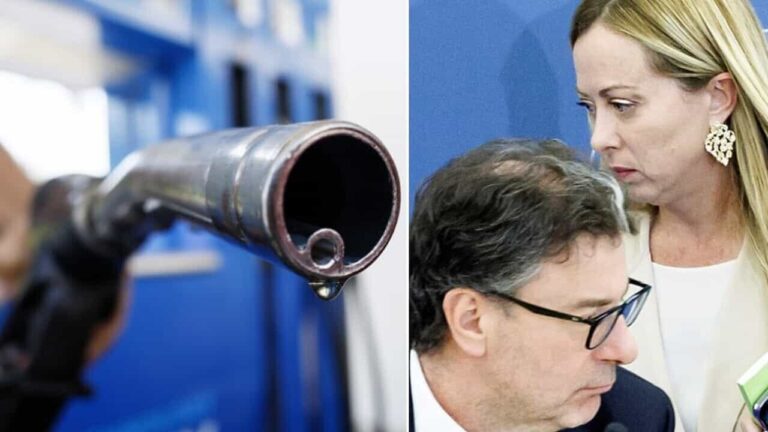
The government is studying new measures to ease the burden on fuel. The decree that extends the 17 cent cut in excise duties on diesel expires on 5 September (included), but at this point the executive is determined not to pass yet another extension, both due to the excessive costs for public finances and the limited impact on the price at the pump.
The latest ad hoc decree, launched last August 25th, in fact cost the state coffers around 130 million, but the cost of diesel fuel still remained above 2 euros. Now the majority wants to try new paths. One is that of mobile excise duties, i.e. the mechanism by which the extra revenue guaranteed by the increased VAT revenue can be reused – subject to interministerial decree – to lower taxes on fuel.
But first the government will have to do its calculations, verifying how many people received more from VAT in August and decide the size of the cut, which in any case does not promise to be significant. To be clear, it is useless to expect miracles: we are talking about a few cents per litre.
The hypothesis of a contribution linked to the ISEE loses steam
The other, less unrealistic hypothesis is that of an intervention aimed at certain categories of subjects. The Minister of Business and Made in Italy, Adolfo Urso, spoke of “selective measures, first and foremost for the benefit of those who travel for work and the less well-off classes”. So far so good, but the problem will be finding a criterion to determine the beneficiaries of the new discount. On this point the intentions of the majority are still unclear.
The possibility of using the ISEE criterion, disbursing the contribution on the “Dedicated to you” card is viewed with suspicion by the executive. As Forza Italia exponent Alessandro Cattaneo explained, “the only way to determine income is the ISEE, and 80% of the resources go to foreigners. It seems to me to be an unfair and ineffective system”. For this reason, according to Il Sole 24 Ore, the government could decide to provide the discount through employers with the fringe benefits mechanism.
A paycheck bonus?
The mechanism would allow companies to provide a full-service voucher to their employees completely tax-free (without Irpef or INPS contributions), deducting 100% of the expense from the budget as a business cost. In short, it would be a real petrol bonus on the paycheck. A solution that would lighten state spending on cutting excise duties, while leaving the measure to the free participation of employers.
The hypothesis was confirmed by the head of Economy of Fratelli d’Italia Marco Osnato: “If the crisis were to last on this scale – explained the FdI exponent – a selective evaluation will be made. One possibility is petrol vouchers from the employer, through fringe benefits. I believe it was a good intuition of the deputy minister Maurizio Leo”.
A new “bonus” in the pay slip at Christmas: the hypothesis of a cut in personal income tax up to 135 euros on the thirteenth
Diesel above 2.1 euros per litre
We will know more when the decree expires. Meanwhile, prices at the pump remain very high. According to the Ministry of Business and Made in Italy on Monday 31 August 2026, the average cost of petrol is equal to €2.017/l while diesel oil stands at even €2.130 per litre. On the motorway network, however, the average self-service price is €2.097/l for petrol and €2.204/l for diesel.