

This is how polls are rigged to manipulate a democracy
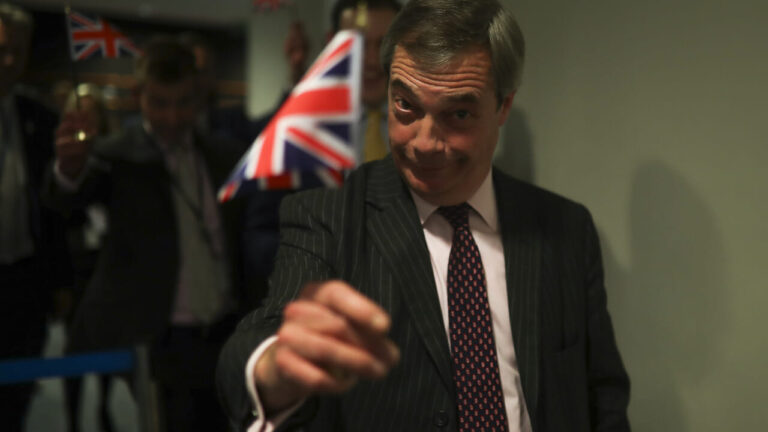
What remains of democracy when politics is dictated by polls and their response is commissioned by one of the parties involved, passed off as independent and paid for with money from a foreign country? These are questions that are shaking the United Kingdom, just weeks after Keir Starmer’s resignation, after one scoop from Channel 4 News which revealed how Reform UKk, Nigel Farage’s party, had commissioned the production of polls favorable to his party, in the months leading up to May’s local elections.
The investigation conducted together with investigative journalists from Verbatim shows James Orr, the party’s policy director, and Dan Jukes, a close associate of Farage, arranging for an American company to pay for three election polls in which the questions were expressly worded to show Reform as an electoral danger for Labour. The first poll, which cost £18,000, then appeared on the front page of the Telegraph on 17 January with the headline: “If we voted today, Labor would face a total defeat”; another two, worth £4,500 and £10,000, were published by the Telegraph and the Times with the following headlines: “Two in three voters want Starmer gone” and “Among trade union members, Reform is on the same level as Labour”. The same polls were then used by Lewis Goodall, a journalist far from Reform UK but highly critical of Starmer, in his documentary for Channel 4 Dispatches, “Keir Starmer: Where Did It All Go Wrong?”, helping to build the representation of a now delegitimized leadership and the need for its replacement, while Andy Burnham was presented as a possible alternative.
The Lib Dems have complained to the Metropolitan Police and the Electoral Commission. The Telegraph withdrew the affected articles after claiming it had been misled, while the British Polling Council found possible breaches of its transparency rules.
Responding to our investigation, one of the UK’s leading election lawyers explained why paying £32,500 for polling constituted donations to Reform:
“This is a donation just as much as giving a gift of money directly to Reform. It’s money that’s coming from America. That’s a… https://t.co/UB0UAcfT7Z
— Verbatim (@Verbatim_Media) September 4, 2026
In addition to the complaints, the Channel 4 scoop led to the resignations of James Orr and Dan Jukes, but the issue is more serious than Reform’s legal problems: three polls were constructed to produce results favorable to the party, and now the problem is not just the violation of funding rules but what emerges about the power exercised through the manipulation of perception. Those numbers, which came out of the Reform circuits, arrived in the newspapers, on social media and on television, and helped consolidate the image of an unstoppable force, of a Labor in free fall and of an unpopular Keir Starmer. In short, they exerted direct influence on elections and were instrumental in bringing about the replacement of a prime minister. And this is as much a problem for Reform as for the current Prime Minister Andy Burnham who, albeit unwittingly, has ridden the wave created by polls paid for by Reform.
It is one of the traps of contemporary politics: unverifiable findings and trends are treated as if they were definitive verdicts more important than those of the ballot box. Perception replaces reality and polls end up turning into self-fulfilling prophecies. In this way, power is transferred from politics to the media and from the results in the polls to those who have the resources to commission ad hoc polls.
At stake is democratic stability. When one party begins to use polls instrumentally and another relies on them to decide its leadership or direction, the democratic relationship is reversed. It is no longer the voters, through voting, who determine who should govern: it is the predictions about “what could happen” that determine the choices of the parties. But that data can be manipulated, and Reform’s case proves it.
This is a perfect example of how the media environment can be manipulated to the point of compromising the democratic process. Despite the landslide victory in July 2024, Starmer was forced to resign in July 2026, mainly due to his unpopularity. But now we know that there were polls without credibility behind it. And then, when public opinion can be narrated through manipulated polls and media campaigns, members of Parliament end up responding to a fictitious perception of public opinion. Power thus shifts from democratic institutions towards those capable of manipulating the information environment: from facts to narratives, from electoral choice to the ability to build consensus or rejection through artfully created polls.