

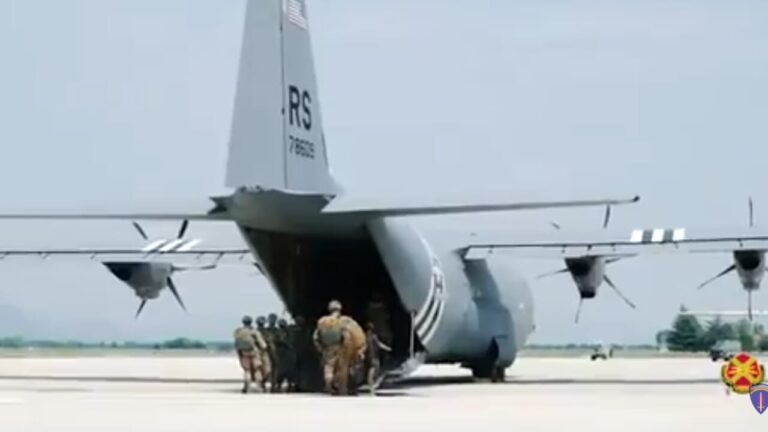
The Pentagon is considering a drastic reduction in the American military presence in Europe. On the table there would be the withdrawal of at least 25 thousand soldiers, almost a third of the men currently deployed on the continent. But one of the most radical scenarios could reach up to 40 thousand soldiers, effectively halving the US contingent in Europe.
To reveal it is NBC Newswhich cites seven current and former American and Western officials. The review does not only concern soldiers: cuts could also come from the United States to planes, ships, weapons systems and other assets currently deployed in European bases. At the moment, however, no final decision has been made.
From 80 thousand to 55 thousand soldiers, or even 40 thousand
The United States currently maintains approximately 80,000 troops in Europe. The main hypothesis under study foresees a reduction of the order of 25 thousand men, while according to two sources cited by NBC one of the options would go up to around 40 thousand. It would be one of the most significant reductions in the American presence on the continent since the end of the Cold War.
Those most affected could be Germany, Italy and Spain, where a significant part of the US forces are located. But some of the soldiers and equipment may not even return to the United States: among the options being studied is the transfer of some capabilities to the eastern flank of NATO, therefore closer to Russia.
The dossier is in the hands of General Alexus Grynkewich, commander of American forces in Europe and simultaneously supreme commander of NATO forces on the continent. The review, launched in June by Defense Secretary Pete Hegseth, envisions at least four possible configurations of the U.S. military presence. A final recommendation is expected to come in November, before the Trump administration’s policy decision. Reuters confirmed that Grynkewich is directly participating in the evaluation.
Why Trump wants fewer American soldiers in Europe
The review is part of the Trump administration’s strategy to push European allies to take on a larger share of their own conventional defense. Washington also wants to have more freedom to move men, ships and planes to other theaters considered priority.
Secretary of State Marco Rubio himself had anticipated in recent months that the American presence in Europe would be progressively reviewed. “There will ultimately be fewer US troops in Europe than in the past,” he explained in May, underlining however that any changes would be discussed with NATO allies.
However, the review comes at a time of growing tension on the eastern flank of the Alliance and while several European governments are calling for strengthening, not reducing, the deterrence capacity against Russia. Reuters reports that the uncertainty about the future American presence is accelerating military investments and the search for greater autonomy from the United States in several European countries.