

Samsung’s release of One UI 9 began in recent days: the new user interface made its debut with the new foldables – Z Fold 8 and Flip 8 -, and is now preparing to expand its functionality to the other devices of the Korean giant, starting with the S26 family. But what changes, concretely? Simpler and more fluid user experience and, above all, the Galaxy AI, a suite of tools based on artificial intelligence made in Seoul, enhanced and more personal.
Samsung One UI 9, the news for videos
Let’s start with My FanCam, a function that allows you to automatically ‘follow’ a selected person within a recorded video, keeping them at the center of the frame and thus intelligently reformatting the footage as the scene moves. It is a useful function, in particular, for transforming a horizontal video into vertical format, to use it on social networks, without losing focus on the main actor of the shot (how it works is clear in the video below).
Simplified user experience
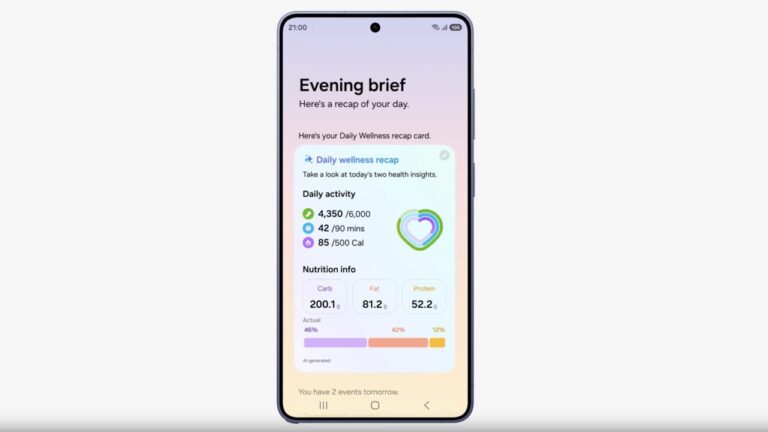
Also to make life easier for users, the new generative and editable ‘Now brief’ Cards help users choose what to display in daily summaries. Specifically, it is possible to create cards dedicated to health, weather and videos, so that the daily brief reflects the most relevant information. But One UI 9 also evolves familiar experiences to help you complete everyday tasks faster, from creative suggestions and prompts to simultaneous translation improvements in conversation mode that help reduce delays and make conversations more natural and seamless.
Furthermore, the ‘Scan documents’ function allows you to digitize complex materials, such as curved book pages or sheets with bent corners, with fewer manual adjustments. Views are optimized for large screens and an improved erase feature is also built in, resulting in cleaner, more usable scans.
Security and privacy are also enhanced, integrating transparency and control directly into the user experience. In particular, integrated AI can identify potential privacy risks, including unnecessary attempts to access permissions in the background, giving users greater awareness of how their information is being used.