

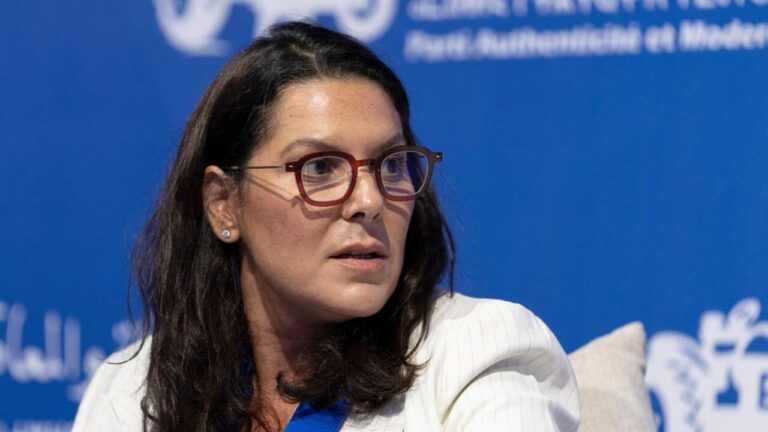
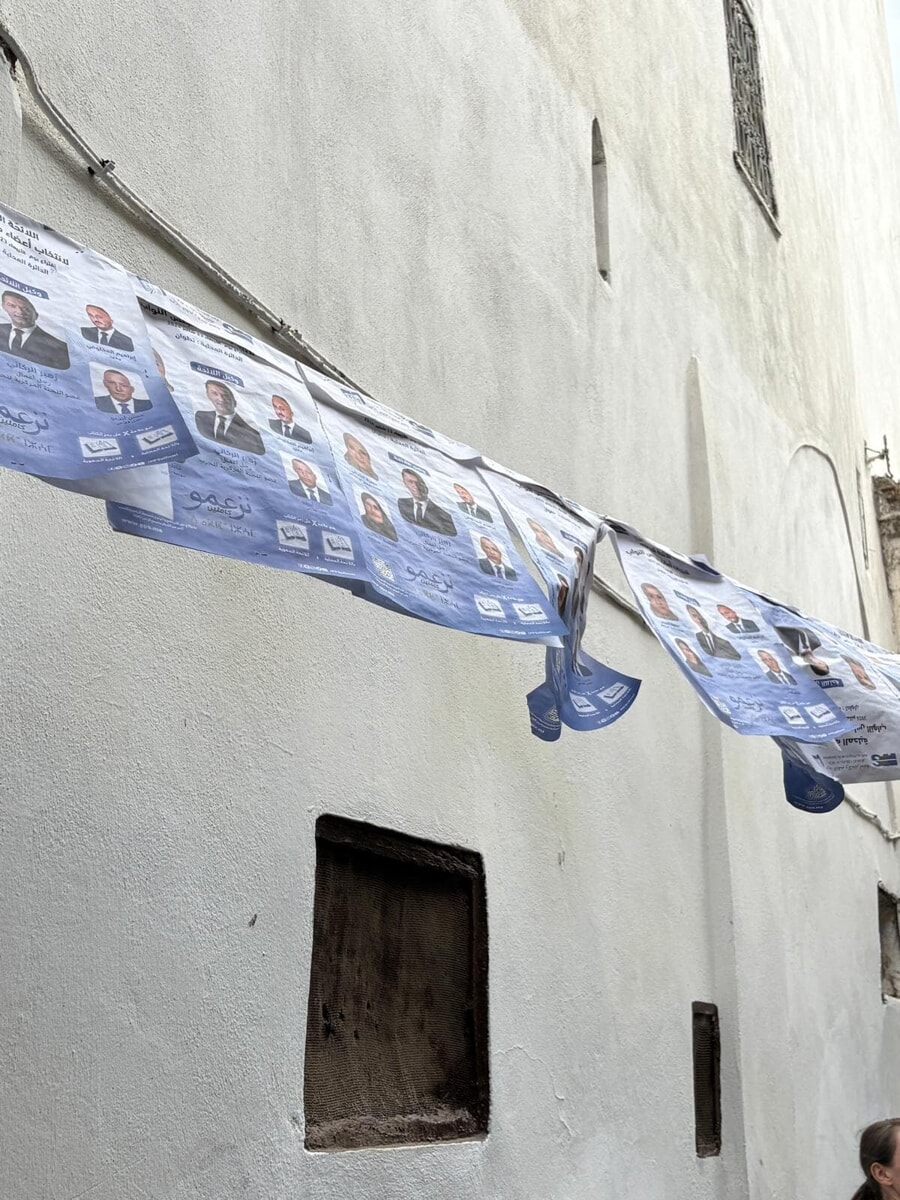
To understand Morocco these days you need to keep two photographs together. In the first there is Fatima Ezzahra El Mansouri who enters the Royal Palace of Rabat and leaves on 29 September with the task of forming the new government. Fifty years old, lawyer, former mayor of Marrakech, outgoing minister: she is the first woman in the history of Morocco called to lead the executive. A first time for the Kingdom, a constitutional monarchy, and the second in the Arab world, after the Tunisian Najla Bouden, who in 2021 became the first woman to lead an Arab government. In the other photograph there is almost no one. There are the polls on September 23rd and, above all, those who didn’t go to those polls. An almost surprising image for those who, in the previous days, had seen politics pouring into the streets: young people celebrating, flyers thrown into the air, drums, Moroccan songs and dances, in the narrow streets of the medinas as well as in the new neighborhoods of the cities. A noisy, colorful and tremendously physical campaign. Then the polls arrived and participation stopped at 38.02 percent, according to official data from the Moroccan Interior Ministry.
Between those streets and those ballot boxes there is a part of Morocco that these elections have tried to tell. A country preparing for the 2030 World Cup and investing in its international image, but in which the political debate continues to return to issues much closer to everyday life: the cost of living, work, housing, school, healthcare, opportunities for young people. It is from this contrast that El Mansouri’s nomination should be read. Because the photograph of the first woman to lead the Moroccan government is destined to go down in history, but it comes at the end of a vote that tells of something more complex than a simple alternation in power.
Who is Fatima Ezzahra El Mansouri
His political name was not born on September 29th. El Mansouri was born in Marrakech on 3 January 1976, studied law between Rabat, Montpellier and the United States and has practiced as a lawyer since 2005, specializing in land and real estate law. He arrives at the Royal Palace after almost twenty years spent inside the Moroccan political machine. In 2007 he joined the Mouvement de tous les démocrates, the movement that preceded the birth of the Authenticity and Modernity Party, the Pam, of which he was among the founders the following year. A modernist formation that has built part of its political identity in opposition above all to the Islamism of the PJD, but which it would be reductive to pigeonhole perfectly into the European categories of right and left. In 2009, at just 33 years old, he took over the leadership of the Marrakech city council; in 2011 he entered Parliament. From 2015 to 2024 he presided over the National Council of the WFP, in 2021 he returned to the helm of the Municipality of Marrakech and in the same year he entered the government of Aziz Akhannouch as minister of territorial planning, urban planning, housing and city policy. Since 2024 she has been coordinator of the collegiate direction of the party. It has passed through almost every level of Moroccan institutions: local administration, parliament, party and government. It’s a first time, but she’s not a debutante.
The vote that brought Fatima Ezzahra El Mansouri to the Palace
To understand why she arrived, you must first understand how this country works. And this is where Morocco becomes more difficult to read through the eyes of a European. The Kingdom is a constitutional monarchy: Mohammed VI is the head of state and the Crown maintains a central role in the political and institutional architecture, but there is also an elected Parliament and a government. Moroccans, therefore, do not directly elect the head of government. They elect the members of the House of Representatives and, after the vote, article 47 of the Moroccan Constitution comes into play: the king appoints the head of government by choosing him from within the party that came first in the legislative elections.
This is exactly what happened on September 29th. Mohammed VI received El Mansouri at the Royal Palace in Rabat and appointed her head of government, entrusting her with the task of forming the new executive. However, there is an important nuance: the victory of the WFP did not automatically make El Mansouri the only nameable person. The Constitution establishes the party from which the head of government must come, it does not identify the person in advance. Before the nomination, El Mansouri herself had recognized that the choice was up to the sovereign among the personalities of the group that arrived first.
What the polls really said
The previous step is the vote on September 23rd. Moroccans were called to elect 395 deputies to the House of Representatives, with over 15.8 million people registered on the electoral lists. The WFP won 97 seats, becoming the country’s leading political force. Behind were the Rni with 66 deputies, the Istiqlal with 65 and the Pjd with 54. Followed by the Popular Movement with 29, USFP with 26, Pps with 19, Constitutional Union with 17, Democratic and Social Movement and Left Alliance with eight each. However, no one has the numbers to govern alone.
Then there is another element that prevents us from reading the result as a clear break with the past, the WFP did not come from the opposition: it was part of the outgoing majority led by Aziz Akhannouch’s Rni and El Mansouri herself was minister. Change, therefore, coexists with a strong component of continuity. The party that comes first changes, the person at the helm of the government changes and a historic barrier falls because for the first time that position is entrusted to a woman. But a part of the political class now called upon to give answers to the Moroccans has also participated in the management of the last five years.
Why her
To the question “why did the king choose Fatima Ezzahra El Mansouri?” can be answered as far as the facts go. The Constitution requires that the head of government come from the party that came first in the legislative elections. The WFP won and El Mansouri has been the coordinator of its collegiate management since 2024. Added to this is an institutional curriculum built over almost two decades: Médias24 has defined her as one of the most prominent political personalities in the country for almost twenty years. Beyond this point you need to be cautious. To attribute other motivations to the king without having been made explicit by the Palace would mean entering the field of suppositions. The documented fact is that El Mansouri’s party won the elections, she occupies one of the top positions within it and Mohammed VI appointed her according to the mechanism provided for by the Constitution.
The symbolic significance of the decision remains enormous. Upon leaving the Royal Palace, El Mansouri herself spoke of a “historic” moment, underlining that for the first time a woman takes on the responsibility of leading the government. But immediately afterwards he shifted the discussion to the work to be done and the expectations of citizens, with particular reference to young people. “The work begins today,” he said, announcing consultations within the WFP and subsequently with the other political forces to arrive at the formation of the executive. It is the first real test of the new head of government.
Because what happens in Morocco is also of interest to Italy
At this point a question remains, especially for those observing from Italy: why should we care who governs Morocco? Just look at the Mediterranean not as a border, but as a space that puts the two countries into many of the same issues: economy, energy, migration, security and relations between Europe and Africa.
To the north of the country there are also two places that make this proximity to Europe almost physical: Ceuta and Melilla, the Spanish enclaves on the African coast. It is one of the points where Europe and Morocco meet and where the relationship between the two shores takes the concrete form of a “frontier”. The migratory pressures that periodically affect the enclaves, and which also involve young Moroccans, also bring us back to one of the issues that emerged during the electoral campaign: the opportunities offered to the new generations and the possibility of building their own future in the country.
But the link with Italy is first and foremost economic. According to data cited by the Italian ambassador to Morocco Pasquale Salzano on the occasion of the bicentenary of the Treaty of Friendship and Commerce of 1825, in 2025 trade between the two countries approached five billion euros, while Italian direct investments in the Kingdom are estimated at almost 1.8 billion. Italy is Morocco’s seventh trading partner worldwide and the second supplier of industrial machinery and equipment. A presence that concerns industrial technologies, engineering, mechatronics, energy transition and agri-food. It’s not just a question of exchanges. Infrastructures such as Tanger Med and Nador West Med, together with the development of the industrial hubs of Tangier and Kenitra, illustrate the Kingdom’s ambition to increasingly become a connection point between Europe and the African continent. Added to this is the preparation for the 2030 World Cup, which opens another season of investments in infrastructure, transport and the management of major events (not just sporting events). For Italian companies it means looking at Morocco not only as a nearby market, but also as a possible gateway to other African markets.
However, the relationship between Rome and Rabat is also political. Last July, during the Feast of the Throne in Rome, the Moroccan ambassador to Italy Youssef Balla spoke of solid relations between the two countries and of a vision of the Mediterranean as a space of “dialogue, peace and prosperity”. A relationship that gains further weight as Italy seeks to strengthen its presence and partnerships on the African continent with the Mattei Plan. And then there are the people. Balla himself defined the Moroccan community in Italy as a “human bridge” between the two countries. Behind the diplomatic relations and the billions of exchange there are families who live between the two shores, students, workers, entrepreneurs and migratory paths that have directly linked the two societies for decades.
Morocco in photos
In the end, those two photographs remain. Fatima Ezzahra El Mansouri leaving the Royal Palace with a task that no Moroccan woman had ever received before. And the polls of September 23, with that 38.02 percent. But between the two there are also images of the campaign seen from here: the kids on the street, the leaflets thrown into the air, the drums and the dancing in the medinas and new neighborhoods. A country that for days made politics heard in the streets and which, at the time of voting, left more than six out of ten registered voters out of the polls. Now begins the part that doesn’t fit into a photograph, the one in which we need to understand what, of all this, will really be able to change.