

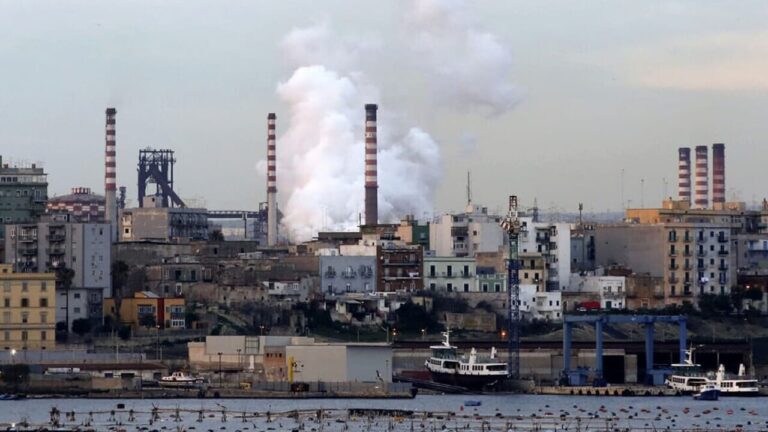
The Milan court of appeal confirmed, for the second time, the provision with which in July it was ordered to shut down the blast furnaces of the former Ilva by the end of October. The panel of judges, chaired by Giuseppe Ondei, also rejected the second request for suspension presented by the lawyers of the group in extraordinary administration and of AdI spa, who had requested the suspension of the decision on the blocking of the hot area in view of the Cassation hearing already set for 20 October.
The reasons for the decision
On September 30, the parties’ discussion was held before the judges. The deputy prosecutor Angelo Renna had asked to reject the new request for suspension, after the one already rejected on 11 September. The lawyers of the former Ilva and AdI, however, had reiterated their reasons, i.e. the irreparable damage – they claimed – due to the shutdown and had asked for time until after the judgment of the Supreme Court, set for 20 October.
Citizens’ right to health prevails over the rest. This, in summary, is the content of today’s provision. According to the Court, as stated in the order, “the setting of the hearing” of the Supreme Court does not change anything compared to the previous provisions which indicated the prevalence of the right to health, given the harmful emissions of the plants and the presence of asbestos.
What happens now
Therefore for now the decision with which the civil court of Milan on 27 July ordered the steel group to interrupt production activity in the hot area of the blast furnaces within 90 days remains in force, until “the asbestos still present in the plants has been completely removed” and “the necessary measures have been adopted to bring the emission of fine dust within safety limits”.
In recent days Acciaierie d’Italia had started the first procedures for the redundancy of workers, communicating that “the production stoppage imposed by the judicial provision will lead to the consequent impossibility of supplying, at least until the overall production reorganization of the group, the activities downstream of the production cycle of the hot area and the staff functions connected to the activities”.