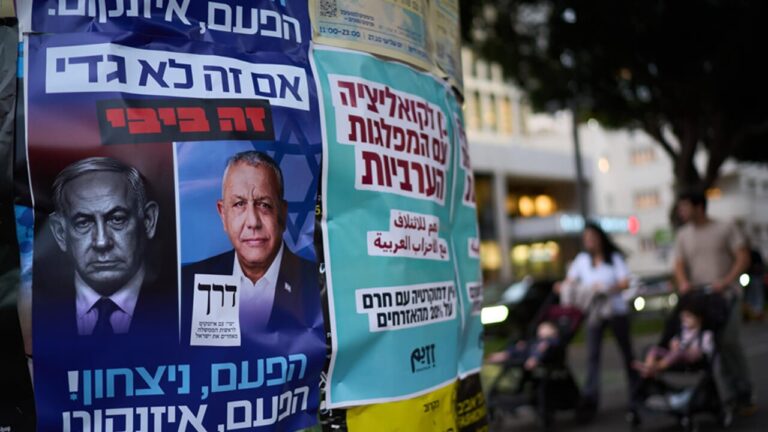
Today is the day on which the fate of Israel is decided: it is election day. This is the first vote after the October 7 massacre. The country goes to the polls in a more than tense climate: the conflict with Iran looms, the soldiers still in Lebanon and Gaza.
This is not a simple election, but a crucial watershed for the political destiny of Israel and for the leadership of Benjamin Netanyahu, the longest-serving prime minister in the history of the state.
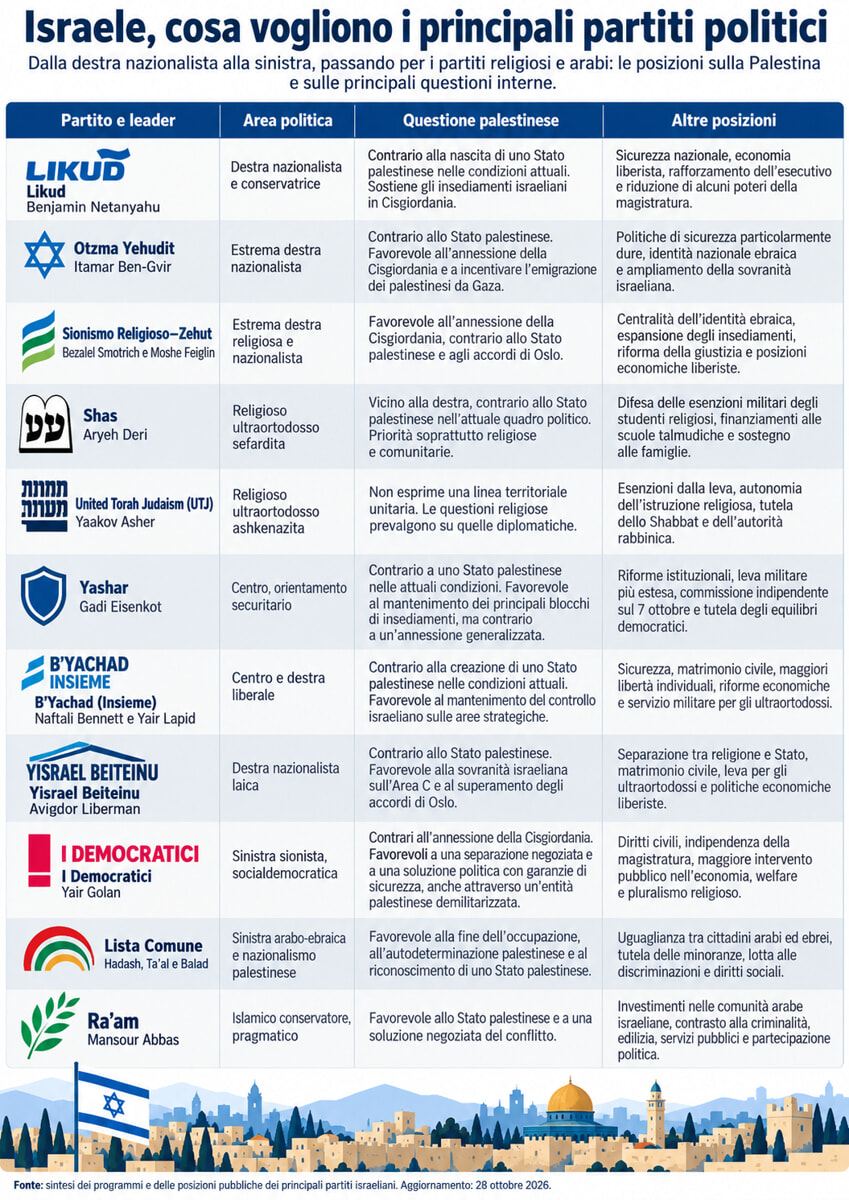
The political framework sees two opposite fronts. On the one hand, the bloc loyal to the outgoing prime minister, supported by the historic forces of the far right and ultra-Orthodox parties. On the other, the opposition coalition led by Gadi Eisenkot, former chief of staff. Despite Trump’s repeated endorsements, polls show a very close head-to-head between the two blocs.
The vote
The Israeli electoral law, based on a pure proportional system with a threshold of 3.25% and a single national constituency, requires reaching the “magic number” of 61 seats (out of the 120 total in the Knesset) in order to create an executive. There are a total of 36 parties in the running, of which only 13 are detected in the polls because they exceed the threshold.
Israelis cannot vote abroad, except for diplomats and their family members, soldiers stationed overseas, and representatives of national institutions serving abroad. For these there was an early vote, which took place on October 15, with ballots sealed in a double envelope and sent to Israel, to be counted at the end of the operations.
The exit polls will be announced immediately as the polls close, but the final results will not be made official until eight days after the vote, on November 4. Counting “double envelopes” takes longer and has in the past reversed the results of initial exit polls.
Netanyahu is going for broke
Netanyahu is seeking a seventh, non-consecutive term. His party, Likud, is Zionist and nationalist in orientation, but lost support after Israel suffered a Hamas attack on 7 October 2023. For this reason, Netanyahu is focusing everything on strengthening the security machine, although the military operation in Gaza cost him an arrest warrant from the International Criminal Court for alleged crimes against humanity together with the then Defense Minister Yoav Gallant.
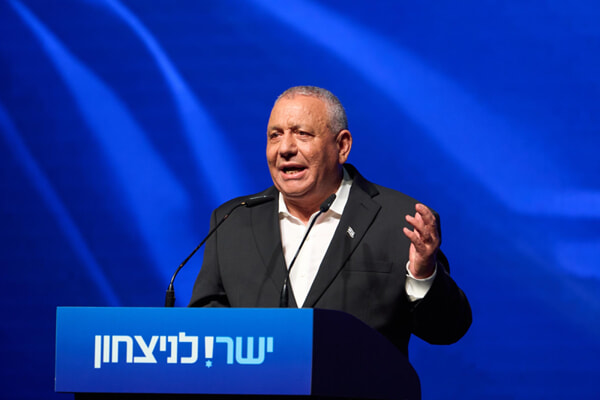
Gadi Eisenkot’s challenge
Gadi Eisenkot is Netanyahu’s main challenger. He was the chief of staff of the Israeli Defense Forces (IDF) between 2015 and 2019, in 2022 he took the field alongside his predecessor in the IDF Benny Gantz. For a large portion of Israelis today, Gadi represents the most concrete hope of turning the page. Among the opposition parties, his Yashar! – meaning straight, honest – is the favorite to lead the post-Netanyahu era, even though he was born just a year ago. If he manages to form a government, he would become the first prime minister of “Mizrahi” (eastern) origin in the country’s history.
Born in Tiberias in 1960 to parents who arrived from Morocco, he grew up in the distant suburbs of Eilat, in a large traditionalist family. His military career began with the Golan infantry brigade, considered a unit of the people as opposed to those of the elite. Also for this reason, Gadi is seen by the people as one of the people. But above all because he is part of the Israeli mourning family, having lost the last of his five children and two grandchildren in this war, who were killed in the fighting in Gaza.
At the center of his agenda are internal issues such as the establishment of a commission of inquiry into the events of October 7 and the enlistment of the ultra-Orthodox – who speak more to centre-left voters. While to the right-wing electorate he speaks of the definitive defeat of Hamas, within 18 months, “either with the Trump Plan, or with force”. He supports the war against Iran, calling it “the most just in recent decades”.