

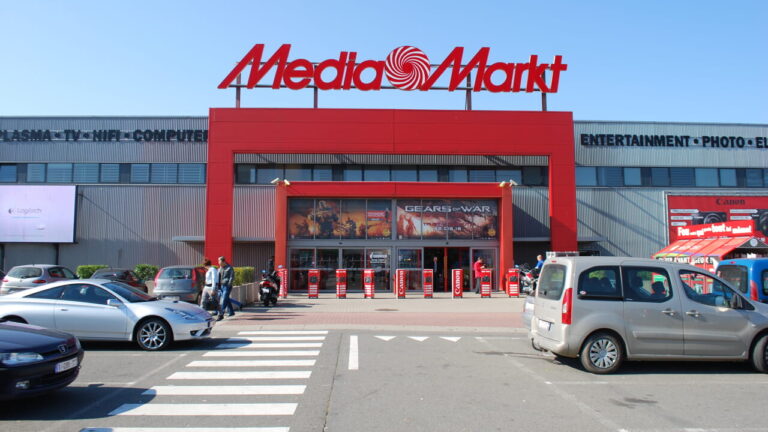
The European Commission, in recent hours, has given the conditional green light to the acquisition of Ceconomy AG, the German holding company controlling the MediaMarktSaturn chain – active in Italy under the MediaWorld brand – by the Chinese e-commerce giant JD.com.
The operation, valued at approximately 2.2 billion euros, marks a historic handover in the corporate structure of the main technology retail operator on the continent. The tech chain was born in Germany in 1979 in Munich. The brand then officially landed in Italy with the name MediaWorld on 24 October 1991, the date of the inauguration of the first point of sale in Curno (Bergamo).
In Beijing almost 60% of the shares
The transaction gives the Beijing group a direct stake equal to 59.8% of the shares, guaranteeing it effective control of over 85% of the votes in the meeting by virtue of the agreements stipulated with the previous corporate structure, which maintains a minority share of 25.4%. In the last financial year 2025/2026, the Ceconomy holding company recorded overall revenues of 24 billion euros (up more than 5% on an annual basis) and an operating result (adjusted EBIT) of more than 500 million euros, marking the fifteenth consecutive quarter of profitability expansion.
A decisive contribution comes precisely from the omnichannel push: online sales of the group exceeded 5.7 billion euros – equal to over 26% of the total turnover -, driven by the strong development of the MediaMarkt marketplace, whose gross value of goods traded (GMV) almost doubled, reaching 527 million euros.
Brussels’ approval came at the end of an in-depth investigation conducted pursuant to the Foreign Subsidies Regulation, the legislation introduced to prevent Chinese capital and state subsidies from distorting competition within the European single market. To overcome the Community Antitrust findings, JD.com had to accept “a series of binding commitments aimed at preventing aggressive commercial practices or distortive cross-financing” – which will remain in force for 10 years – under independent supervision.
The doubts
The operation merges a widespread physical network of over a thousand points of sale spread across Germany, Italy and the rest of Europe with the technological and logistical infrastructure of a global e-commerce giant. The management of JD.com assured that the operational continuity of the group will be guaranteed and that the integration will focus on “strengthening the omnichannel model”, streamlining the delivery processes and “expanding the product categories”.
But doubts are growing among industry insiders about the impact of the new ownership on local production chains, with the real risk of a progressive replacement of European brands in favor of high-margin Asian producers inserted directly into the Beijing distribution chain.
Added to this is the delicate nature of managing the personal data and purchasing habits of tens of millions of European consumers: the supervisory authorities have demanded compliance protocols on the confidentiality of information comparable, in severity, “to those of the aerospace sector”.
Finally, on an industrial and commercial level, many experts hypothesize that the enormous physical distribution network of MediaWorld and Saturn could undergo restructuring or cuts to optimize costs, progressively transforming European stores into a privileged outlet showcase for direct-to-consumer Asian goods and brands to the detriment of community producers.