

Libya is Putin’s new Syria but for Rome the problem is Kiev
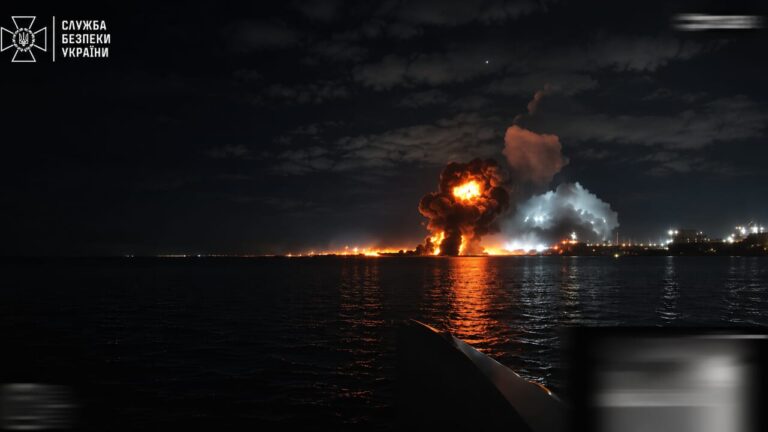
There is some animation about the Ukrainian attack on Russian ships in Benghazi. Matteo Salvini spoke of “war on Italy’s doorstep”, Antonio Tajani defined the operation as worrying and protested to the Ukrainian Foreign Minister Andrij Sybiha. According to press reports, Giorgia Meloni deemed the attack “inadmissible”. Giuseppe Conte, Nicola Fratoianni and Angelo Bonelli also expressed strong criticism, evoking the risk of escalation and violation of Libyan sovereignty.
In short, for once, from right to left, Italian politics not only seems united, but also appears illuminated by the sudden discovery that Libya exists and that the Mediterranean is a strategically relevant area for national security. It’s a shame that the outrage came with Ukrainian drones and not with Russian military operations. Because Moscow didn’t appear on the Libyan coast yesterday and didn’t just send a few ships on a courtesy visit. It has built a military presence that represents one of the Kremlin’s most important strategic operations on NATO’s southern flank. And he did it right under our noses.
What are the Russians doing in Africa
Estimates speak of around 1,800 Russian soldiers including Africa Corps (formerly Wagner), special forces and support personnel. Moscow has consolidated its presence through six military installations (Al-Jufra, Al-Khadim, Al-Qardabiyah, Brak al-Shati, Maaten al-Sarra and Tamanhint) and transferred MiG-29 fighters, drones and air defense systems to Libya. Furthermore, satellite images show hangar expansions and interventions on airport infrastructure. After the fall of Assad, radar components destined for the S-300 and S-400 systems were also moved from Syria. And on November 13, images were released documenting the presence of an Iskander ballistic launcher at the Al-Qardabiyah base, near Sirte.
Yet it would seem that the problem is Ukraine, not the almost two thousand Russian soldiers, the bases, planes and missile systems that Moscow is installing a few hundred kilometers from our coasts. Those, evidently, do not constitute an escalation risk. They are simply there, perhaps to enjoy the Mediterranean.
And let Conte, Fratoianni and company pass. We have been hearing this repeatedly for over four years that Russia is a friendly country, that Putin has no intention of harming us and that, ultimately, it is NATO that is provoking. For them, evidently, the fact that Moscow is building a military arsenal a few hundred kilometers from our coasts is a trifle. After all, imagine if Russia, which loves us so much, could ever represent a threat. Apart from the freezers in our supermarkets being brought to 50 degrees, the military plants being blown up, the bomb scares in schools, the blocked air traffic and the drones over Genoa.
But the fact that Giorgia Meloni and Antonio Tajani are expressing alarm is astounding. The Italian government should be very clear about what it means to have a Russian military presence of this size in Libya, a stone’s throw from home. And you should know that the Ukrainian operation hit a military device that poses a real threat to our interests and security. Instead of raising the specter of escalation, one might wonder why he didn’t say thank you instead.
The Libyan dossier
And here we come to the crux of the matter. Rome has close relations with Libya, not only with the government in Tripoli but also with the power of Khalifa Haftar in Benghazi. There are Eni’s interests, energy supplies, the control of migratory flows, security agreements and a network of political and commercial relationships that Italy cannot afford to compromise. But this very relationship makes it even more difficult to ignore what is happening: Haftar is Moscow’s main local interlocutor and his collaboration has allowed the Kremlin to transform Cyrenaica into a Russian military platform. The Ukrainian attack brought out this contradiction in all its evidence. And this is embarrassing for Rome: in order not to disturb Haftar, it not only tolerated Putin’s military presence, but now it even finds itself forced to rebuke those who are trying to weaken that presence.
This is a contradiction in terms, and it is also dangerous. Because a foreign policy cannot be reduced to managing balances with anyone who has a port or an oil well, even if they ally themselves with a hostile country that places military bases under your home. Italy must begin to behave like a country that has understood the international scenario it finds itself in. And above all what the sides are.