

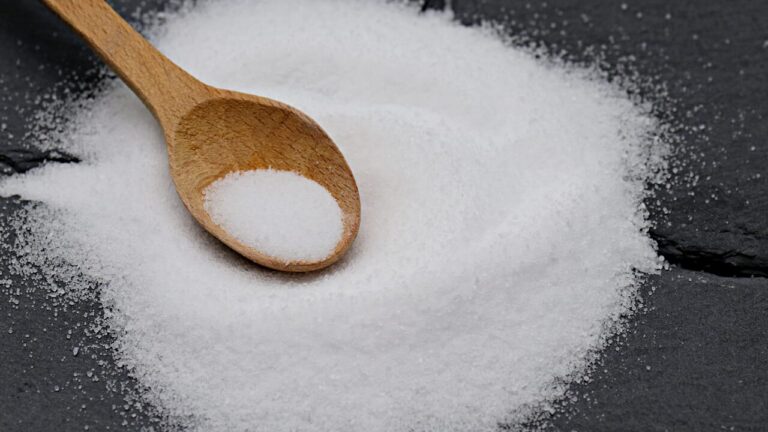
Erythritol is a natural sweetener that is very widespread in the food market, which in recent years has come under the spotlight several times due to possible harmful effects on health. A study by the Huazhong University of science and technology in Wuhan, China, published inInternational journal of molecular scienceswhich used a genetic epidemiology technique to evaluate the association between erythritol and stroke, identifying a possible link. It is not proof that the consumption of foods containing erythritol directly causes the onset of cardiovascular disorders – the authors themselves warn – but one more clue of a possible link, which deserves to be investigated further in the future.
The first suspicions
Erythritol is a polyalcohol found naturally in various varieties of fruit and vegetables. It is very popular as an alternative to sugar, because it contains very few calories despite having the same appearance and taste. It has always been considered safe for human consumption (after all, it is naturally present in various foods that we consume regularly), but for some years various research has been raising suspicions about the long-term effects of taking much higher doses than those normally found in vegetables, in particular due to a possible link with ischemic stroke.
In 2023, a study of more than 2,000 U.S. adults observed a nearly double risk of heart attacks and strokes over three years among participants with the highest levels of erythritol and other similar compounds in their blood. Research from 2024, carried out on 20 healthy volunteers, showed that platelets become more reactive (and therefore more prone to forming clots and causing thrombosis) following the intake of a dose of the sweetener. And in 2025 a group from the University of Colorado also identified a possible mechanism for brain damage linked to erythritol, noticing signs of distress in human cerebral vessel cells exposed to the substance.
The new research
In short, the clues continue to accumulate. For this reason, the authors of the new study decided to delve deeper into the question using Mendelian randomization, a molecular epidemiology technique that exploits DNA variants inherited at birth, and therefore not influenced by habits or diseases, as a kind of natural experiment: if carriers of a variant that predisposes to a particular risk factor (such as a high level of erythritol in the blood) more often develop a certain health outcome, for example stroke, it is possible to infer a link between the risk and disease.
And this is precisely what emerged from the research: carriers of gene variants linked to a higher level of erythritol in the blood would be 25 percent more likely to suffer from a stroke. The risk also remains higher even after adjusting the results to take into account other risk factors, such as blood pressure, type 2 diabetes and cholesterol. For two other sweeteners, sucralose and aspartame, no statistically significant association with stroke emerged.
How to interpret the results
The results of the Chinese study, although interesting, do not allow us to demonstrate a direct relationship between erythritol consumption and health damage. In fact, genetic analyzes do not measure direct food intake, and cannot demonstrate a causal link between the variables analyzed. However, the clues are starting to become consistent, and for this reason many in the scientific community are anxiously awaiting the results of a clinical trial that can confirm, or deny, the fears once and for all.
This is what they are doing at the University of California at Davis, where a randomized clinical trial is underway in which participants drink drinks sweetened with erythritol or aspartame for two weeks to directly evaluate platelet activation and adhesion and markers of vascular inflammation. If the results are again in line with those of recent years, erythritol could actually be considered a risk factor for the development of stroke and other cardiovascular disorders. While waiting for the trial to conclude, however, the verdict remains suspended.