

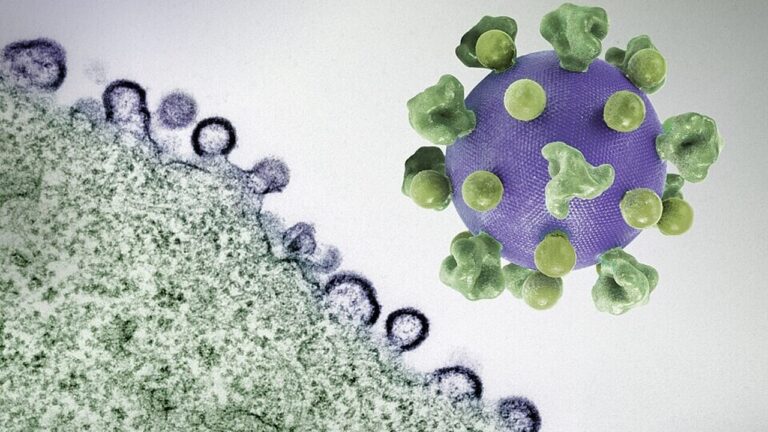
Important news in the fight against HIV: from Norway, in fact, comes the news of a new patient who has recovered from the infection after a marrow transplant, made necessary by the onset of a serious hematological tumor. The case of the man – a 63-year-old already dubbed the “Oslo patient” – was described in the magazine Nature Microbiology by a team of researchers from the University of Oslo.
It all starts with the patient from Berlin
The Norwegian case is not the first case of recovery or long-term remission following a bone marrow transplant. At least seven other similar episodes have occurred in recent decades, starting with the famous “Berlin patient”, Timothy Ray Brown, who in 2007 was the first man to be declared cured of HIV. These clinical successes usually occur when the transplanted cells come from a donor carrying a genetic mutation known as CCR5-delta32, an alteration that makes white blood cells lack the CCR5 receptor, the “gateway” that most HIV strains use to infect immune system cells. If following the transplant the new immune cells replace completely, or almost completely, those of the patient, the virus no longer has easy access and, failing to replicate, progressively disappears from the organism.
The peculiarity of the related donor
Today, when an HIV patient develops a haematological tumor that requires a marrow transplant, doctors first look for compatible donors who present this specific mutation. In the case of the Norwegian patient, the story took on a completely peculiar profile: not having found a compatible donor in the databases, the Norwegian doctors tested the patient’s brother, who was found not only compatible, but also the carrier of this rare genetic mutation present in just 1 percent of the European population. The fact that the brother met both requirements allowed the transplant to be performed with a drastically reduced risk of rejection compared to a foreign donor.
The results of the study by the University of Oslo
The transplant took place in 2020 and, according to the data presented by the authors of the study, the donor’s cells gradually replaced those of the patient both in the blood and in the marrow, and even in the intestinal tissues, a detail that could prove fundamental for the long-term remission of the infection. Two years after the operation, the doctors suspended the antiretroviral therapy and five years after the transplant, the analyzes show no trace of viral DNA capable of replicating. Antibody levels against HIV have also steadily decreased, a sign that the “immunological memory” of the infection is disappearing as the virus is no longer present to stimulate the immune system.
A procedure that remains exceptional
Despite the enthusiasm that arises with each new patient treated for HIV, scientists urge caution: stem cell transplant remains an extremely risky and invasive procedure, burdened by a high mortality rate (around 10-20 percent) and complications. For this reason, it will never become a therapy of choice for all HIV-positive patients. For the majority of people living with HIV, current antiretroviral therapies, although not definitive, represent a much safer and more effective option for preventing the development of AIDS and leading a normal life. However, cases like this are fundamental for research: studying the mechanisms by which resistance to infection develops allows us to identify new therapeutic targets, with the hope of developing less risky treatments accessible to all in the future.