


The Italian Navy is ready to intervene in the Strait of Hormuz, plans have been drawn up. Admiral Giuseppe Berutti Bergotto, Chief of Staff of the Navy, explained to the Defense Committee of the Chamber what our country can make available to clear mines from the stretch of sea through which approximately 20 percent of the world’s oil and gas passes. Before the units set sail for the Persian Gulf, some essential conditions must be created: a stable truce between the United States-Iran-Israel, an international mission and a green light from the government and therefore from Parliament.
The Strait of Hormuz is blocked, Italy has an ace to play: the “invisible” minehunters
The dangers
“We have seen that the closure of Hormuz can be done quickly even with a few lire, because the mines that the Iranians have planted cost very little and are also dated”, explained Admiral Giuseppe Berutti Bergotto. This contributes to creating “an area of uncertainty and above all a growing decline in navigation safety”. Even more so because “the Strait is a passage of only thirty-three kilometers: the part that has been dedicated to merchant traffic is the central one, at a distance from the Iranian coast of about eighteen kilometers”.
A distance that can be covered quickly “with a small boat going at 50-79 kilometers per hour”, adds the Chief of Staff of the Navy. Because container ships and oil tankers can also be attacked by other threats overlooking the Strait: “I’m not just talking about mines, because there are other threats brought by the Pasdaran boats and missiles. In that area the Iranians have significant missile launch points that can actually hit all the ships passing through Hormuz.”
The capabilities of the Navy
Our Navy ensures the freedom and safety of navigation through missions around the world. In 2026 it will be engaged on various fronts: in the Mediterranean with the “Safe Mediterranean” and “Safe seabed” operations; in the Red Sea and the Indian Ocean as part of the European Union missions “Aspides” and “Atalanta”; in the Arctic with the “High north” scientific mission; in the Gulf of Guinea through Operation “Gabinia”.
Why Trump needs Italian minesweepers, pressing Meloni: “He cannot obey the order”
A particular role is played by the Fifth Naval Division led by Admiral Cristo Salvatore Traetta: “We have a high demining capacity: we are a nation of reference in this field because every year we clear an average of 14 thousand explosive orders that are found either at sea or on our beaches. They are all war remnants, obviously, and this has allowed us to maintain high levels of preparation and high level of personnel training”, underlined Berutti Bergotto.
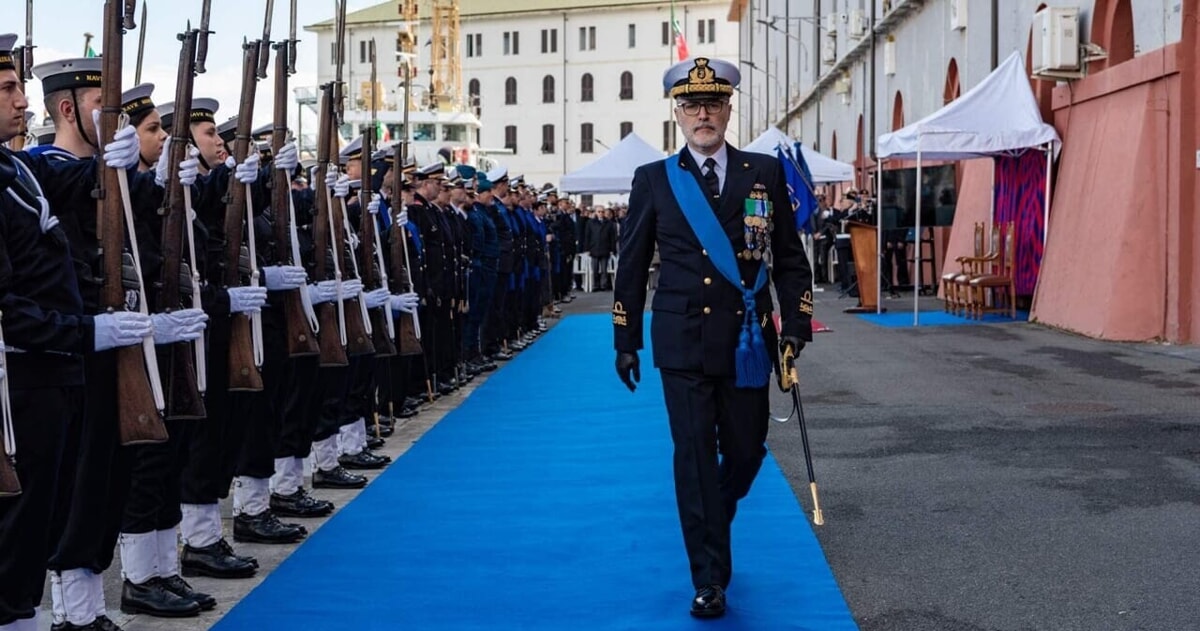
The Chief of Staff then declared in front of the parliamentarians that the “Navy is ready to carry out a mine clearance operation in Hormuz”. But on one condition: “These activities must be carried out in a non-conflict situation because they are very delicate and like all missions in delicate areas they involve risks: our task is to keep the risks to the minimum possible”, clarified the soldier.
How Italy can intervene
The admiral then explained what the capabilities of our Navy are: “We have eight fiberglass minehunters that were launched in the nineties, but they have always been updated to the state of the art and are still technologically advanced: they use remotely piloted vehicles and autonomous vehicles to search for devices and then deposit the charge that allows us to defuse and clear the mine”.
All this happens with very rigid and slow procedures to guarantee the safety of the operators and the tools used. A demining operation can therefore take a long time. A forecast that reflects what the Pentagon anticipated to the US Congress. According to Washington intelligence, Iran has placed 20 or more mines in the Strait of Hormuz and surrounding areas. Some of these devices would have been released remotely using GPS technology, others would have been positioned using small boats. According to experts, the cleanup, in this scenario, could take up to six months.
For this reason the admiral repeats that “intervention in a mined area, not only by Italian minehunters, but also in all other nations, must be done after hostilities have concluded”. The missions that see Italy among the participating states are “conducted within coalitions under the flag of NATO, the European Union or in any case multinationals. International coalitions are always quite large, because this helps the effectiveness of the operation: there is an exchange of information, there are more means available and also from a national point of view there is greater security”.
Therefore Berutti Bergotto believes that “an intervention in Hormuz, a decision that belongs exclusively to the Government, can be developed in an international environment”. And this is in fact being discussed within the executive.
The mission
The Chief of Staff of the Navy also spoke about the possible Italian mission to Hormuz on Five Minutes, the program hosted by Bruno Vespa. The admiral presented what our country would make available if an operation in the Strait were authorized: “Prudent planning envisages a group based on two minehunters with an escort unit and logistics: four ships in total”, he declared.
Giuseppe Berutti Bergotto, Chief of Staff of the Navy, this evening #22April guest a #FiveMinutes. pic.twitter.com/BnS9AfM9sE
— Porta a Porta (@RaiPortaaPorta) April 22, 2026
Italy would not be alone: ”Obviously we are part of an international coalition. The other nations will also send minesweepers. In Europe there are France, England and a joint group between Holland and Belgium”, he added. He talked about this on the TV station TF1 the French Minister of the Armed Forces Catherine Vautrin. The latter reported that European countries such as Belgium, the Netherlands and France have demining capabilities that could help ensure the passage of ships.
Meloni goes to Macron to reopen Hormuz: the role of European minehunters
Among the “willing” we could also add Germany. Government sources have indicated that Berlin could participate with minesweeping ships of the MJ332 type or with reconnaissance boats.