

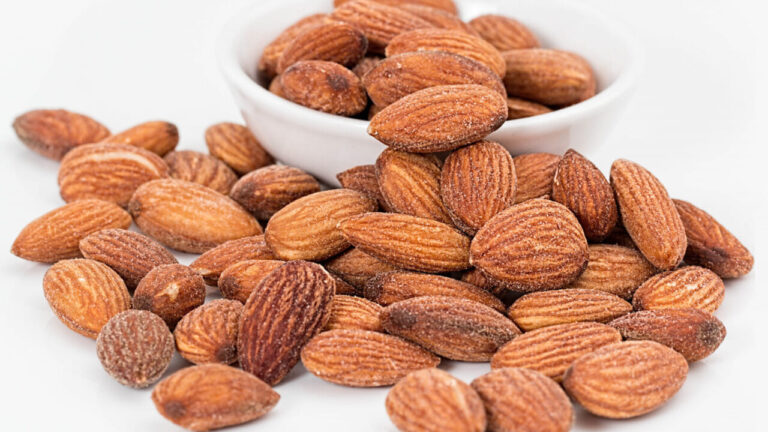
Almonds, and nuts in general, are considered a healthy snack that can help reduce cholesterol and keep your heart healthy, as part of a healthy, low-fat diet. The most recent confirmation comes from a systematic review with meta-analysis published in the journal Nutrients last year, which has been talked about again in recent days due to a press release from the Almond Board of California, which publicizes the results: the daily consumption of almonds would in fact be associated with a reduction in levels of total cholesterol, LDL cholesterol (the bad one) and several other parameters considered cardiovascular risk factors. Excellent news, therefore, but be careful not to exaggerate, and to read the data in the right context.
The study
The study analyzed 36 studies conducted in the past on over 2,400 people, analyzing the effect that regular consumption of almonds has on various markers of cardiovascular health. The results confirm that a dose of between 25 and 168 grams of almonds per day is associated with a reduction in total cholesterol, LDL cholesterol (the one commonly defined as “bad”) and non-HDL cholesterol, all factors which, if high, increase the risk of cardiovascular disease. The most interesting novelty of the research, conducted with the rigorous standards of meta-analysis, concerns the effect of dried fruit on the proteins that transport fats in our body.
For the first time, the authors confirmed that almonds improve the relationship between apolipoprotein B (ApoB, considered harmful because it promotes the formation of plaques in the arteries) and apolipoprotein A (ApoA, which is instead protective). In essence, including a handful of almonds in your daily diet helps maintain a healthier lipid profile, reducing cardiovascular risk markers and supporting, in a simple and natural way, the health of our arteries.
The limits of the research
The elephant in the room when analyzing this work is its authors, and their financiers. Although this is serious research, and published in a respected journal, it was not born in a university context or in a public research body, but is the result of the work of a multinational consultancy company based in Canada, Intertek Health Sciences, which was commissioned by the Almond Board of California, a trade association that promotes the interests of Californian almond producers.
It is not that rare in the field of food research, in fact it is a relatively common practice. But it is still a fact that forces us to read the results with a certain caution. Not so much in terms of their general meaning, because scientific consensus all points in the same direction: almonds and dried fruit in general can be an excellent healthy snack in the context of the fight against cholesterol. But at least compared to their real effectiveness. The authors of the study define it as “significant” on LDL cholesterol and other risk markers, but the reduction that emerges from the study is actually relatively modest: we are talking about an average of 5 mg/dl less cholesterol, compared to a target of 10 mg/dl considered significant for dietary interventions in people with hypercholesterolemia.
So are almonds good for you?
So how to behave? The new research actually only confirms what was already known about the role of almonds in cardiovascular prevention. Their effectiveness is higher in people who have high cholesterol levels, and when they are used as a replacement for other less healthy snacks. The advice is to consume around 30 grams per day, to benefit from the effects on cholesterol without exceeding the caloric intake. In this way, even a relatively small effect can make a difference when included in a healthy diet in which every small change in habits has an additive effect on cholesterol levels, both in terms of prevention and support for pharmacological therapies that may become necessary.