Artificial intelligence takes the field to estimate the seismic risk in the Flegrei fields. A study carried out by the scientists of the Department of Geophysics of the Doerr School of Sustainability of Stanford, the Vesuvian Observatory of the National Institute of Geophysics and Volcanology (Ingv-Ov-Ov) and the University of Naples Federico II has in fact carried out the most precise mapping of the seismic events that have affected the area in recent years. The work, recently published on Science, provides important details on the origin of the phenomenon and lays the foundations for a new alert system, capable of identifying even the smallest changes in real time and to improve seismic and volcanic risk estimates.
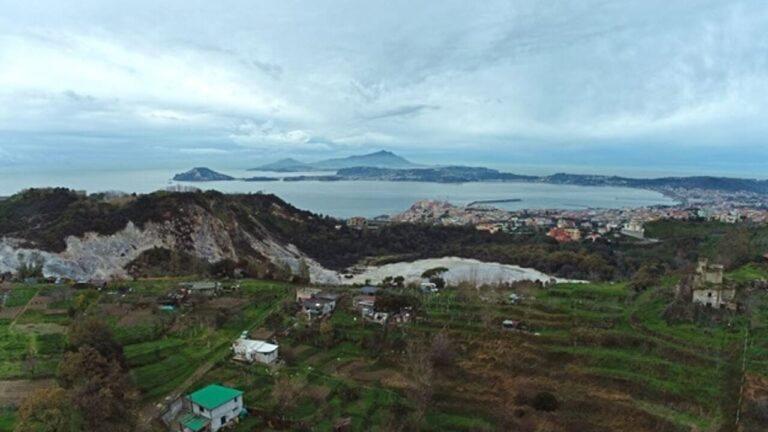
The analysis took into consideration an area of interest that includes densely populated areas, such as the western suburbs of Naples and the city of Pozzuoli, where in recent years there has been a decisive increase in seismic activity, gas emissions and soil lifting. The work was carried out using artificial intelligence techniques developed at the University of Stanford, which have been applied to the data recorded by the SISMOGRAPHES OF INGV in the Flegrei Campi area, identifying over 50,000 earthquakes in the period between 2022 and half of 2025.
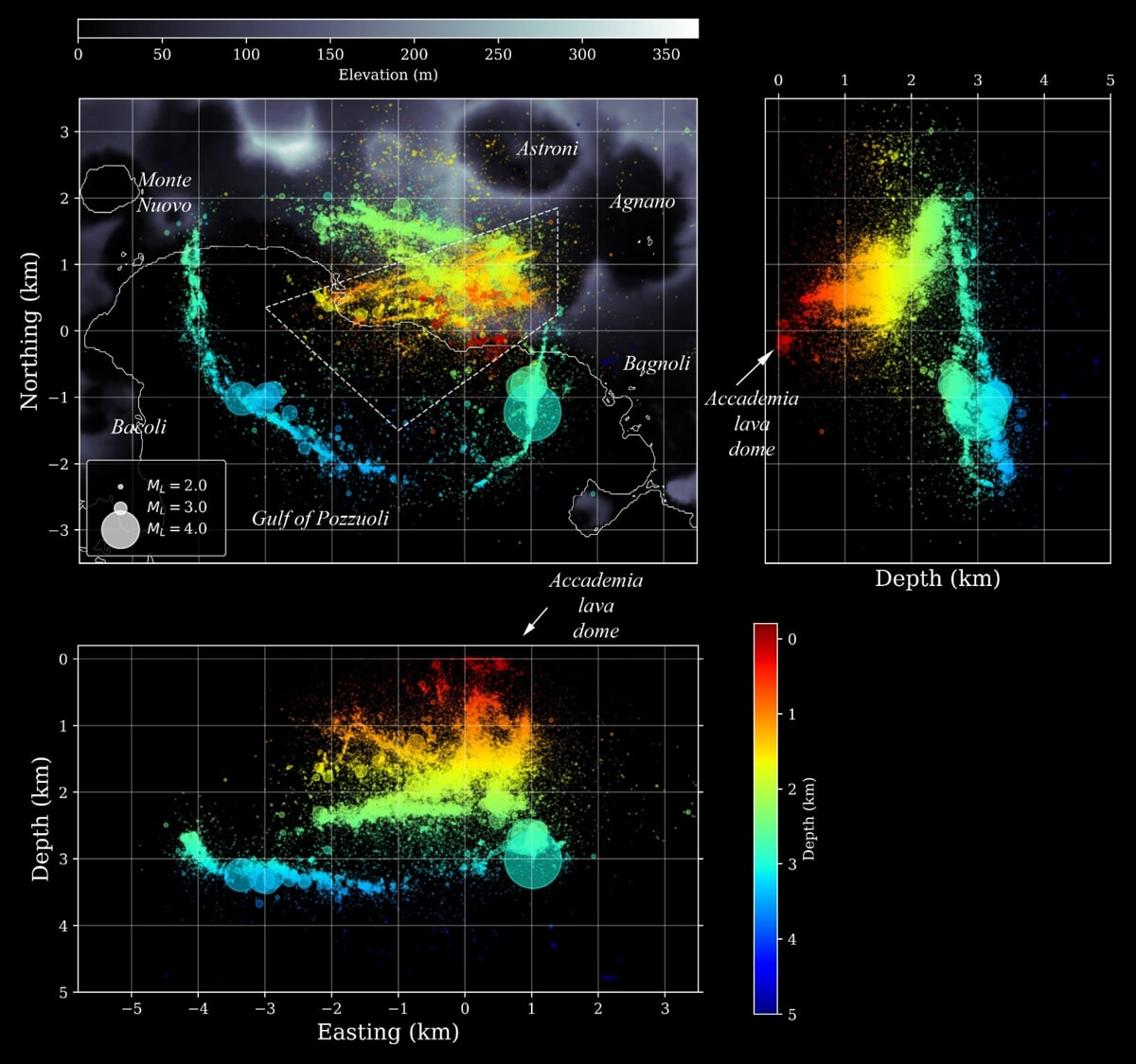
This high definition seismic catalog highlighted a system of active faults and provided important details on the origin of the phenomenon. The results showed that almost all seismic events have a tectonic origin, with depths of less than 4 km, and that currently there are no evidence of a significant migration of magma.
A ring fault system has also been identified surrounding the caldera lifting area, extending both on the mainland and in the Gulf of Naples. “Within this ring structure – explains Warner Marzocchi of the University of Naples Federico II – the observed seismicity highlights for the first time on the mainland near Pozzuoli of specific and well -defined faults, which could lead to more precise estimates of dangerousness and seismic risk in this area”.
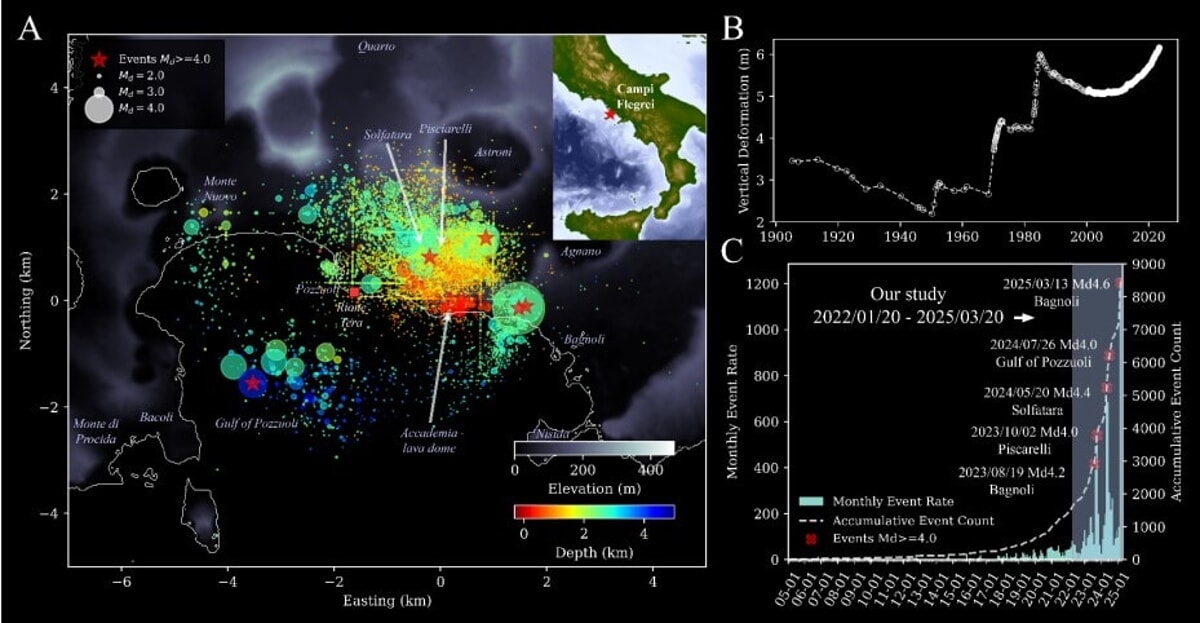
Less frequent, but still present, the seismic events that are not purely busty. Phenomena defined as “hybrids”, observed mainly near the lava cathedral of the Academy, at depths of the kilometer. “These events come from the interaction between rock, fluids and gas during a fracture”, underlines Anna Tramelli, Ingv researcher. “More in -depth analyzes suggest that the fluids involved would be hydrothermal.”
The work has also led to the creation of a new system of analysis of seismic signals, already in operation, which in the future can be used as a tool to estimate seismic risk in the Flegrei fields area, practically in real time.