

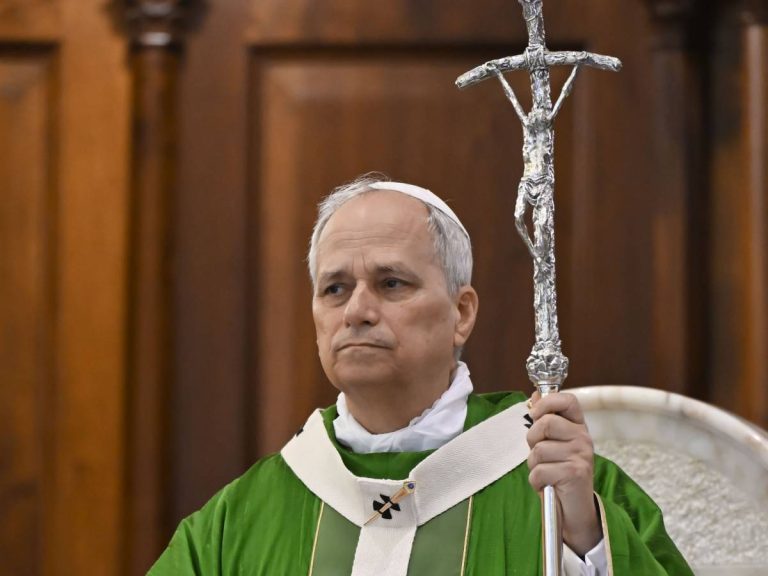
In the agenda of the new pontificate there is not only the Middle Eastern question and the war in Ukraine. Relations with China have marked the days of the general congregations and may have somehow conditioned the outcome of the conclave, weakening the candidacy of the Cardinal Favorito Pietro Parolin. The Secretary of State, in fact, linked his name to the signing of the provisional agreement on the appointment of the bishops with Beijing who made many Asian and Western cardinals turn up his nose. The election of an American makes interesting the evolution of the developments of the Sino-Vatican relations after the pontificate “friend” of the South American Bergoglio.
Prevost and China
Just as on the Israeli-Palestinian conflict, before 8 May there are no public declarations of Robert Francis Prevost onProvisional agreement on bishops and more generally on religious freedom in China. Cardinal Stephen Chow Sau-Yan, bishop of Hong Kong, while admitting that he did not know him much, however, revealed that Prevost has visited the Asian country several times. Chow gave Leone XIV a statue of the Madonna of Shehan, venerated in a Marian sanctuary near Shanghai. The purpose of the gift is precisely to remind the new Pope the Church in China. A few years ago a report of the Financial Times he wrote that within a decade the country of the dragon could become the one with the highest number of Christians in the world. This explains the importance of the China dossier for the Catholic Church and for the new Pope who wants to give impetus to the new evangelization. In any case, its election was accepted with non -hostile words from Beijing. The spokesman for the Foreign Ministry Lin Jian has in fact declared: “The hope, under the guidance of the new Pope, is that the Holy See continues to engage in a constructive dialogue with China and to conduct in -depth communication on international issues of mutual interest”.
The first appointment
On 11 June the first appointment of a Chinese bishop arrived from Leone XIV which was then approved also by civil authorities. Monsignor Giuseppe Lin Yuntuan has been appointed auxiliary bishop of Fuzhou by the Pope and then also recognized by the civil system. During the vacant headquarters the People’s Republic had unilaterally The election of Wu Jianlin to auxiliary of Shanghai and Li Jianlin in Bishop of XIXIANG is announced. An anomaly because it is the pope who appoints the bishops and at that moment there was not. Now that Leo XIV has been elected will have to face the story of these two prelates and I will see whether or not it will endorse the Beijing’s decision. What is certain is that the American Prevost, originally from a country that strongly feels the theme of religious freedom, is aware of the existence of strong stomach ache Within the Cardinal College in relation to favor policy used by the Holy See in these twelve years towards the communist government. The question did not emerge only in the general congregations, but also in the first meeting with the cardinals after the election.
The legal aspect
The story of Wu Jianlin and Li Jianlin It is emblematic of the challenges that the provisional agreement on the appointment of bishops is placing both decision makers and scholars. L’interesse non è più unilaterale come testimonia la recente uscita della prima collana scientifica cinese su diritto canonico e diritto ecclesiastico. The volume Canon Law & China Law published in Hong Kong, he was curated by the Liu Peng professors of the Pu Shi Institute for the Social Sciences of Beijing and by the Italian Stefano Testa Bappenheim of the University of Camerino. As is found in the introduction of work, the absence of Chinese scholars of ecclesiastical and canonical law in local universities since 1978 has meant that “The Chinese intellectual community has given relatively scarce attention to ecclesiastical law and canonical law, therefore i misunderstandings are very common” By infligating accordingly on “Normalization of relations between China and the Holy See”. In short, in China there are not enough notions on the legal dimension of the Church and this can hardly have been an element extraneous to the problems in the application of the agreement on the bishops. In the editorial novelty, we look at the precedents of the past, when the iron curtain still existed, as in the contribution of the same head Bappenheim on “Relations between the Holy See and Poland after the Second World War” And then the fundamental distinction between Catholic and Holy See church faced by Professor Maria d’Arienzo.
The deepening by the Chinese academic world could induce civil authorities to avoid forcing Like the one seen during the vacant seat with the unilateral formalization of two bishops? It would certainly be of help for the difficult task of the first American Pope called to manage relations with communist China.