

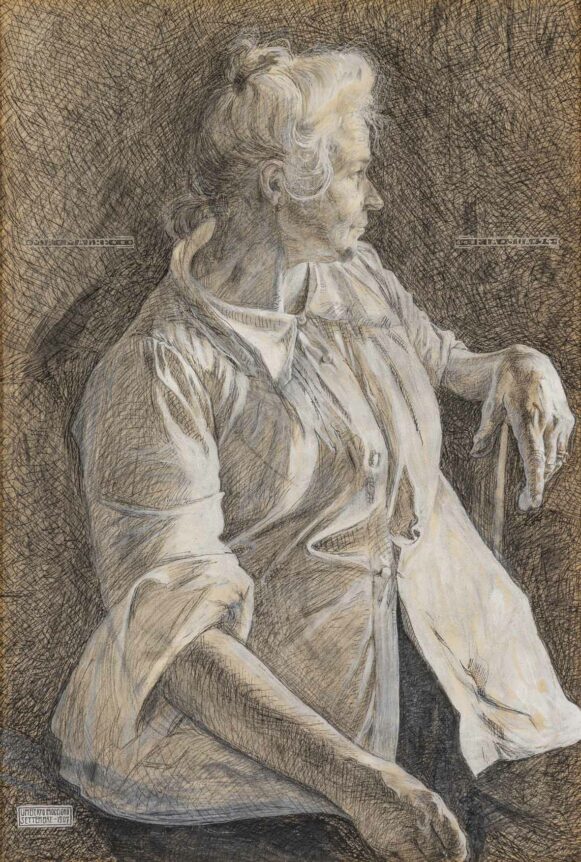
Bottegantica in Milan presents from 3 to 30 October 2025, the exhibition Boccioni and Baer. The story of a found found with which the gallery intends to pay homage to Umberto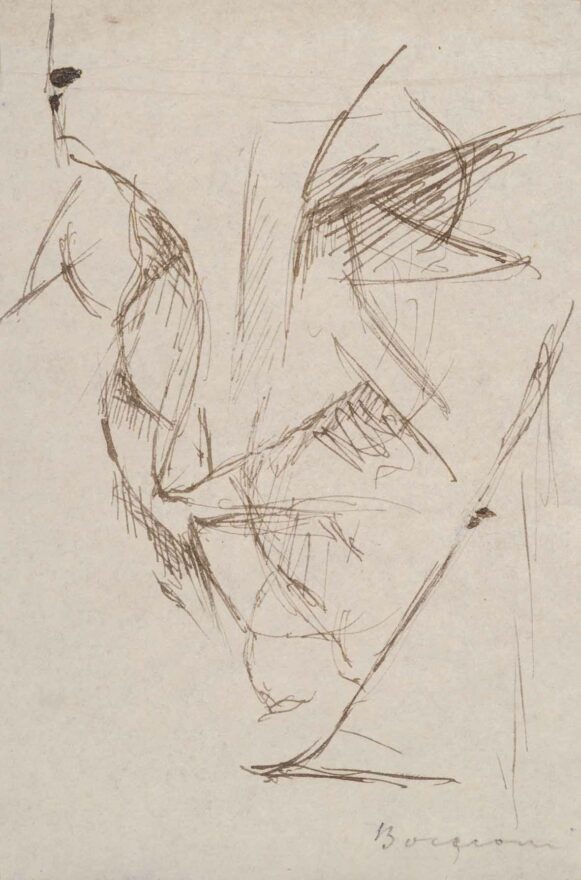 Boccioni, one of the most important and original exponents of Italian art of the twentieth century.
Four years after the review, the young Boccioni (2021), focused on the painter’s prefuturist experience, a shopping exhibition dedicates an exhibition of deepening on the artist’s collective history linked to an important Milanese Jewish family, of German origin, who contributed significantly to the international fortune of Boccioni.
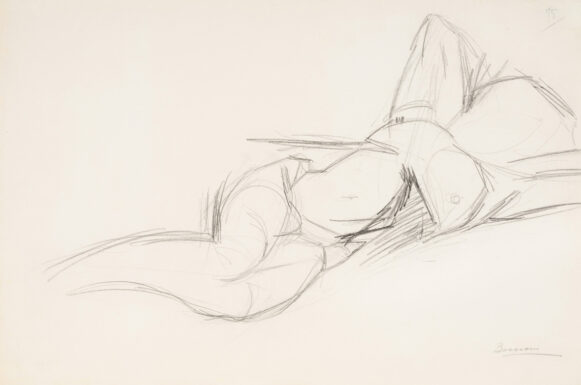
The discovery of a nucleus of four unpublished drawings by Umberto Boccioni, from the Baer collection, It constitutes the starting point for a dutiful reconstruction of the collecting events of one of the most significant collections – for quality and consistency – of works by the futurist genius, and for the return of a family history linked to the artistic and political history of Italy of the early twentieth century.
The contacts between Umberto Boccioni and the Baer family, and therefore with the two cousins Vico and Samuele Baer, important entrepreneurs of success in the trade of embroidery and packs of clothes, were born, probably, within the refined cultural entourage of Margherita Sarfatti. Samuele’s wife, Betty, portrayed by Boccioni in 1909 together with the little daughter Nora, since her arrival in Milan, moved within the world of female associations, beating himself both for the emancipation of the woman and for the welfare policies, as evidenced by his closeness to one of the most important figures in this context, such as Alexandrian Ravizza. The common attendance of these environments is, in a good chance, the opportunity for Betty to deepen his interest in the world of art, just when Margherita Sarfatti had recently known Boccioni. The entry into the social and cultural circuit of Betty and Samuele Baer opens new relationships such as those with the Ruberl family and, in particular, with Leisel Hammerschlag Ruberl, daughter of the famous activist Meta Quarck, and, above all, with Vico Baer. These in a short time became one of the closest figures to the artist, not only as 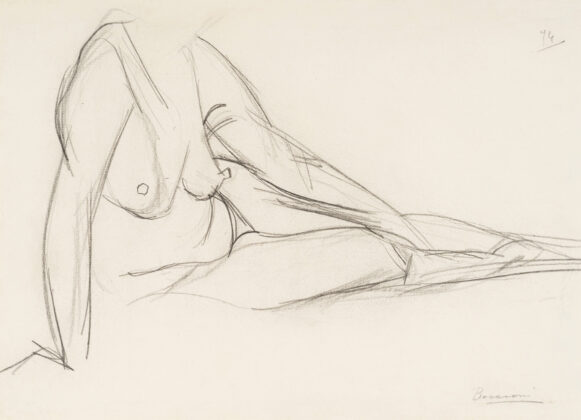 collector and patron, but also of “only friend I have left”, like
  The artist himself wrote to him in 1914.
Linked to the family business of the production of “packs for lady”, M. Baer & Co, founded in 1884 in Milan by the father of Vico, Maximilian, the Baer widely supported the Boccionian artistic activity: a “photography” of the collection can be obtained from the lists of the works exhibited on the occasion of the posthumous exhibition of 1933 set up at the Castello Sforzesco in Milan, in which 38 pieces lent by the two cousins Vico and Betty Baer appear.
Only five years after the Boccionian exhibition, the destinies of the Baer family were upset by the improbing actions of fascism. The promulgation of racial laws will lead to Baer’s diaspora: Ludovico with his family, already who have already taken refuge in Switzerland, will be able to reach the United States in December 1938, Nora – the girl portrayed just two years by Boccioni – will escape in England together with her husband Cornelio Papp, and his sister Gemma will also leave Italy in 1939 for the United States.
A part of Samuel and Betty Baer’s family, however, had remained in Italy. Paradigmatic in this sense the case of the daughter Marianna Baer, her husband Giuliano Treves and the 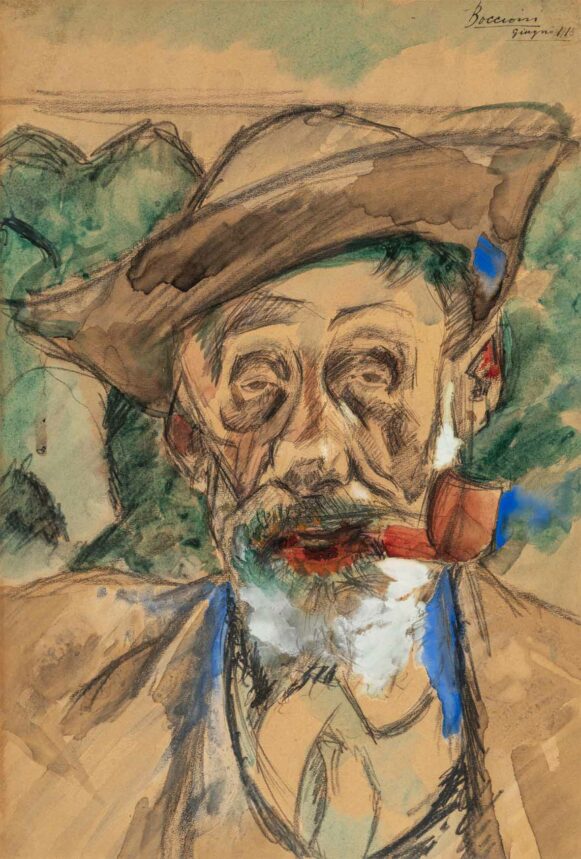 brother Mario Baer. Marianna and Giuliano, escaped the raid of Carmine of November 1943 in Florence, repaired in Rome where Giuliano continued his militancy in the partisan files going up the peninsula,
 Gradually freed, and finding death in Florence, during the actions for the liberation of the city. Marianna, shortly after, would have reached England. Mario, otherwise, remained in Florence, working to save the life of the Jews fleeing persecutions.
The Baer collection, in the immediate post -war period, will slowly be dispersing between sales and significant donations, such as Boccioni’s works that Vico allocated to Moma in New York. In addition to official documents, there remains trace of these donations also from the baer movements between the old and the “new world”: in one of the many lists of entry passengers in the United States, we find Vico and his wife fight in New York on August 27, 1951. They had embarked on Malpensa: in June they had concluded the donation to the Pinacoteca di Brera in Milan of the famous Boccionian self -portrait of 1908.
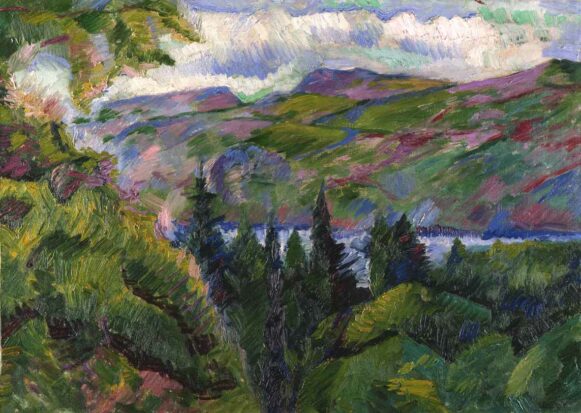
On the occasion of the re -emergence of the nucleus of designs, so far unpublished, coming from the Betty Stein Baer collection, the Boccioni and Baer exhibition. The story of a newfound collection aims to present to the public a selection of works by the futurist master, passed through the Baer collection, such as some works connected to the development of his the city rises, one of his maximum masterpieces, or an unprecedented design of a futurist head.
These works will be joined by other Boccionian works, such as the portrait of the sculptor Riccardo Ripamonti, who allow to reconstruct the physiognomy of a fundamental season not only for the art of Umberto Boccioni, but for the entire history of avant -garde collecting of the beginning of the century.
The exhibition will be accompanied by the publication of a volume by Niccolò d’Aperti with a text by Ester Coen. Enriched by vintage materials and documents that tell the story of the Baer family, the volume will present for the first time a reconstruction of the collection of Samuele and Betty Baer and Vico Baer offering the possibility of rediscovering works considered dispersed, such as the portrait of Vico Baer, and unpublished masterpieces such as the portrait of Gemma Baer, so far unknown in the Boccionian literature.
Carlo Franza