

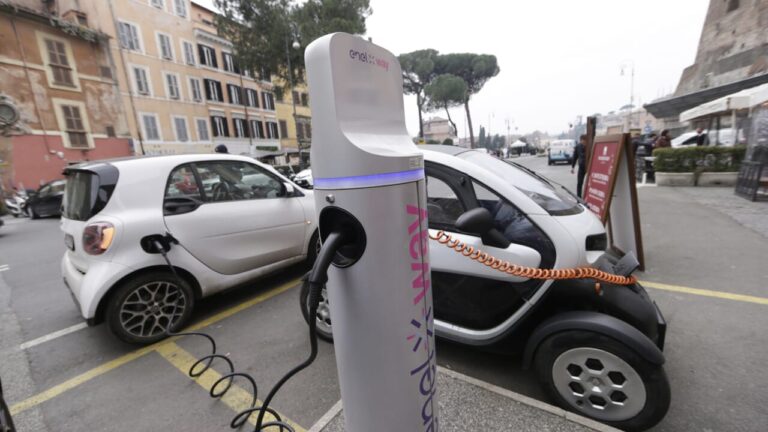
The date “x” is today, Tuesday 22 September. From 12pm it will be possible to submit the application to obtain the “column bonus”, i.e. the contribution for the installation of electric charging infrastructure for private use. Requests must be made to the Ministry of Business and Made in Italy through the IT platform made available by Invitalia, which manages the measure on behalf of the ministry. Let’s see in detail what it is, the amounts, who can get the bonus and how.
The column bonus
The exact wording is “Domestic charging station bonus”. This is a contribution for the purchase and installation of infrastructure for charging electric vehicles by private individuals and condominiums.
Coming to the numbers, the contribution covers 80% of the expenses incurred within the limit of 1,500 euros if the contribution is requested by a natural person, 8,000 euros if it is requested by a condominium. The contribution is paid in a single payment.
How to apply
For installations carried out from 26 June to 31 December 2026, applications can be submitted from 12pm on 22 September 2026 to 12pm on 31 January 2027. Applications submitted are admitted in the chronological order of presentation.
We would also like to point out that it is not possible to submit an application to obtain the “Domestic Column Bonus” contribution if the expenses incurred have been subject to previous benefits.
The application can be submitted exclusively via the online platform. You need the digital identity (Spid), or the electronic identity card (Cie) or the national services card (Cns). Once logged in, you can proceed to fill out the electronic form by following the guided procedure.
To avoid finding yourself unprepared, you must have with you:
- copy of the applicant’s identity document and tax code;
- copy of the condominium tax code and the identity document of the pro tempore administrator;
- meeting resolution authorizing work on the common areas;
- electronic invoices acquired from the Revenue Agency portal;
- current account statements issued periodically by the banking institution showing the payments connected to the invoices;
- declaration of conformity issued by the installer;
- the details of the current account, in the name of the beneficiary, on which to request crediting of the contribution;
- a valid certified email address (PEC), which must be active for the entire duration of the procedure;
- attestation of charging infrastructure requirements.
The other “windows”
The measure is foreseen in the multi-year program for the automotive sector defined and provides for a budget of 68 million euros until 2030.
For 2026, infrastructures whose installation is completed in the period between 26 June 2026 and 31 December 2026 are eligible for the contribution. For the years from 2027 to 2029, infrastructures whose installation is completed in the period between 1 January and 31 December of the respective year are eligible for the contribution. For 2030, infrastructures whose installation is completed in the period between 1 January and 31 March 2030 are eligible for the contribution.
“Today we take another step forward in the implementation of the program we are implementing to accompany the industrial and ecological transition of the sector – comments Minister Urso -. We support consumers and, at the same time, the Italian supply chain. 54% of the new generation charging infrastructures installed in Italy, in fact, are produced in our country. Every euro invested in the charging network therefore also supports Italian manufacturing, employment and our technological supply chains”.