

With the end of the discount on excise duties, on 6 October, and without the government’s introduction of mobile excise duties, diesel prices started to skyrocket above the ceiling set by Eni again. A nasty surprise for motorists: according to updated data from the Ministry of Business and Made in Italy, the average price of fuel in ‘self service’ mode along the national road network is equal to 2,040 euros per liter for petrol (2,243 yesterday) and 2,261 euros per liter for diesel, compared to 2,244 euros yesterday. On the motorway network, however, the average self-service price is 2.051 euros per liter for petrol (2.054 yesterday’s price) and 2.287 euros per liter for diesel (2.267 yesterday’s price).
Melons and mobile excise duties
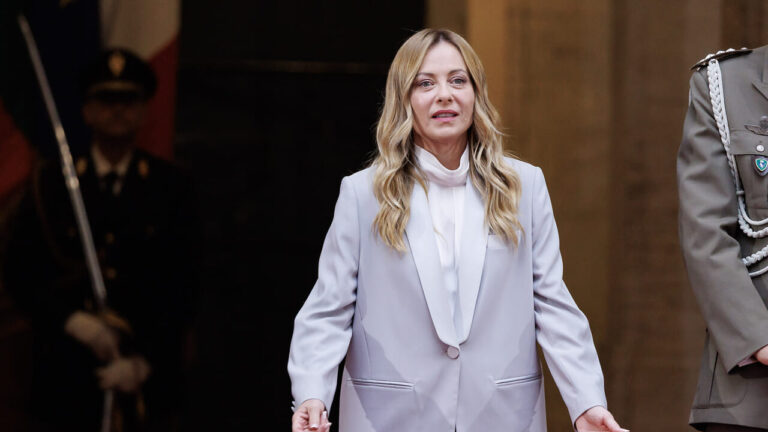
And what does the government do? The Prime Minister, Giorgia Meloni, spoke on the topic in the press conference at the end of the Med9 summit, in Split, Croatia: “We are obviously always ready to intervene again on the issue of excise duties, particularly with the mechanism of mobile excise duties. We have perfected this mechanism whereby when the price of fuel increases, the increased VAT that comes in is set aside and used, if necessary, to lower the price by cutting the excise duties”.
The return of the price cap
The Prime Minister also spoke about the funds available: “As of September we have around 160 million that can be spent with this objective, what we are asking ourselves is whether it is more effective to spend these resources at this moment in which, however, there are containment measures or to keep them as a reserve for when those containment measures end. Notwithstanding that this also depends on the maintenance of the cap, now what I can hope for, and let’s see what happens in the next few hours, is that we can fully restore the cap, after which the evaluation will be made downstream. This is what the government is currently wondering about.”
The letter to Ursula von der Leyen
Meloni then commented on the conversation she had with Ursula von der Leyen: “As for flexibility, starting from the topic of the letter, clearly I had the opportunity to talk about it with President von der Leyen, but I had the opportunity to talk about it during our discussions, because it is a topic that, among other things, not only Italy has raised, for example Greece has also done so. What is the question we are asking? Let’s raise the issue of the impact that the higher inflation is having on national budgets, because we must consider that today’s inflation is not the one planned three years ago. Three years ago Europe approved the national plans with inflation planned at 1.8 percent, today that inflation is much higher and this entails higher automatic costs for almost all, I presume for all the member states”.
“We – added the Prime Minister – have in our system in Italy a series of automatic adjustments to inflation, pensions, allowances, raw materials, for example for the implementation of the Pnrr. The increase in raw materials involves a greater outlay of resources, that is, there are billions and billions more that we will be called upon to spend without having decided, not because these are new measures that governments have wanted. I say this to clarify that we are not asking for free spending because we want to be particularly cheerful, no, but yes must take into consideration the fact that we will have billions more to spend in our budgets, which we will have to spend, without having decided and we believe that this must be objectively evaluated within the limits of the increase in permitted spending”.
“This is the question in which I think there is interest – concluded Giorgia Meloni – because it is a question of common sense, then it is still a long debate because to arrive at answers of this type a convergence must be found between the Commission, the Member States, the Council. But there is certainly interest in listening”.
Eni: “We will apply a responsible commercial policy”
When asked by Ansa, an Eni spokesperson declared that the company “shares the needs expressed by the Prime Minister and is applying them”. Furthermore, Eni “will apply a responsible commercial policy, compatible with the trend of international prices, such as to maintain diesel and petrol prices at a sustainable level, with the price cap in force (at 2.25 euros per litre, ed.) which will have the function of containing any peak levels”.