

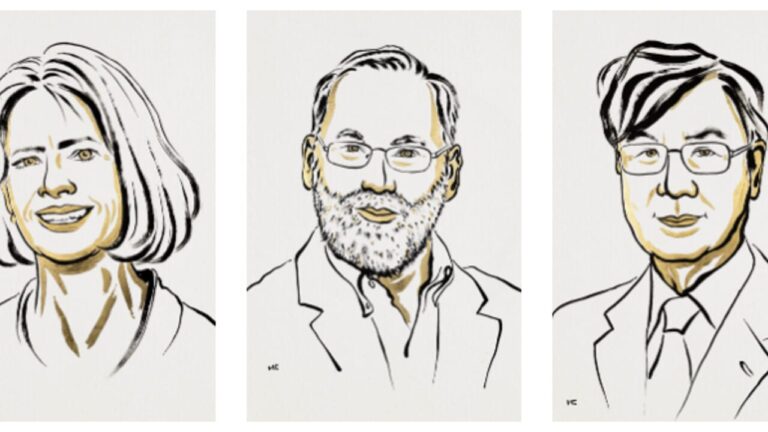
There are two men and a woman, two US and a Japanese, the Nobel Winners for Medicine 2025: Mary E. Brukow are American, born in 1961, and Fred Ramsdell: born in 1960. The oldest of the three is Shimon Sakaguchi, born in 1951 in Japan.
What they discovered on the “sentinels” of our immune system
The powerful human immune system, in other words, must be adjusted, otherwise it could attack our same organs. Sakaguchi, Mary E. Brunkow and Fred Ramsdell have discovered how to control it. The story begins in 1995, when Shimon Sakaguchi shows that a previously unknown class of immune cells protects the body from autoimmune diseases, that is, from the immune system that attacks itself. A first firm point.
Their research on peripheral immunological tolerance have revolutionized the gaze that science had up to that moment on the sentinels of our body. Sentinels that every day protect us from thousands of different microbes trying to invade us. These all have a different aspect and many have developed similarities with human cells as a form of camouflage. But how does the immune system do to establish what to attack and what to defend? Nobel prize studies come into play here.
After the intuitions of Sakaguchi, from Brukow and Ramsdell the other fundamental discovery arrives in 2001: the experts manage to explain why a specific stock of mice was particularly vulnerable to autoimmune diseases. These rodents presented a mutation in a gene (Foxp3), which in the human equivalent cause a serious autoimmune disease, Ipex syndrome. Two years later Sakaguchi intervenes again, managing to connect the discoveries: the scientist shows that the Foxp3 gene regulates the development of the cells he identified in 1995. These cells, now known as regulatory T cells, monitor other immune cells and guarantee that our immune system tolerates our tissues.
The discoveries of the winners gave way to the trend that explored the secrets of peripheral tolerance, stimulating the development of medical treatments for cancer and autoimmune diseases. This field could also lead to more effective transplants. Many of the treatments are now under the clinical experimentation phase.
Who are the three rewarded immunologists
The American Mary E. Brukow, 65, obtained the doctorate at the University of Princeton and is currently senior responsible for the programs of the Institute for the biology of the Systems of Seattle (ISB), a non -profit research institute for the study of relationships between the various parts of biological systems and promoting an interdisciplinary approach to biological research.
The other Awarded American, Fred Ramsdell, 66 years old on December 5, is the research director of the Parker Institute for the immunorype of tumors. Born in 2016 in San Francisco, it is also working as a scientific consultant for the private biotherapeutics sonoma of San Francisco.
For the second consecutive year among the winners of the Nobel Medicine, there is a researcher engaged in a private company, even if in the case of Ramsdell not exclusively. The Japanese Shimon Sakaguchi, 74, is the oldest of the Nobel Prize for Medicine 2025. He achieved his doctorate at the University of Kyoto in 1976 and works in the Immunology Frontier Research Center of the University of Osaka. It is known above all for the discovery of the role of the regulatory t cells of the immune system, which have so far found applications in the fight against tumors and autoimmune diseases.