

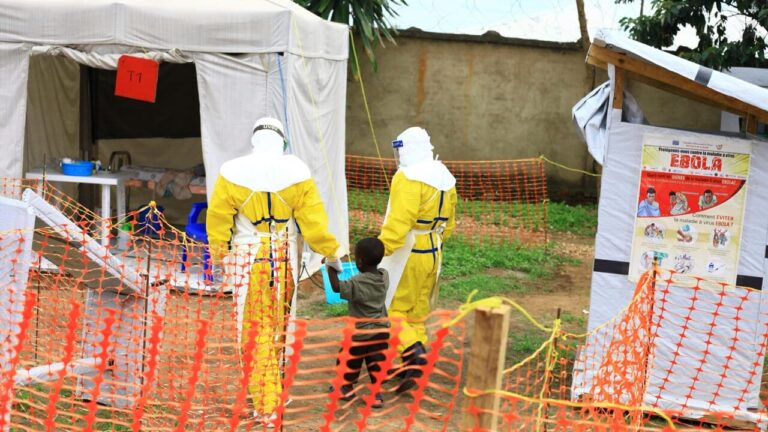
The World Health Organization (WHO) has declared the Ebola outbreak in the Democratic Republic of Congo and Uganda a “public health emergency of international concern”, the second highest alert level globally. According to the United Nations agency, the risk of spread to neighboring countries is high, even if at the moment the conditions for speaking of a pandemic do not exist.
The alarm concerns an outbreak caused by the Bundibugyo strain of the Ebola virus, a rare variant for which, at present, there are no approved vaccines or drugs. The WHO warned that the outbreak could be “much larger” than cases identified so far, with a significant risk of further local and regional spread.
The numbers of the outbreak: dozens of deaths and hundreds of suspected cases
According to data released by the WHO, 80 suspected deaths, 8 laboratory-confirmed cases and 246 suspected cases distributed in at least three health areas were recorded in the province of Ituri, in the east of the Democratic Republic of Congo: Bunia, Rwampara and Mongbwalu. However, local sources and Congolese health authorities speak of an even heavier toll, with over 80 victims and more than 330 total cases reported.
The outbreak would have already spread beyond the areas initially involved. A positive case was in fact confirmed in Goma, an important city in the east of the country controlled by the M23 rebel militia supported by Rwanda. According to the director of the Congolese National Institute for Biomedical Research (INRB), Jean-Jacques Muyembe, it is a woman who contracted the virus from her husband who died in Bunia, then moved to Goma when she was already infected.
A further case was confirmed in the capital Kinshasa, presumably in a person returning from Ituri province.
First cases across the border: two infections confirmed in Uganda
The WHO reported that the virus is no longer limited to the Democratic Republic of Congo. Two confirmed cases have been reported in neighboring Uganda. Ugandan authorities have announced that a 59-year-old man, who died in recent days, had tested positive for Ebola.
The presence of infections in multiple countries contributed to the decision to raise the international alert level, even if the UN agency specified that, at the moment, the situation does not constitute a global pandemic emergency.
Doctors Without Borders: “Extremely worrying epidemic”
The NGO Doctors Without Borders (MSF) called the outbreak “extremely worrying”, announcing the preparation of a large-scale health response. The Africa CDC, the health agency of the African Union, had also declared an emergency in recent days due to the epidemic located in the province of Ituri, one of the most unstable areas of the country, marked by decades of armed conflict.
What is Ebola and how is it transmitted
Ebola is a highly contagious, often lethal viral hemorrhagic fever transmitted through direct contact with bodily fluids of infected people, such as blood, saliva, vomit, or other body fluids. Infected people become infectious only after the onset of symptoms, at the end of an incubation period which can vary from two to 21 days.
Initial symptoms include high fever, headache, muscle aches, fatigue and sore throat. In the later stages, vomiting, diarrhea, skin rashes and internal or external bleeding may appear.
Over the last fifty years the virus has caused around 15 thousand deaths in Africa. The most serious epidemic recorded in the Democratic Republic of Congo, between 2018 and 2020, caused almost 2,300 deaths and over 3,500 infections.
The current outbreak is the 17th Ebola outbreak in the country since the disease was first identified in 1976, in what was then Zaire. The latest Congolese epidemic, declared in August 2025, was considered over in December after at least 34 deaths.