

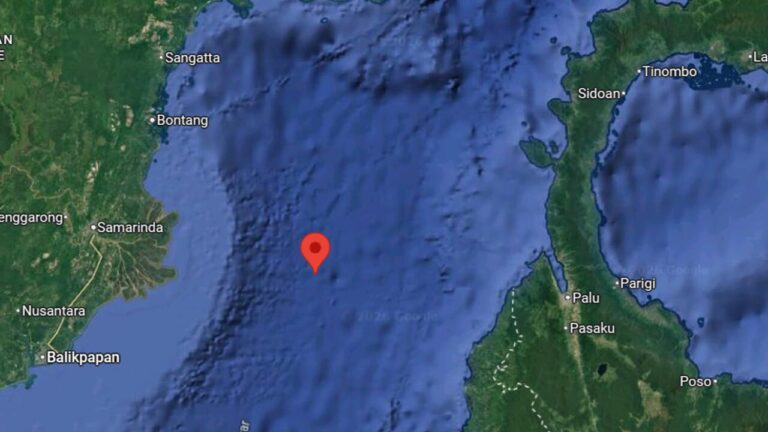
For Eni it is a golden period. After the two huge fields discovered off the coast of Libya, the energy giant announces that it has identified a new gas reservoir from the Geliga-1 exploratory well. This time we are on the other side of the world, in Indonesia, and precisely in the Kutei basin, about 70 km from the coast of East Kalimantan. It is an offshore field, therefore in the open sea. Eni’s estimate is that there are 140 billion cubic meters of gas and 300 million barrels of condensates, i.e. light hydrocarbons similar to oil, but easier to process to obtain fuel.
How much gas has Eni discovered in Indonesia
To get an idea of the magnitudes, it is enough to say that in the Italian subsoil, between onshore and offshore plants, estimates speak of around 40 billion cubic meters which can be extracted and marketed with a probability greater than 90%. The fields recently discovered by Eni in the Mediterranean (Bahr Essalam South 2 and Bahr Essalam South 3) contain over 28 billion cubic meters of gas in place.
In Indonesia Eni found a quantity of gas 5 times greater, equal to more than three times the resources estimated in Italy. The field is located in the PSC Ganal, an offshore exploration and production block operated by Eni (82%) and the Chinese Sinopec (China Petroleum & Chemical Corporation) which holds the remaining 18% of the shares.
Details on the Indonesian field
In Eni’s press release it speaks of volumes “in place”, i.e. still to be verified in terms of actual producibility. In any case, the quantity of hydrocarbons is decidedly important. Eni drilled into the seabed starting from a water depth of 2,000 meters and then continuing under the sea bed for another 3,000 meters, until reaching a total depth of 5,100 meters.
During the drilling, a column of gas trapped in rocks dating back to the Miocene (between 5 and 23 million years ago) was intercepted. “The Geliga-1 discovery – writes the company in the press release – is part of Eni’s excellent exploration track record in the Kutei Basin and follows the important Geng North discovery, which occurred at the end of 2023 just 20 km south of Geliga, as well as the more recent discovery of the Konta-1 well, announced in December 2025. These results – it is explained – confirm the significant gas play potential of the basin and the scalability of the resources in the area”.
Eni’s presence in South-East Asia
In short, Eni has found another treasure. The company operates in 62 countries and is controlled by the Ministry of Economy which (also through Cassa Depositi e Prestiti) owns approximately 30% of the shares. Geliga-1 consolidates Eni’s presence in Indonesia, where the group has operated successfully since 2001 and already produces 90,000 barrels per day. The new field will become part of the portfolio of Searah, the new joint company with Petronas. With assets of 19 areas under concession between Indonesia and Malaysia, this company aims to become the new energy leader in the area, already being able to count on discovered reserves equal to 3 billion barrels of oil equivalent”.
The sale of a 10% stake in the assets contributed by Eni Indonesia in Searah to a third party is currently underway, a stake that will remain excluded from the new company, and is expected to be completed in 2026. The discovery of Geliga increases the value of this sale.
In the last six months, Eni has successfully drilled another four exploratory wells in the same basin. “The exploration campaign – we read in the group’s note – will continue with a further well expected in 2026 and two wells in 2027”. Therefore, other surprises could come. The gas giant has also confirmed investments in the two large production hubs in the area (the North and the South Hub). The beating heart will be a new floating production unit capable of managing, in addition to gas, also 90,000 barrels per day of condensates.